The Three Variables That Decide the Rate
Graham Smith, writing from Melbourne, Australia, lays out the machinery behind a question that sounds almost childish until it is put to the test. Heat moving into or out of water is governed by three variables. [1] The first is the temperature gap between the water and whatever is doing the heating or cooling. The second carries a technical name — the heat transfer coefficient — and it measures how readily conduction and convection move energy through a given physical setup. The third is the contact area where water meets the medium that warms or chills it.
Set those three levers side by side and the asymmetry appears at once. Heating usually comes from an electrical element or a flame, and that source can sit hundreds of degrees hotter than the water. Cooling usually comes from a liquid refrigerant or from ambient air. Both of those are typically only a few tens of degrees cooler than the water they are meant to chill. The temperature gap, in other words, is lopsided by design — a heating element hundreds of degrees hotter against air only a few tens of degrees cooler.
The middle lever is where water shows its character. Water is a poor conductor; it does not pass heat along efficiently the way a metal spoon does. But it is an excellent convector, because its density shifts with temperature, and those shifts set up currents that ferry heat away from a surface. Picture a room where one person starts moving and the whole crowd begins to drift — the motion, not the material, does the work. Smith’s point is that the observation of faster heating rests on two factors stacked together: a larger temperature difference and a higher heat transfer coefficient.
Where the Boiling Changes the Arithmetic
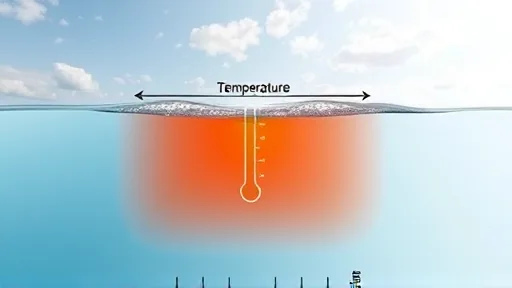
Boiling water pushes the heat transfer coefficient to an extreme. The turbulence of boiling carries more heat away from the surface, and steam carries enormous quantities of latent heat as it leaves. Latent heat here means the energy absorbed during the change from liquid to vapour without any rise in temperature — a hidden cargo that the phase change smuggles out of the pot. This is why a rolling boil strips energy from a hotplate at a rate that still water never approaches.
Smith then flips the picture, and the flip is the useful part. In industrial cooling towers or a home evaporative cooler, the water’s surface area can be enlarged enormously by breaking it into small drops and passing air across them. The heat transfer coefficient climbs high in that arrangement too, because evaporated water carries latent heat away. Under those conditions, cooling outpaces heating. The kettle and the cooling tower are not contradicting each other; they are running different geometries.
Kevin Hesketh, writing from Preston in Lancashire, UK, takes the argument from physics to engineering and reframes the whole question. [1] Systems can be built that cool water as quickly as they heat it. His example is the coolant loop in a car. Coolant is pumped through channels in the engine block and heats up rapidly against the hot metal. It then passes into the radiator, a grid of multiple thin channels where airflow cools it down.

The Radiator as a Tuning Dial
Once the loop reaches running temperature, it settles at an equilibrium fixed by the thermostat. Hesketh separates the two halves of the cycle cleanly: heating time is how long the coolant spends in the engine block channels, and cooling time is how long it spends in the radiator. Those two durations do not have to match. They could be engineered to match, he argues, simply by resizing the radiator channels. [1] The imbalance that looks like a law of nature is, in a well-built loop, a design choice — a dial an engineer can turn.
That closes the loop on the original puzzle. The reason a pot on a stove heats faster than it cools is not that water has a preference. It is that the three variables — temperature gap, heat transfer coefficient, contact area — happen to be arranged favourably on the heating side in a kitchen and unfavourably on the cooling side. Rearrange them, as a radiator or a cooling tower does, and the advantage can move to the other side. The question was never about water’s temperament; it was about the plumbing around it.