Ions flow like liquid inside solid crystal
A Simulation Reveals the Unseen Dance
For decades, scientists knew that some solids could conduct ions almost as fast as liquids do. But no one had ever seen exactly how. A research team led by the University of Osaka, in collaboration with the National Institute of Advanced Industrial Science and Technology (AIST), RIKEN, and the Institute of Science Tokyo, has now created a computer simulation that shows this process in action for the first time. The simulation reveals a fundamental mechanism behind superionic conduction — a phenomenon where ions move rapidly through a solid while the crystal’s framework remains completely intact.
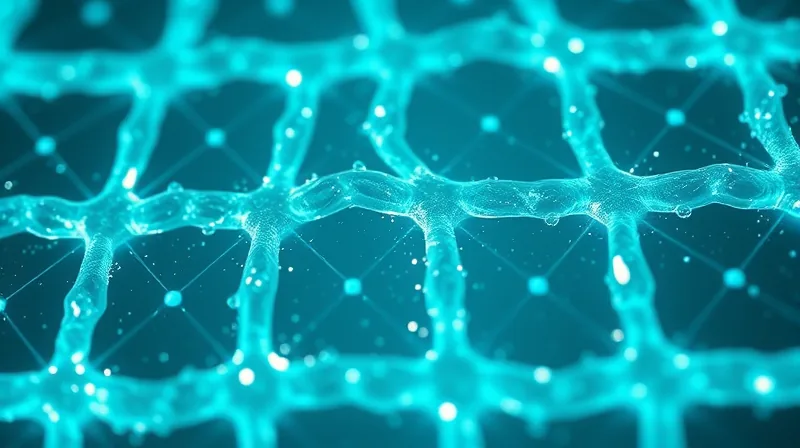
The key finding is that the ions behave like a liquid inside the solid crystal. They do not hop from one fixed position to another, as conventional models suggested. Instead, they flow continuously through channels within the rigid crystal lattice. This liquid-like motion was previously theorized but never observed at the atomic level. The simulation provides the first direct visual evidence of this behavior
The researchers discovered that the ions form a kind of “molten sublattice” inside the crystal. While the main crystal structure stays solid and unmoving, the ions that carry the charge essentially melt into a fluid state. This dual nature — solid framework with liquid-like ions — is what enables superionic conduction. The crystal acts as a rigid highway, and the ions flow through it like traffic moving freely on a well-designed road.
The Next Step the Researchers Name
The team now plans to use their simulation to design new materials with even better superionic conduction. They specifically aim to create crystals where the liquid-like ion flow happens at lower temperatures and with higher efficiency.
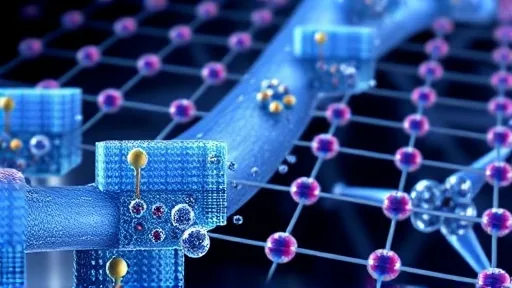
The researchers want to identify which crystal structures and chemical compositions best support this molten sublattice behavior. By understanding the exact conditions that trigger the transition from static to flowing ions, they can engineer materials optimized for practical applications. The simulation provides a blueprint for this design process.
One immediate target is improving solid-state batteries. Current solid electrolytes often require high operating temperatures to achieve sufficient ion conductivity. If the team can lower that temperature threshold by engineering the crystal structure to support liquid-like ion flow, it would remove a major barrier to commercial solid-state battery adoption. The researchers state this as a direct application of their discovery.
What This Means for the Field
The discovery reshapes the fundamental understanding of how ions move through solids. It challenges the long-held assumption that ion transport in crystals always involves discrete jumps between lattice sites. The new model — where ions flow as a continuous liquid within a solid framework — opens up entirely new avenues for materials design.
This finding connects directly to work at other institutions pursuing the same research question. Researchers at MIT and Stanford have been developing theoretical models of superionic conduction using machine learning, but their simulations lacked the atomic-level resolution the Osaka team achieved. The Osaka team’s work provides the experimental verification those models needed. Similarly, groups at the University of Cambridge have been investigating liquid-like ion behavior in different crystal structures, and this new simulation offers a unifying framework for their observations.
The implications extend beyond batteries. Superionic conductors are also critical for fuel cells, sensors, and next-generation computing components. Any device that relies on fast ion transport could benefit from materials designed using this new understanding. The researchers note that their simulation method can be applied to many different crystal types, making it a versatile tool for the entire field of solid-state ionics.
Sources
2. National Institute of Advanced Industrial Science and Technology
3. RIKEN
5. MIT
6. Stanford