
Fifty Thousand Jobs Against Eleven Hundred
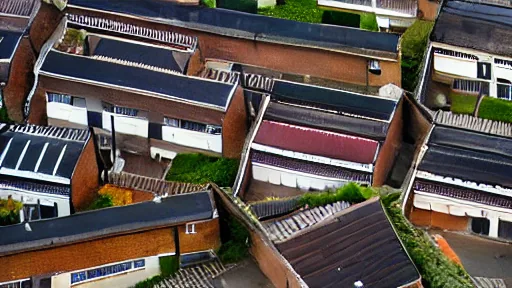
The fear worth naming first is the familiar one: that any move away from fossil fuels is a bill paid in lost work, and that green policy is a luxury bought with somebody else’s job. It is not an irrational fear. It is the frame in which every North Sea licensing decision has been argued for a decade. On the numbers published this week, it is also the wrong frame. Insulating Britain’s homes and investing in heat pumps — electric heating systems that move heat rather than burning fuel — would do more to cut the cost of living, create jobs and boost the UK’s economy than drilling for new oil.
The warm homes plan is a £15bn programme. It is currently under threat of cuts as ministers seek budget savings. Delivered, it would take about £1bn a year off household energy bills across the UK. The relief would be concentrated on those on low incomes. It would provide a £1.6bn yearly boost to the economy. It would support about 50,000 new jobs. Those jobs would be spread across thousands of small businesses rather than pooled in a single industry and a single region. Up to 5m homes would be insulated. A further £15bn of private investment would be drawn in. The geography matters as much as the total: the spending would be spread across the country rather than concentrated in one area.
Set that against Rosebank, the oilfield west of Shetland. It would create about 1,100 direct and indirect jobs. Those jobs would be concentrated in the North Sea and in two companies. One of those two, Equinor, is an overseas investor. Equinor has previously estimated 3,500 jobs at peak for Jackdaw and Rosebank combined. The contrast that survives that correction is about distribution. Fifty thousand jobs sit across thousands of small firms; eleven hundred sit on two balance sheets and in one basin.
The effect on bills is a separate question, and the evidence there is just as stubborn. New North Sea oil and gas would not bring down fuel prices. It would not ease any supply constraint — a limit on how much fuel can reach the market — on the UK arising from the Iran war. The reason is mechanical rather than political. Oil and gas are sold on international markets, so a barrel landed west of Shetland is priced by the same forces as a barrel landed anywhere else. A licensing decision, however framed, cannot be sold as a price cut. The programme now facing budget savings can be, and the figure is £1bn a year.
Who Pays When the Basin Empties
The fiscal case for drilling rests on revenue. Research by WWF and the campaigning group Uplift puts a figure on how much of that revenue actually arrives. While total profits from Rosebank for its backers — Equinor, Shell and Ithaca Energy — could reach £1.5bn over its 25-year lifespan, the UK government faces a potential loss of £258m through tax breaks and incentives. One number is private gain; the other is public cost. They sit on opposite sides of the ledger, and setting them side by side is what the licensing debate rarely does.
The wider basin shows the same pattern at scale. North Sea tax revenues were about £4bn in 2025-26, but upstream tax relief — tax breaks granted on oil and gas extraction before refining — and support measures came to an estimated £3.26bn. That relief bill equals more than three-quarters of the receipts. The ratio, not the headline, is the number that matters to anyone counting on the basin to fund public services.
The direction of travel makes the arithmetic worse rather than better. The North Sea is a basin — a geological area holding oil and gas — in steep decline. Tax revenues from drilling are projected to fall to about £100m by 2030. When the platforms stop producing, they still have to come down. A revenue stream that narrows to £100m while carrying a £12bn closure bill is not a growth story. It is a liability with a lag.
E3G priced the two options against GDP — the total value of goods and services a country produces. Delivering the warm homes plan in full would boost GDP by 0.08 %. Modelling suggests Rosebank would add about 0.025 % on average through its lifetime, assuming the average oil price returns to $70 a barrel from recent highs. That price assumption is doing real work in the calculation. If the UK taxpayer paid for decommissioning, the cost would outweigh any positive impact. The two figures are not rival estimates of one thing; they measure different things, and the smaller one is the one whose upside is concentrated in a handful of companies.

A Decision Due, A Ledger Contested
The choice is live rather than theoretical. The energy secretary, Miatta Fahnbulleh, said recently that a decision on the Jackdaw gasfield was “imminent”. [1] A decision on Rosebank would take a little longer. Both sit inside a promise. Labour committed in its 2024 election manifesto to halting new licensing for oil and gas. Jackdaw and Rosebank could be exceptions because they were already in the licensing system — the government permit regime that allows a company to extract oil or gas. That is the mechanism by which a manifesto commitment becomes a discretion. A discretion is exercised by a minister, on a date, with a signature. The date, in the case of Jackdaw, is close.
The pressure runs largely one way. Ten major unions wrote to the government recently to oppose granting a licence to Rosebank. Six hundred scientists wrote to ministers between June and September 2026 urging a rethink. The Department for Energy Security and Net Zero declined to comment on E3G’s findings or on the future of the warm homes plan. decision close. That silence is not an answer. It is a position. And it leaves the two ledgers to be argued in public without an official reconciliation.
Industry’s counter-case should be read with its footnotes attached. Adura, the joint venture between Equinor and Shell that owns Jackdaw and Rosebank, argues that approving Rosebank and other planned North Sea developments would support £35.3bn in UK economic value between 2026 and 2035. It puts Rosebank’s private sector investment at £8.7bn, three quarters of which will be spent in the UK. Together with Jackdaw, it says, the two fields would contribute £4.1bn in additional tax revenue over the next decade. The figures take in the company’s wider operations beyond Rosebank and Jackdaw. They also treat wider supply-chain spending and the spending of employees as economic benefits, an assumption the source itself flags as uncertain. On the tax take, they do not account for the large tax reliefs available, estimated at more than £2.4bn. And contrary to standard HM Treasury practice, the estimates do not appear to factor in a discount rate for future income. A pound of tax revenue in 2035 is worth less than a pound today; a projection that skips the discount is a projection that flatters the future. None of this makes the £4.1bn zero. It makes it smaller, and later, than the headline implies.
The supply side of the green programme makes its own argument, and it is about reversibility rather than virtue. Dhara Vyas, chief executive of Energy UK, which represents the energy industry, warned: “We need government to stick to its ambitions on electrification. Watering down the warm homes plan or making further changes to the zero emissions vehicle mandate sends mixed signals to a market that has been in a state of flux for far too long — these businesses cannot easily ramp up production again, and sadly for too many have already had to close.” [1] Factories, supply chains and trained installers cannot be switched on and off at the pace of a budget round. A subsidy withdrawn is not a saving; it is a capacity decision. That is the asymmetry the Treasury faces when it looks for money in the warm homes plan. The £15bn is visible in the near term; the 50,000 jobs and the £1.6bn arrive over years and across thousands of firms.
James Huw Dyson, a senior researcher at E3G, framed the political risk in household terms: “When the first cold snap rolls in, the public aren’t going to thank the government for cutting home insulation while giving big oil tax breaks to drill for polluting energy that keeps our bills high.” [1] He added: “If the government is serious about tackling the cost of living, and investing across the country, it should focus its attention on insulating homes and rolling out clean energy, which will cut bills and create good jobs across Britain at the same time.” What this comparison renders obsolete is now a short list. Obsolete: the claim that a new oilfield is the route to cheaper household bills, when the fuel is priced on international markets and the £1bn a year sits in the insulation plan. Obsolete: the assumption that North Sea licensing is a dependable revenue source, when £4bn of receipts arrived alongside £3.26bn of reliefs, the basin’s takings are projected at about £100m by 2030, and decommissioning carries a £12bn bill for the taxpayer. Obsolete: counting 1,100 jobs in two companies as a national growth strategy while a 50,000-job alternative waits on a budget decision. Obsolete: quoting a peak of 3,500 jobs across two fields as though it were a floor, when the 1,100 figure for Rosebank is the direct and indirect total. Obsolete: weighing a £35.3bn company estimate against a public analysis without noting that the estimate leaves out a relief bill above £2.4bn and a discount rate. And obsolete: the idea that this is green against growth. On these numbers it is one kind of growth against another — smaller, more concentrated, and carrying a closure bill the public may yet be asked to pay.
Sources
Mentioned organisations (context, not sources)
- WWF — Organisation (homepage)
- Uplift — Organisation (homepage)
- E3G — Organisation (homepage)
- Equinor — Organisation (homepage)
- Labour — Organisation (homepage)
- Department for Energy Security and Net Zero — Organisation
- Energy UK — Organisation (homepage)
- HM Treasury — Organisation
- Adura — Organisation (homepage)
- Shell — Organisation (homepage)