Ultrasound Helmet Offers Noninvasive Deep Brain Access
For decades, the deepest structures of the human brain have been a locked room. Scientists could see them on scans, could infer their activity, but could only truly interact with them through the brutal workaround of surgery. Drilling through the skull to implant electrodes — that was the price of entry. It still is, for the roughly 150,000 people worldwide who receive deep brain stimulation for conditions like Parkinson’s disease. The procedure works. It also carries the risk of bleeding, infection, and permanent tissue damage. The locked room demanded a heavy toll from anyone who wanted to enter.
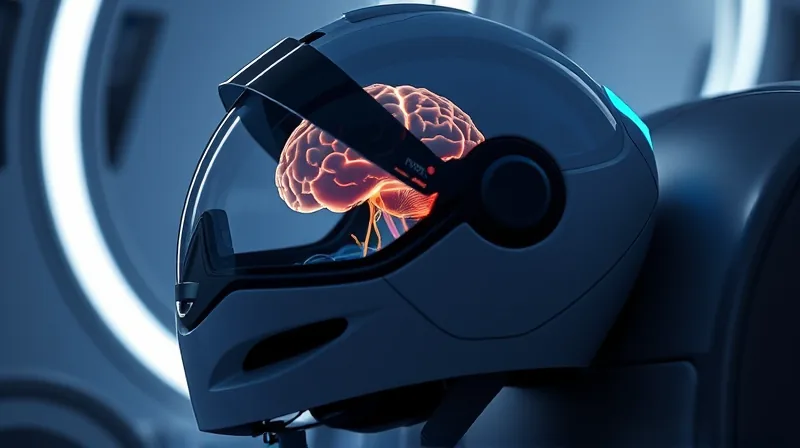
Now, a team from University College London and the University of Oxford has built a key that does not break the door down. It whispers through it. Their new device is a helmet fitted with 256 ultrasound elements, each one sending a gentle mechanical pulse toward the brain. No scalp is cut. No bone is drilled. No electrode is implanted. The ultrasound waves pass through the skull as if it were glass, converging on a target deep inside the brain with a precision that has never been achieved before.
The implications ripple far beyond the laboratory. For neuroscientists, this is the first time they can study causal relationships in deep brain circuits without surgery. For clinicians, it offers a potential path to treating Parkinson’s disease, depression, and essential tremor without ever opening the skull. The researchers describe it as a paradigm shift. The evidence, published in Nature Communications, suggests they may be right
A Locked Room, Now Open
The challenge was always physics. Ultrasound is a mechanical wave, a ripple of pressure that can push and pull on brain tissue. When it hits a neuron, it can influence how that cell fires — turning its activity up or down. The technique, known as transcranial ultrasound stimulation, has been around for years. But there was a catch. The skull is not a friendly medium. It scatters and distorts sound waves, blurring them like light through frosted glass.
Earlier systems could only reach the brain’s outer layers with any accuracy. Deeper structures — the thalamus, the basal ganglia, the circuits that govern movement and mood — remained out of reach. The waves would arrive at the target, but so diffuse and weak that they could not reliably change anything. It was like trying to write a letter with a fountain pen while wearing boxing gloves.
The new helmet solves this with a computational trick. Each of its 256 elements produces only a small amount of ultrasound. But the team builds a detailed model of each participant’s skull from imaging scans. That model calculates exactly how each element’s wave will bend and scatter as it passes through bone. The system then adjusts every element so that all the waves arrive at the target point simultaneously, overlapping in perfect phase.
“The key insight is that each element contributes only a little, but together they create a focal spot where we need it,” said Charlotte Stagg, study author and professor of human neurophysiology at Oxford The precision is staggering. The new device targets areas around 1,000 times smaller than conventional ultrasound systems can pinpoint, and 30 times smaller than previous deep brain ultrasound devices. This matters because the deep brain is crowded. Structures that sit millimeters apart do wildly different things. Stimulating the wrong one could produce unintended effects.
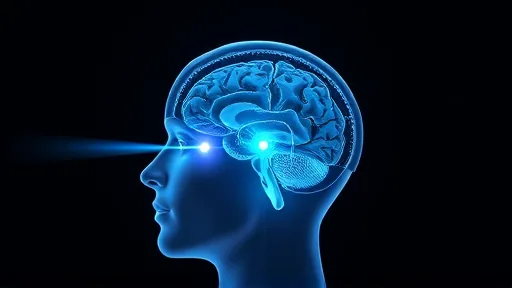
The team demonstrated this precision on seven human volunteers. They targeted the lateral geniculate nucleus, a small structure in the center of the brain that relays visual information from the eyes to the visual cortex. In the first experiment, participants watched a flashing checkerboard. During ultrasound stimulation, functional MRI scans showed significantly increased activity in their visual cortex — proof that the signal had arrived exactly where it was aimed.
A Gentle Push, Not a Burn
The helmet’s design philosophy stands in stark contrast to existing ultrasound tools. Some ultrasound devices available today work by ablation — they heat tissue until brain cells die. This is effective for certain patients, but it is irreversible. Once tissue is destroyed, it cannot be brought back. The approach has its place in medicine, but it is a blunt instrument for understanding the brain’s subtle circuitry.
The new system is different. It does not destroy anything. It changes activity transiently, safely, and reversibly. “This helmet will allow us to target brain regions with the same precision, to change the ongoing activity of a brain region without heating it up or damaging it in any way and without screws into the skull,” Stagg said
The helmet itself is a marvel of engineering. Patients wear it while lying inside an MRI scanner, with an individually printed soft plastic face mask keeping their head perfectly still. The mask is not for comfort — it ensures that the ultrasound waves hit their intended target with millimeter accuracy. The stimulation takes about 8 minutes to gather enough signal, or alternatively, the team can stimulate for about 40 seconds and then observe the after-effects. Those effects outlast the stimulation by 1 to 2 hours, a window that could be clinically useful.
In a second experiment, the team observed something remarkable. After ultrasound stimulation, the visual cortex showed sustained decreases in activity for at least 40 minutes. This was not a fleeting blip. It was a lasting change in how the brain processed information. The participants themselves noticed nothing — their conscious experience of the flashing checkerboard was unchanged. But the scans revealed a different story. Their neural circuits had been nudged into a new state.
This combination of precision and persistence is what excites the researchers most. It means the technique could be used not just to observe the brain, but to modify it. The ability to turn specific circuits up or down, temporarily, without causing permanent damage, opens a door to understanding what those circuits actually do. For the first time, scientists can investigate deep brain regions in healthy people to understand their function, then test different stimulation patterns in people with neurological diseases to find the best way to improve their symptoms.
From Helmet to Clinic
The researchers are clear that this is a beginning, not an end. The immediate next step is understanding the mechanisms. “Further studies are needed to fully understand the mechanisms underlying TUS-induced neuromodulation,” the team emphasized. How exactly do gentle mechanical pulses change neuronal firing? What patterns of stimulation produce which effects? These questions remain open.
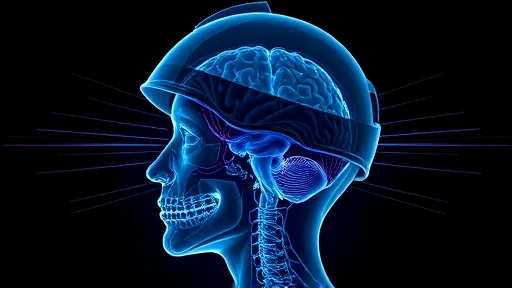
But the clinical potential is already visible. The ultimate goal is to harness these effects for therapeutic benefit — stopping hand tremors, for instance, or alleviating the symptoms of depression. The system could allow clinicians to test whether a particular brain region is a good target for treatment before committing to surgery. It might even replace surgery altogether for some conditions.
The team has already taken steps toward that future. Several members have founded NeuroHarmonics, a UCL spinout company developing a portable and wearable version of the system The current helmet is bulky and requires an MRI scanner. A portable version could bring this technology out of the lab and into clinics, and eventually, perhaps, into patients’ homes.
Safety data so far is encouraging. “We haven’t observed any side effects at this stage,” Stagg said. “The helmet is a little claustrophobic but it is much less involved than what would be needed for surgery.” That is a low bar, admittedly. Brain surgery is about as involved as medicine gets. But it is a start.
The study, led by biomedical engineer Bradley Treeby, represents a significant milestone in the development of safe, effective, and targeted brain stimulation technologies. The locked room is no longer locked. The question now is what scientists will find inside, and how quickly they can turn those discoveries into treatments that change lives. .