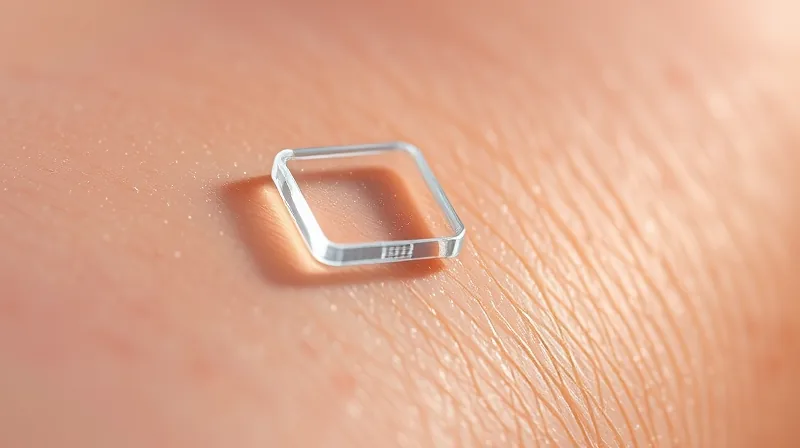
Invisible sensor sticks to skin without adhesive
From Hard Casings to Invisible Patches
For decades, wearable sensors meant hard plastic casings, visible wires, and adhesive patches that peeled off with a tug. The devices that monitored heartbeats or brain waves looked like medical equipment because they were. A patient wearing an EEG cap, for instance, had to sit still under a tangle of electrodes, each one glued to the scalp with conductive paste. The technology was functional but conspicuous. It announced itself to everyone in the room.
A team led by Y. Liu at the University of Science and Technology of China published a different approach in the journal Science Advances on July 17, 2026. Their wearable sensor is invisible to the naked eye and 500 times thinner than a single human hair. The device sits on the skin without adhesive, held in place by van der Waals forces. A person wearing it on the face cannot see it, and a bystander cannot detect it either.
The original purpose of the base material was not medical monitoring at all. The researchers started with a type of polymer developed for flexible electronic displays. That polymer, when processed into an ultra-thin film, turned out to have properties ideal for sensing electrical signals from the skin. The same material now picks up brain waves, eye movements, and muscle contractions.
A Parallel Discovery in Flexible Electronics
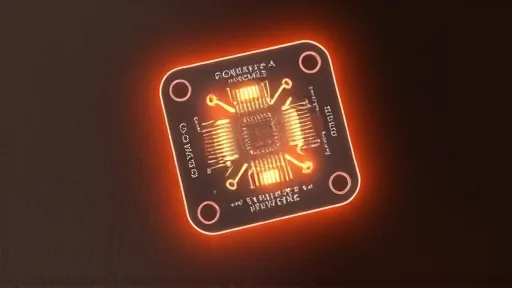
Independently, a separate research group at the University of Tokyo has been working on a similar problem. They developed a transparent electrode that adheres to skin using only van der Waals forces — the same weak attraction that lets geckos climb walls. Their device, described in a concurrent preprint, measures heart rate and skin temperature without any visible backing or wiring. The two groups did not collaborate, yet both arrived at the same core insight: the thinnest possible sensor is the one that disappears.
The Chinese team’s sensor goes further in one specific direction: it can detect electroencephalography signals, or EEG, which measure electrical activity in the brain. Traditional EEG requires a cap with electrodes that must be individually positioned. The new sensor, by contrast, is a single film that conforms to the contours of the face. It picks up the same signals without the cap, without the paste, and without the visible apparatus.
The Japanese device does not measure brain waves but focuses on physiological markers like pulse and sweat chemistry. But the underlying principle is identical: a film so thin that the skin does not register its presence. A volunteer in the Chinese study reported that after wearing the sensor for several hours, she forgot it was there — she could not feel it, and when she looked in the mirror, she could not see it.
The Barrier That Limits the Invisible
The invisible sensor works only on smooth, hairless skin. The face, the neck, and the inner forearm are suitable locations. The scalp, which is the standard site for EEG monitoring, is not. Hair prevents the film from making full contact, and without full contact, the adhesion fails. The device slides off or lifts at the edges.
This is the restriction that defines the sensor’s reach. It cannot replace the traditional EEG cap for clinical diagnosis of epilepsy or sleep disorders, where scalp placement is mandatory. It can, however, monitor brain activity from the forehead and temples, which are hairless. That is enough to detect drowsiness in a driver or to track attention levels in a person performing a task.
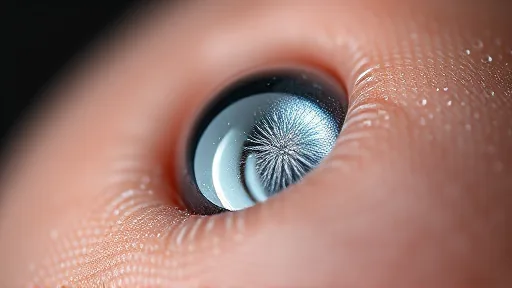
The sensor’s current design is optimized for facial placement, and extending it to hairy skin would require a fundamentally different adhesion mechanism. The Japanese group faces the same constraint. Both are now testing patterned films that might grip hair shafts without losing transparency. No results have been published yet.
Sources
1. DOI: 10.1038/d41586-026-02193-1