DNA Shredder Offers New Way to Kill Diseased Cells
Editing Versus Elimination
For over a decade, the story of CRISPR has been one of precision editing. Scientists learned to cut a gene at a specific spot, remove a faulty sequence, and let the cell’s natural repair machinery stitch the DNA back together. This approach, called gene-editing, works like a scalpel. It makes a clean incision, removes the problem, and preserves the rest of the genetic material. The cell survives the procedure and continues its normal function with corrected instructions.
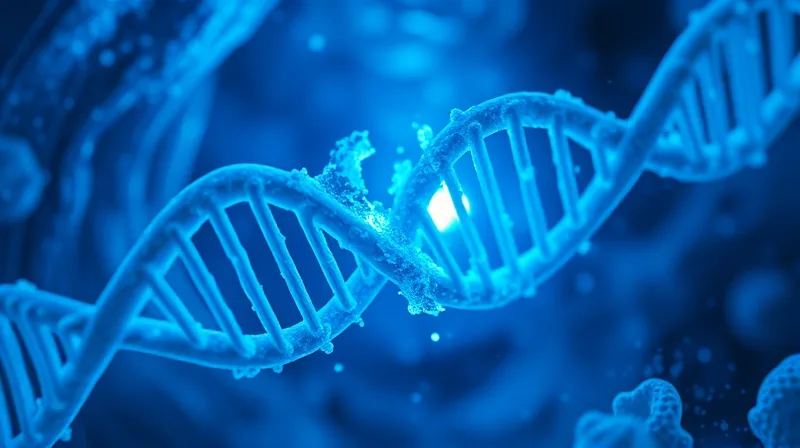
The new tool described in recent papers in the journal Nature works on a completely different principle. Instead of repairing a damaged gene, it destroys the entire cell. The molecule reads a signal unique to a diseased cell, then cuts that cell’s DNA into fragments faster than the cell can repair them. The damage accumulates until the cell can no longer reproduce its own cellular machinery and dies. Healthy cells, which lack the triggering sequence, are completely spared. This is not editing. This is programmable cell-killing.
The distinction matters for understanding what is new here. Gene-editing is a correction tool. It fixes a typo in the genetic code while leaving the page intact. The DNA shredder is a deletion tool. It removes the entire page, the book, and the shelf. One approach preserves the cell. The other eliminates it. Both use the same fundamental CRISPR mechanism to find a specific genetic sequence, but their outcomes could not be more different.
Consider what this means for treating diseases where the problem is not a single faulty gene but the very presence of a harmful cell. Cancer cells, for instance, are not simply cells with a typo. They are rogue cells that have lost their normal regulatory controls. Editing their DNA might fix one mutation, but they often have many. Killing them outright removes the threat entirely. The DNA shredder offers a way to do exactly that, based purely on the genetic signals the cancer cell displays on its surface or within its interior.
From Editing to Elimination
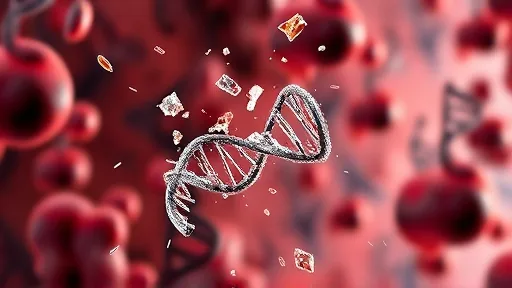
The first demonstration of this capability came from researchers at the University of Utah. Their paper, published in the May issue of Nature, showed the therapy cutting the growth of lung cancer cells driven by mutations in one of the most common cancer-driving genes by about 50% in a lab dish. [1] That result matched the performance of the chemotherapy drug cisplatin in the same test. The crucial difference: the DNA shredder had no effect on healthy cells, while chemotherapy typically damages healthy tissue alongside cancerous tissue.
A second paper followed in June from a lab at the University of California, Berkeley. [2] This is significant because Berkeley is one of the two labs whose 2012 work established CRISPR-Cas9 as a programmable gene-editing tool. The Berkeley team extended the shredding approach to target a gene that is mutated in 40% to 50% of all cancers. This particular gene has long been considered one of oncology’s most challenging targets for drug development. Traditional drugs struggle to bind to it effectively, but a tool that recognizes its genetic sequence and destroys the cell carrying it bypasses that problem entirely.
All of this work remains in test tubes and animal models. The obstacle of developing the shredder technology into a medicine useful for treating human patients is still unsolved. Delivery remains a major hurdle. Getting a molecule into every diseased cell in a patient’s body is far more complex than doing so in a controlled laboratory environment. The technology works. The question is whether it can be packaged, shipped, and deployed inside a living human being.
Other research groups are pursuing related approaches. CRISPR Therapeutics uses gene-editing to produce Casgevy, a treatment developed with Vertex Pharmaceuticals. Intellia Therapeutics uses editing in its candidates to treat hereditary angioedema, a condition causing severe swelling, and transthyretin amyloidosis, a progressive disease caused by abnormal protein deposits in organs and tissues. Beam Therapeutics uses base editors for alpha-1 antitrypsin deficiency and sickle cell disease. None of these programs involve the DNA shredder, but they share the underlying CRISPR mechanism.
Akribion Therapeutics, a private German biotech, is working to develop a therapy using the shredder tool. [3] Its lead program targets HPV-positive head and neck cancer. The company is years from clinical trials. The technology remains frontier science.
Delivery Remains the Challenge
The scientific significance of these papers extends beyond the laboratory. The ability to perform efficient cell destruction based on a genetic sequence addresses a fundamental limitation of gene-editing. Oncology and virally driven cancers are areas where killing diseased cells could constitute a breakthrough in treatment. Gene-editing cannot easily fix the dozens of mutations that accumulate in a cancer cell. Destroying the cell entirely sidesteps that complexity.
The path from laboratory discovery to clinical application remains long. Developing a new drug from scratch is expensive. Developing one in a new disease area, with new regulatory requirements and new clinical trial designs, is even more so. Researchers must demonstrate safety and efficacy across multiple stages of testing before any therapy reaches patients.
The May paper in Nature showed promise using established drug-delivery methods. Researchers have spent years developing techniques for getting gene-editing complexes into specific cells in the body. That delivery system is not specific to any particular payload. The same infrastructure that delivers editing tools could potentially deliver the shredder molecule.
A well-functioning delivery system is one of the hardest parts of genetic medicine. The shredder molecule needs to reach the diseased cells to destroy them. Researchers who already know how to deliver CRISPR complexes to specific tissues have a head start in adapting their methods to this new tool.
The scalability of this technology remains open. Moving from lab dishes to animal models to human trials is a long and uncertain path. The shredder works in controlled conditions. Whether it works in the complex environment of a human body, whether it can be manufactured at scale, whether it can be delivered efficiently to solid tumors - these questions have no answers yet. The science is promising. The medicine is not.