
Male hormones suppress asthma nerve activity in lungs
For years, researchers could only infer how sex hormones influence asthma by observing that the condition presents differently in men and women. The underlying mechanism remained hidden, a black box of cellular signaling. Now, a direct experimental approach has changed that picture. By surgically removing the testes of male mice, scientists could observe the immediate consequences on lung tissue, isolating the role of male hormones with a clarity that previous observational studies could not achieve.
The method did not stop at surgical removal. In a second, more precise step, the team turned off the receptors for male hormones specifically within the lungs of the mice. This genetic switch allowed them to distinguish between hormones acting throughout the body and those acting locally in the airways. The result was the same in both scenarios: the mice showed a heightened response to an inflammatory agent, revealing that male hormones could work directly on lung cells to suppress excessive reactions.
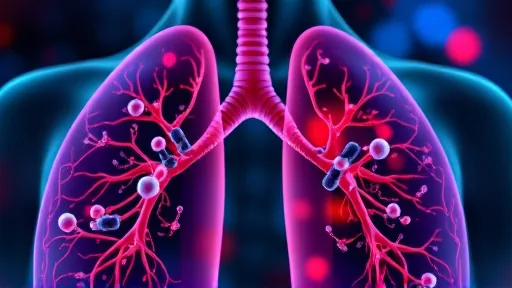
This finding operates at a specific scale: the level of individual nerve cells within the lung tissue. The research suggests these nerve cells could be critical intermediaries. The male hormones appear to act on these neurons, potentially raising the threshold for triggering an asthma attack. It is a local control system, a fine-tuning mechanism embedded in the organ itself, rather than a system-wide hormonal effect.
The insight becomes more significant when considering the principle of scaling. If the same mechanism operates in humans, it could explain why asthma prevalence and severity differ between sexes across different life stages. The local nature of the effect suggests that therapies targeting these specific nerve cells could potentially offer a more precise approach than systemic hormone treatments, which carry broad side effects. The study opens a path toward understanding how a biological signal can be localized to a single tissue type. Parallel work at the University of Melbourne’s Lung Health Research Centre is investigating how neuroimmune interactions in the airways respond to hormonal signals, a complementary line of inquiry that reinforces the growing consensus that local nerve regulation plays a central role in respiratory inflammation.
The research team, led by Tu, X., Chen, H., Ma, X., Donovan, C., and Yang, J., published their findings in Science Immunology. Their work identifies a previously unknown role for male hormones in the respiratory system. The study does not merely confirm that hormones affect asthma; it pinpoints the exact cellular machinery involved, offering a concrete target for future investigation. The team’s next step, as outlined in their paper, is to determine whether the same receptor pathway exists in human lung tissue, a question that would bridge the gap between mouse models and clinical application.
The study closes on a precise observation rather than a broad claim. The heightened response to the inflammatory agent occurred specifically when either the testes were removed or the lung receptors were disabled. This symmetry of results strengthens the conclusion that the protective effect is mediated locally. The nerve cells in the lungs, under the influence of male hormones, could act as a brake on inflammation. Without that brake, the inflammatory response accelerates. That is the finding, and it stands on its own as a clear, verifiable step forward in understanding the biology of asthma. Future research will need to confirm whether these mechanisms translate to human patients, and whether targeting this pathway could yield new therapeutic strategies for asthma management.