Two Jupiter-sized planets lighter than shaving foam
When a planet is less dense than shaving foam
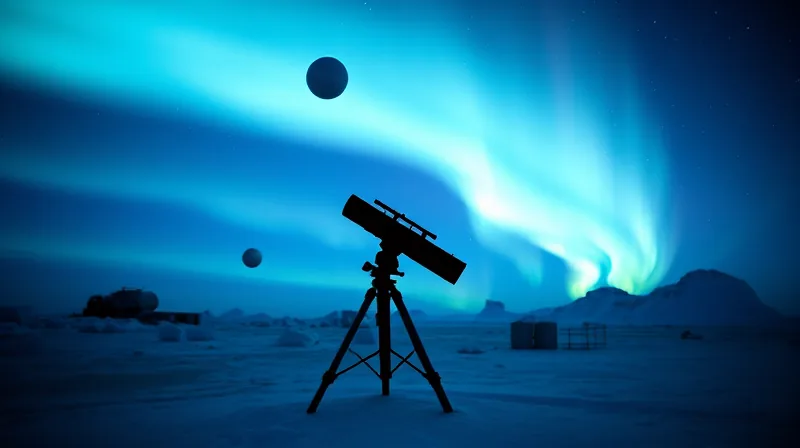
The Antarctic Search for Transiting ExoPlanets telescope sits at Concordia Station, one of the most isolated places on Earth. The Antarctic Search for Transiting ExoPlanets telescope sits at Concordia Station, one of the most isolated places on Earth.
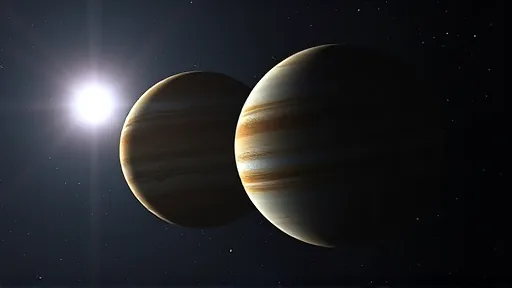
The two planets, named TOI-791 b and TOI-791 c, orbit a yellow-white dwarf star about 1,100 light-years from Earth. That star is slightly brighter and hotter than our own Sun. Both planets are gas giants roughly the size of Jupiter. But here the similarity ends. Jupiter has a density 28 times greater than TOI-791 c and 35 times greater than TOI-791 b, according to a paper published in the Monthly Notices of the Royal Astronomical Society
Lead author Dr George Dransfield, an astrophysicist at the University of Oxford, compares their density to shaving foam “At least shaving foam is white, not pink, and doesn’t taste nice,” she told Metro. “So people aren’t just thinking, ‘oh, tasty planets’.” The comparison is not a joke. It is a precise description of how little matter is packed into each planet’s volume.
Only 37 of the 6,300 exoplanets discovered so far are classified as super-puffs. These two are among the lightest ever found. Their existence challenges everything astronomers thought they knew about how planets form and survive.
How astronomers measured the marshmallow worlds
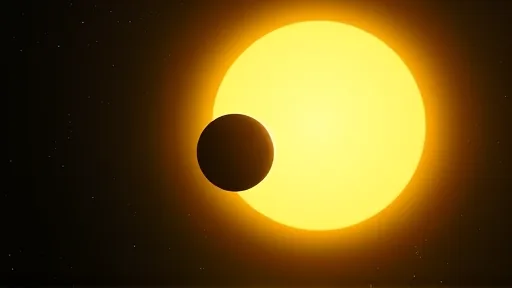
Dr Dransfield and her team used a technique called transit spectroscopy. When an exoplanet passes in front of its host star, its atmosphere is backlit by starlight. Different gases in the atmosphere absorb different wavelengths of light, leaving a chemical fingerprint. By analyzing these squiggly lines on their screens, scientists can guess what the planet is made of.
The researchers also measured how the two planets tug on each other gravitationally. This gravitational dance affects how long each transit takes. From those timing differences, they calculated the planets’ densities. The results were startling. If Earth were as fluffy as TOI-791 b or TOI-791 c, Dr Dransfield said, the blue marble would be “devoid of all life” — even the more exotic kind. “There would be no solid surface to speak of, and these planets are less dense than water, so they would float in almost any liquid.”
The atmospheres of these super-puff planets likely contain mostly hydrogen and helium, the lightest elements in the universe. These gases are normally found in the outer layers of gas giants like Jupiter and Saturn. But on TOI-791 b and TOI-791 c, they seem to make up almost the entire planet, with very little solid core beneath.
“Somehow these planets got away with not having a core 10 times the mass of Earth because there’s so much gas there,” Dr Dransfield said. “They must have had a significantly smaller core.” She added that they might have formed in a region of the protoplanetary disk where there is much more gas available than solid material, allowing them to start grabbing gas early.
A rare orbital dance and the next steps
These two planets have a peculiar orbital relationship called a mean-motion resonance. For every five orbits completed by the inner planet, the outer planet completes roughly three. This kind of resonance is rare among known exoplanets and even rarer among super-puffs. Only four other systems contain multiple super-puffs in the same system, Dr Dransfield noted. “It’s a really rare configuration.”
TOI-791 b was first identified in 2019 by the Planet Hunters citizen science group using NASA data. TOI-791 c was spotted in 2023 by the same group. Citizen scientists volunteer their time to comb through telescope data looking for patterns that computers might miss. They found the telltale dips in starlight that indicated planets were passing in front of the star.
The next step is further investigation into how super-puffs form. Astronomers want to understand why some planets end up so fluffy while others become dense and rocky. The answer might lie in the environment where they form — the amount of gas available, the temperature, and the distance from the parent star. Dr Dransfield and her team plan to use more powerful telescopes to study the atmospheres of these planets in greater detail.
Sources
1. DOI: 10.1038/d41586-026-02114-2
3. NASA