
Time-Reversed Universe Novel Explores Grief and Scientific Wonder
The premise lands like a gift. An identical universe exists alongside ours, except time flows in the opposite direction. Cross over, and you might watch history unwind — presidents appearing in reverse order, the dead waking into life, the elderly shrinking back toward infancy. It sounds like pure physics poetry, the kind of idea that could fuel a decade of late-night arguments.
Chloe Benjamin’s novel “Under Story” takes that concept and wraps it around something far more intimate. The story follows Laurel Salter, a fungi expert shattered by personal loss, who retreats to an Antarctic research station. She takes work as a kitchen steward, trading her professional life for dish soap and quiet company. The isolation suits her grief.
Then the anomaly appears. A strange light display flickers on the horizon, distant and unexplained. Laurel becomes fascinated. The other station workers notice it too, but nobody quite knows what to make of it. Gradually, the novel reveals what the reader suspects: this light could be a doorway. A crossing point into the anti-universe.
The tension sharpens when Eli Rosen arrives. He is Laurel’s ex-husband, a physicist who has come to investigate the anomaly himself. Their reunion is strained — they are barely on speaking terms. But the anomaly pulls them both, and eventually they cross over together, for reasons the novel keeps close to its chest until the moment arrives.
Benjamin has built a reputation for ambitious, human-centered fiction, and this book pushes further It is a major literary release, published by Tinder Press in the UK and G.P. Putnam’s Sons in the US. The scope is enormous, the emotional stakes deeply personal, and the science — physics and mycology both — gets serious attention on the page.
The Problem With Eating Breakfast in Reverse
Here is where the novel’s central logic starts to strain. In the anti-universe, some things run backward exactly as promised. Political history reverses itself — Donald Trump precedes Barack Obama in the presidential timeline. People are born old, emerging from graves, and grow physically stronger as they age backward. Near the end of their lives, they shrink into tiny forms and slip back into their mothers’ wombs.
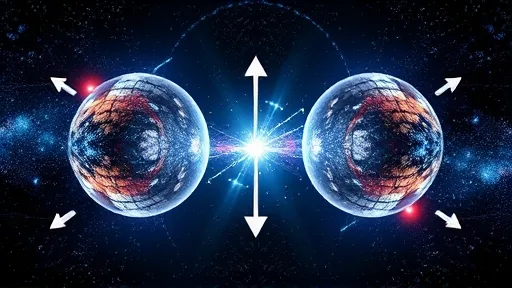
But other things stubbornly run forward. Characters drive to destinations in the normal order, arriving after they depart. They eat meals and digest them afterward, just as we do. A pivotal sex scene unfolds conventionally, with the man ejaculating at the end rather than the beginning. Conversations proceed normally — questions get asked, then answered, then the talk concludes. Holidays start with departure and end with homecoming.
The inconsistency is jarring. If time runs backward in this universe, why do some processes reverse while others hold steady? The novel never quite explains the rule that separates the two categories. Benjamin is free to invent whatever physics she likes, but the selective reversal creates a puzzle that distracts from the story.
The worry over the physics can end up dampening the experience. Once the central logic starts to wobble, it is hard to stop checking it against every scene. The question lingers: what decides which phenomena reverse and which proceed forward? The novel does not offer a satisfying answer, and the uncertainty follows the reader through the rest of the journey.
The book is long, and the first half spends considerable time on side plots and secondary characters. A languorous pace suits some readers fine, especially when the writing is as warm and capable as Benjamin’s. . But the length amplifies the logical questions, giving them room to grow from minor doubts into persistent nagging.
What a Fungi Expert Notices About Time
Laurel’s expertise in fungi is not incidental decoration. Mycology runs through the novel as a serious thread, and Benjamin gives it real attention. Fungi operate on timescales that defy human intuition — networks that persist for millennia, organisms that blur the line between individual and collective. There is something fitting about a fungi expert confronting a universe where time behaves strangely.
Fungi challenge our assumptions about how life works. They communicate through underground networks, share resources between trees, and reproduce in ways that seem alien to our mammalian expectations. A mind trained to understand such organisms might be uniquely prepared to accept a reality where causality itself runs backward. Laurel’s professional background becomes a lens for the reader, a way of seeing the anti-universe not as nonsense but as another strange system with its own internal rules.
The physics gets similar treatment. Eli’s specialty is theoretical physics, and the novel uses his perspective to ground the anomaly in something resembling scientific plausibility. The explanations may not survive close scrutiny — the selective reversal problem remains — but the effort lends the story a texture of rigor. The science serves to build a world that feels, at least initially, like it could hold together.

There is real beauty in what Benjamin weaves. The story moves between present-day Antarctica and Laurel’s painful past, and the back-and-forth structure mirrors the novel’s central concern with time and its reversals. The heartbreak that sent Laurel to the ice is revealed gradually, and the revelation lands with genuine emotional force.
The Other Valley Shows a Way Through
The comparison with Scott Alexander Howard’s “The Other Valley” is instructive. That novel also builds its plot on a time-bending premise — valleys on either side of a central valley exist either ahead of or behind it in time. The physics makes little literal sense on examination. But Howard never tries to explain it. The writer simply pulls the reader along with such confidence that the contradictions fade into the background.
Benjamin takes the opposite approach. She fills her novel with detailed science, inviting the reader to treat the premise as something that could hold up under scrutiny. The invitation backfires. When the details do not cohere, the reader feels let down — not because the science is wrong, but because the book raised expectations it could not meet.
Reviewer Emily H. Wilson notes that she kept reading to the end and found much to enjoy along the way. [1] Wilson is herself a novelist — author of the Sumerians series including “Inanna,” “Gilgamesh,” and “Ninshubar” — and a former editor at New Scientist. [1] Her perspective carries weight: she knows both how fiction works and how science works, and she found herself caught between the two. .
The lesson may be that ambitious premises demand a choice: either commit fully to the logic and make it cohere, or sweep the reader along so forcefully that logic stops mattering. Benjamin commits partway, and the result is a book that feels almost scientifically robust — almost, but not quite. For readers who can set the physics aside, “Under Story” offers a human, warm, and emotionally ambitious journey through grief, connection, and the strange possibility of a world running the other way.
Sources
2. Tinder Press