CRISPR gene therapy now approved for toddlers with sickle cell
A Scalpel That Cuts Disease at Its Genetic Root
For decades, a child diagnosed with sickle cell disease faced a slow accumulation of damage that no drug could reverse. The condition begins not at adolescence, but in infancy, when fetal hemoglobin levels naturally decline and the body shifts to producing adult hemoglobin carrying a single-letter mutation. That mutation — a substitution of valine for glutamic acid at position six of the beta-chain — causes hemoglobin to polymerize under low-oxygen conditions into rigid fibers, deforming red blood cells into crescent shapes that block blood vessels and trigger the disease’s characteristic crises. By the first birthday, the spleen is already under assault, leaving young children increasingly vulnerable to overwhelming bacterial infections — a leading cause of death in young children with SCD in low-resource settings. The kidneys show measurable dysfunction in the first two years of life, initially presenting as hyperfiltration and later progressing to proteinuria and, in young adults, frank renal failure. The brain is at risk of stroke from early childhood.
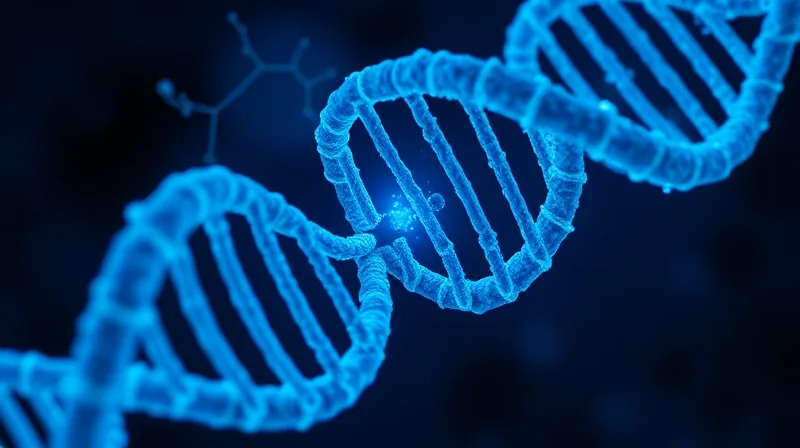
The CRISPR-Cas9 system changes this timeline entirely. Unlike conventional treatments that manage symptoms, this gene-editing tool targets the molecular switch that controls whether the body produces fetal hemoglobin (HbF) or adult hemoglobin. During fetal development, the body produces HbF, a form of hemoglobin well-suited to extracting oxygen from maternal blood. After birth, a transcription factor called BCL11A progressively silences the genes that encode HbF’s gamma-globin chains, redirecting red blood cells toward adult hemoglobin production instead. In a person without sickle cell disease, this switch is unremarkable. In a person with SCD, however, the resulting adult hemoglobin carries the disease-causing mutation — and the switch essentially hands the body a blueprint for a lifetime of crises.
Casgevy, developed by Vertex Pharmaceuticals in partnership with CRISPR Therapeutics, remains the first and only CRISPR-based medicine to receive regulatory authorization for human use anywhere in the world. [1] The treatment is an ex vivo cell therapy — meaning the editing happens outside the patient’s body rather than inside it. The therapy targets the BCL11A switch, reactivating fetal hemoglobin production and bypassing the defective adult hemoglobin entirely. On July 1, 2026, the U.S. Food and Drug Administration cleared Casgevy for use in children as young as two years old — an expansion that places a potentially curative treatment within reach of approximately 5,500 additional American children before years of accumulated organ damage can narrow their options. For the first time, a toddler diagnosed with sickle cell disease no longer has to wait until adolescence for access to a therapy capable of preventing the pain crises, strokes, kidney failure, and shortened life expectancy that define the condition’s natural course.
Why the Age Threshold Dropped from Twelve to Two
The biological rationale for the pediatric expansion is grounded in the disease’s natural history. Sickle cell disease does not wait for a child to grow up. Damage begins almost from the moment fetal hemoglobin levels start declining in early infancy. By the time an adolescent reaches the previous age threshold for Casgevy, years of accumulating vascular and organ injury may have permanently narrowed what any intervention can recover. The supplemental FDA approval extends Casgevy’s existing indication — previously limited to patients aged 12 and older — to any patient aged two and above with either sickle cell disease (SCD) with recurrent vaso-occlusive crises (VOCs), or transfusion-dependent beta-thalassemia (TDT).
Dr. Megha Kaushal, acting deputy director of the Office of Therapeutic Products at the FDA’s Center for Biologics Evaluation and Research (CBER) and a pediatric hematologist, articulated the reasoning. “These disorders carry a heavy burden for children and their families, affecting growth, development, and long-term health in profound ways,” she said in the FDA press announcement of July 1, 2026. “Grounded in the scientific evidence that earlier treatment reduces the risk of lasting end-organ damage, making this therapy available to younger patients opens a critical window for intervention.”
The expansion places the therapy within reach of approximately 5,500 additional American children who would previously have had to wait until age twelve, by which point organ damage from sickle cell disease has often become irreversible. By intervening before the body has accumulated years of damage from sickled cells blocking blood vessels, the treatment aims to prevent the cascade of complications that define the disease’s natural course.
A Parallel Frontier: Cutting HIV Out of Its Hiding Places
The same molecular scissors that rewrite hemoglobin production are now being aimed at a different viral enemy. A new study from the University of Amsterdam AMC has unveiled a potential cure for HIV that uses CRISPR-Cas gene editing technology to cut out HIV DNA from infected cells. One of the significant challenges in HIV treatment is the virus’s ability to integrate its genome into the host’s DNA, making it extremely difficult to eliminate — but the CRISPR-Cas tool provides a new means to isolate and target HIV DNA.
Associate professor Elena Herrera Carrillo from the University of Amsterdam AMC led the research. “We have developed an efficient combinatorial CRISPR-attack on the HIV virus in various cells and the locations where it can be hidden in reservoirs, and demonstrated that therapeutics can be specifically delivered to the cells of interest,” she said. The study used CRISPR-Cas and two guide RNAs against “conserved” HIV sequences — parts of the virus genome that stay the same across all known HIV strains. The researchers infected T cells and showed that a single guide RNA could completely inactivate HIV, while two guide RNAs could cut out the viral DNA entirely.
The team acknowledges a long road ahead before their cure will be available to patients. “We hope to achieve the right balance between efficacy and safety of this CURE strategy,” said Dr. Carrillo. “Only then can we consider clinical trials of ‘cure’ in humans to disable the HIV reservoir.” Currently, HIV can be kept in check with anti-retroviral medication, but no one has actually been cured — although three patients receiving stem cell transplants for blood cancer were subsequently declared free of the disease when their HIV became undetectable. The CRISPR approach aims to achieve what those exceptional cases demonstrated: complete elimination of the virus from the body. “Our aim is to develop a robust and safe combinatorial CRISPR-Cas regimen, striving for an inclusive ‘HIV cure for all’ that can inactivate diverse HIV strains across various cellular contexts,” Dr. Carrillo added. The findings are to be presented ahead of this year’s European Congress of Clinical Microbiology and Infectious Diseases.