The Trial Nobody Ran for Decades
The idea that a kitchen appliance could rival an inhaler sounds like a claim from a late-night infomercial, not a peer-reviewed finding. Yet the logic behind it has been sitting in plain sight for years. Burning gas creates nitrogen dioxide, and nitrogen dioxide irritates airways. The chain is short and unglamorous. What was missing was not the chemistry but the experiment: no one had taken a household’s stove away and asked, months later, whether the people in that household could breathe more easily.
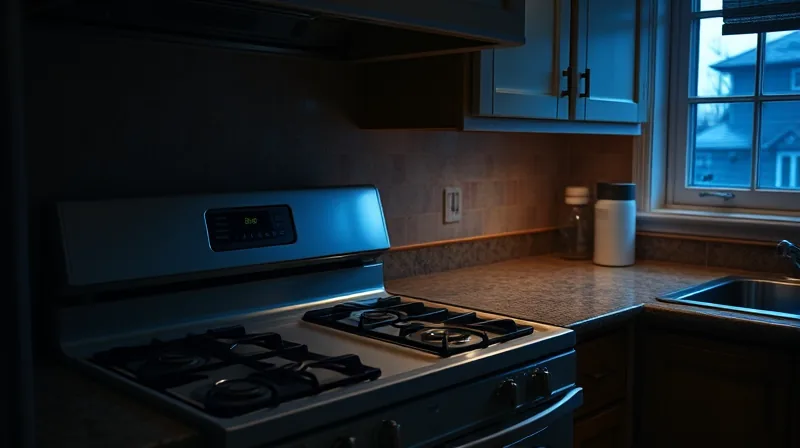
That is the gap a Cleveland project set out to close. Households with at least one person living with asthma received electric stoves, paid for through a research-backed replacement program. The project was led by Ashwini Sehgal, a clinician who studies community health at Case Western Reserve University in Cleveland. The setup was not a laboratory. It was a set of ordinary kitchens, and that is precisely what makes the result worth reading.
The scale of the reported benefit caught the researchers off guard. “We were really surprised at how large the benefit was,” Sehgal says. [1] Eighty-five participants with poorly controlled asthma answered a questionnaire a few months after the switch. Their reported symptom improvement was roughly two to three times as large as what is typical with medication. Participants also reported fewer emergency room or hospital visits, and they said they missed work or school less often. A stove change, in other words, was behaving like a treatment — and a strong one.
The worst-off patients gained the most. Two accounts from the study put a human face on that pattern. A 38-year-old woman told the team that cooking on her gas stove made her feel as though her throat were closing; the sensation vanished after the switch. A 36-year-old man who had struggled to walk uphill or play with his kids described how much better he felt as “magical.”
Why a Kitchen Can Outpollute the Street Outside
The mechanism is measurable, and the numbers are stark. While someone heats, steams or fries on a gas stovetop, nearby nitrogen dioxide levels can skyrocket into the hundreds of parts per billion. The EPA’s one-hour outdoor air quality standard is 100 parts per billion. A single burner, indoors, can push concentrations past a threshold set for the air outside. The comparison lands hard: the room where dinner is made can briefly hold far more nitrogen dioxide than the outdoor air standard allows.
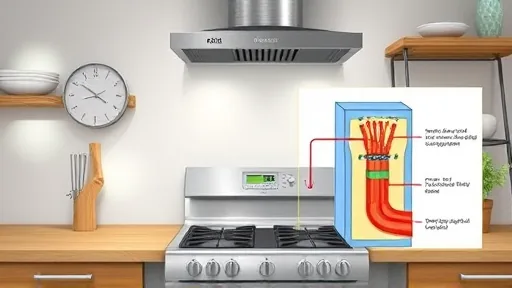
That exposure has documented consequences. Nitrogen dioxide is linked to increased asthma symptoms. Research in children has found the pollutant can boost wheezing, coughing and asthma attacks. The stove is not a background appliance, then; it is an active source sitting at the center of family life, often in the smallest room of the house, often with a child standing beside it.
The project was initially funded to follow 1,200 households for 12 months. The Trump administration terminated the EPA’s Community Change Grants early, which drastically reduced the number of study participants. What survived was a fraction of the intended cohort. Even so, the symptom improvement among the 85 people who answered held up as significant.
Practical advice fills the space where a new stove is not affordable. Laura Paulin, a pulmonologist at Dartmouth Health, recommends kitchen ventilation: an exhaust hood that vents to the outside, or simply an open window. A HEPA filter with a carbon insert can trap nitrogen dioxide and lower airborne concentrations. Paulin also advises keeping children with asthma out of the kitchen while the stove is on. “It is a daunting task to replace a stove, but it doesn’t have to be an all-or-nothing thing,” Paulin says. [1] Sehgal suggests a low-cost trial run: an electric hot plate and a toaster oven, with the gas stove kept off, to see whether symptoms ease.
The Measurement Still Missing
The finding opens a question the current data cannot answer. For researchers, the next step would be to measure lung function before and after a stove switch, says Carrie Breton, an environmental epidemiologist at WashU Bursky School of Public Health in St. Louis. Self-reported symptoms tell us how people feel; a lung function test would tell us what their airways are doing.
Accounting for more variables is the second gap. It would help to track factors such as seasonal effects, Breton says. “Many things can trigger people’s asthma,” Paulin notes. A stove swap in one season may land differently than the same swap in another. Sehgal proposes the design that would settle it: a randomized trial in which some people receive the electric stove right away while others wait six months, creating a comparison group.
If the link holds — fewer emergency room trips, fewer hospitalizations, better symptom control than medication alone provides — the financial question follows. “Health insurance companies should consider paying for or subsidizing” stove swaps, Sehgal says. [1] Breton frames the same arithmetic plainly: “If it truly works this well, it’s got a bigger bang for your buck.” The open question is whether that evidence will be gathered in time to change what insurers and health systems are willing to pay for.