Why Forgetting Is a Feature Not a Flaw
The Camera That Never Existed
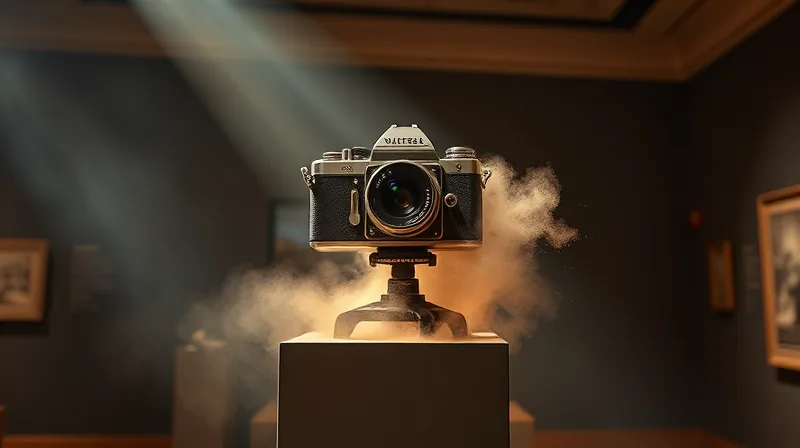
A camera that records everything, stores every frame perfectly, and can replay any moment on demand is a common fantasy. Fiction loves this idea. Fiction loves this idea. Sherlock Holmes retreats into his mind palace to retrieve crime-solving details. In the medical drama The Pitt, a student named Joy Kwon remembers patient room numbers, symptoms, and treatments when the hospital’s electronic records fail.
None of this works like the human brain. Gabrielle Principe, a developmental psychologist at the College of Charleston in South Carolina, confronts this misconception head-on. She asks her students to draw a penny from memory. Not one of them can do it correctly. The exercise reveals something fundamental: our minds do not capture reality like a video recorder.
Some rare individuals, mostly children, claim to possess what researchers call eidetic imagery. This is the ability to conjure up mental images of objects even after they have been removed from sight. But these images are not perfect. They remain temporary. The idea of a truly photographic memory, one that preserves every detail flawlessly, belongs to fiction.
The persistence of this myth matters because it shapes how we judge our own minds. Forgetting an appointment or a name might make a person feel defective. Yet the people who claim perfect recall are not demonstrating a superior brain. They are describing something that does not exist in nature.

The Architecture of Forgetting
Simona Ghetti, a developmental psychologist at the University of California, Davis, explains why total recall would be a disaster. Human brains cannot retain everything. If the brain retained everything, it would be a very cluttered place. The mind would not know which memories to prioritize, and it would struggle to recall what matters over what does not.
Memory retrieval activates collections of nerve cells across multiple brain regions. The hippocampi, nestled near each ear, are among the regions involved. The prefrontal cortex, toward the front of the brain, is also involved. The cerebellum, at the back, is another region involved. Retrieving a memory is not like pulling up a perfect file. The experience is reconstructed from fragments.
This reconstruction is prone to error. Principe describes what happens when the process goes wrong. Sometimes the mind grabs what someone told the person. It grabs a dream. It grabs something the person has been imagining. These pieces begin to feel real. Even people with highly superior autobiographical memory, a rare condition where individuals recall their own experiences in extreme detail, can make mistakes.
The ability to retrieve memories of experiences typically begins around age three. Yet most early memories are ultimately lost. Ghetti notes that there is always the occasional person who thinks they remember going through the birth canal. These claims fall apart under careful questioning. The brain does not preserve our earliest moments as neatly as we might hope.
Why Blurred Edges Are Good for Us

The memories a person keeps are closely tied to emotions. Good memories boost mood. Regularly recalling bad memories can worsen conditions like depression or anxiety. Principe points out that people forget negative things quicker than they forget positive things. This asymmetry is good emotionally.
A sense of self also shapes what a person retains. Principe explains that people tend to forget experiences that do not line up with how they see themselves If a person thinks of themselves as kind and optimistic, and there were times when they were not, they tend to forget those moments. Memory works to protect identity.
Even the memories a person keeps are not perfectly preserved photographs. They can be faulty or flat-out false. Most of the time, Ghetti says, false memories are pretty innocuous Perhaps someone incorrectly remembers telling their partner a funny story, when in reality they told their mother. Or the event happened only in their imagination.
When false memories involve a crime, the stakes become serious. Mistakes can mean the difference between sending someone to prison or not. This is where the fantasy of photographic memory seems most tempting. Yet it is the forgetting that makes room for the memories a person does have. The edges may blur with time, but Principe finds joy in this imperfection. She loves that she can still think back on her kids and conjure them up as babies when she wants to. Nostalgia works precisely because memory is not a perfect recording. It is a living, breathing process that shapes who a person is. Forgetting is not a failure of the mind—it is the mechanism that makes meaning possible.