Suns Mass Loss Triggers Early Solar System Instability
When Stellar Weight Loss Becomes a Wrecking Ball
The Sun is losing weight. Not dramatically, not visibly to the naked eye, but steadily — and this slow reduction in mass may have consequences more violent than previously calculated. A star that sheds mass weakens its gravitational grip. Planets that were once held in tight, predictable orbits begin to drift. The question is not whether this happens, but how quickly the architecture of our planetary neighborhood comes apart.
A new modelling effort has run hundreds of computer simulations of the outer planets under realistic conditions of solar mass loss. [1] The results describe a solar system that does not gently fade but instead undergoes what researchers call terminal instability — a cascade of orbital disruptions that ends with the giant planets scattered or destroyed. The work was led by Konstantin Batygin at the California Institute of Technology and published on 21 September 2026 in The Astrophysical Journal Letters. [1] The paper carries the title “Terminal Instability of the Solar System Triggered by Stochastic Solar Mass Loss.” The numbers are stark. About 40 percent of the simulations showed disruption or violent scattering before the Sun became a white dwarf — the period when it swells and begins to pulse material outward in random bursts. [1] Roughly 90 percent of the simulations broke down within three billion years after the Sun becomes a white dwarf. The outer solar system’s dynamical lifetime collapses to about a gigayear after white dwarf formation. That is roughly one billion times sooner than earlier estimates suggested.
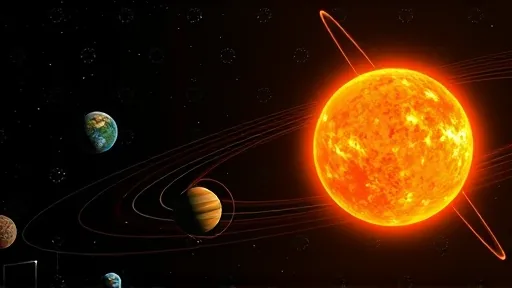
What makes this finding different from earlier work is the mechanism. Previous studies treated the Sun’s mass loss as a smooth, gradual process. The new simulations incorporate stochastic mass loss — random, uneven bursts of material that jostle planetary orbits like a hand shaking a table with marbles on it. The marbles do not all roll off at once. Some stay in place for a while. But the shaking never stops, and eventually the arrangement fails. This is not a prediction of a single catastrophic moment. It is a description of a process that unfolds over billions of years, with a wide window of possible outcomes.
What the Model Leaves Out
The finding comes with a boundary that determines how far it reaches. The simulations focus on the outer planets — Jupiter, Saturn, Uranus and Neptune. Earth is not part of this calculation. Earth’s fate is expected to arrive much earlier, when the Sun becomes a red giant and its outer layers expand toward our planet’s orbit. The model addresses what happens after Earth is already gone.
There is also the question of what “disruption” means in practice. The simulations show orbital destabilization — planets pushed out of their current paths, some possibly ejected from the solar system entirely, others colliding with one another or with the Sun. But the exact sequence of events depends on the specific pattern of mass loss, which is inherently random. The window is broad. The outcome is not a single scenario but a range of possible endings.
Mercury, Venus, Earth and Mars are not included in the outer-planet simulations. Their trajectories are governed by different dynamics, and their end is expected to come sooner.