
Complex sugar found in Milky Way molecular cloud
A Sugar Molecule Beyond Our Solar System
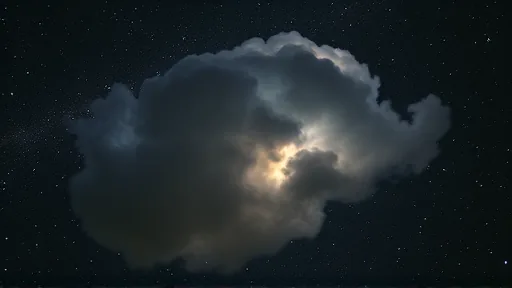
For decades, astronomers have puzzled over how life’s essential building blocks arrived on Earth. The question of how complex organic molecules could survive the violent formation of a star system remained unresolved. A key piece of this puzzle has now emerged from an unlikely place: a cold cloud of gas and dust near the center of our galaxy.
A team led by astronomer Izaskun Jiménez-Serra detected a four-carbon sugar molecule called erythrulose in this molecular cloud. This is the most complex sugar ever found outside our Solar System. Before this discovery, scientists had identified simpler sugars in space, but none with this level of complexity. The finding suggests that the raw ingredients for life may be more common in the universe than previously thought.
The team proposes a pathway for how this extraterrestrial sugar could reach a young planet As a star system forms, passing asteroids and comets could pick up molecules like erythrulose from the surrounding cloud. These same bodies could then deliver such sugars to a developing world during periods of heavy bombardment.
Why This Measurement Works and Others Failed
The detection of erythrulose required a specific approach that previous attempts could not achieve. Astronomers used radio telescopes to identify the molecule’s unique spectral signature in the interstellar medium. This method works because each molecule absorbs and emits radiation at characteristic frequencies, like a fingerprint in the radio spectrum.
Earlier searches for complex sugars in space focused on different wavelengths or less sensitive instruments. The success of this measurement came from targeting the exact frequencies where erythrulose’s molecular vibrations produce detectable signals. The team’s observations at the center of the Milky Way provided a dense, rich environment where such molecules could form and survive.
The significance of this detection extends beyond finding one molecule. It demonstrates that the chemical complexity required for life’s origins can exist in the raw material from which planetary systems form. Previous models suggested that such large organic molecules would be destroyed by radiation in space, but the new evidence challenges that assumption.
What This Discovery Reveals About Life’s Origins
The discovery tells us about the chemical pathways that lead to life. The presence of erythrulose in molecular clouds provides a direct link between interstellar chemistry and the building blocks of early life on Earth. Scientists have long debated whether the sugars needed for early versions of DNA and RNA could have formed in space or only on planetary surfaces.
The finding supports the idea that the feedstock for life’s genetic material could have been delivered from space, rather than requiring synthesis on Earth. During the period of heavy asteroid bombardment around four billion years ago, such extraterrestrial sugars could have been deposited on our planet’s surface. This reshapes our understanding of how common life’s chemical prerequisites might be across the galaxy.
The research also opens new questions about which other complex molecules might exist in these clouds. If erythrulose can survive and be detected, other sugars and organic compounds likely await discovery. Each new finding helps scientists map the chemical inventory of the universe and evaluate how many worlds could potentially harbor the ingredients for life. The next step, Jiménez-Serra notes, is to search for even larger organic molecules in similar molecular clouds.