The Question Everyone Asks Is the Wrong One
Ask a climate scientist what stands between the world and better projections, and the answer usually involves computing power. Faster machines, bigger clusters, longer runs. The assumption is that the bottleneck is brute force — that trustworthy climate prediction is a matter of throwing more processors at the problem until the future comes into focus.
New research from MIT points somewhere else entirely. The constraint, it turns out, is what the models are fed. And the fix does not involve more data. It involves less data, chosen by an algorithm rather than by a human.
The finding lands in a field where a specific human judgment has long been treated as non-negotiable: the belief that a climate emulator must learn from scenarios that resemble plausible futures. That belief is now being replaced by a machine that picks its own curriculum, and it does the job better than the people who designed the old one.
What an Emulator Actually Does, and Why Training Data Mattered
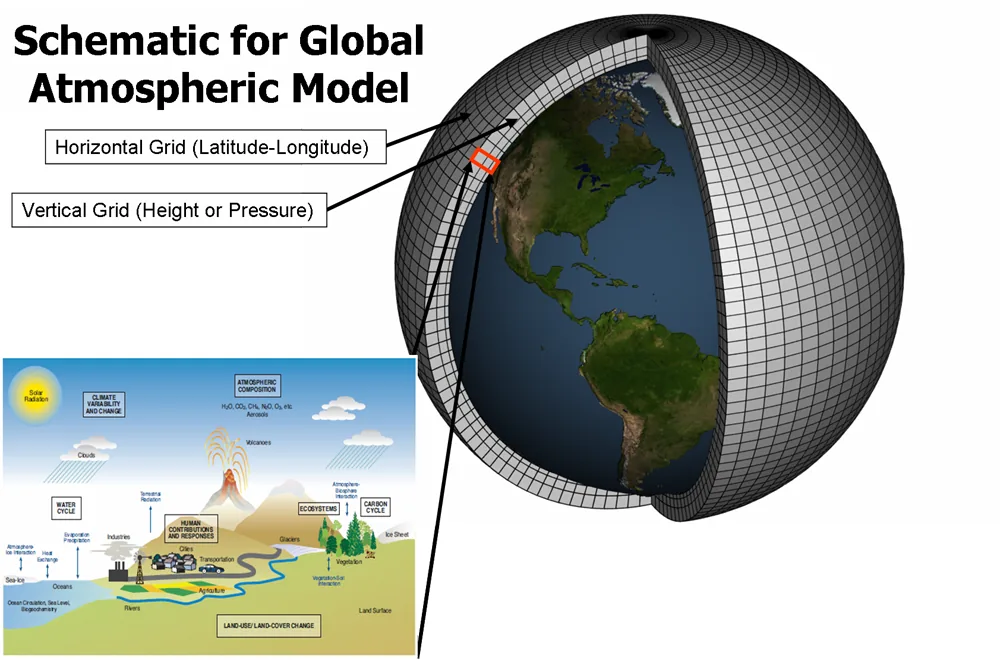
Climate scientists rely on earth system models — vast, physics-based simulations that capture the atmosphere, oceans, ice and land in extreme detail. These models are powerful and slow. A single projection of one future scenario can take months on a cluster of supercomputers.
Climate emulators are the shortcut. They are AI surrogate models trained to mimic the behavior of a full earth system model, and they run in seconds. That speed lets researchers test thousands of scenarios, probe regional effects, and stress-test policy choices that would be impossible to explore with the full model.
But the shortcut has always depended on the long road. Training an emulator means running a full earth system model several times to generate data, typically across six to eight future scenarios drawn from realistic emissions trajectories. Those datasets are expensive, slow to produce, and — as the MIT team discovered — quietly limiting.
The Ceiling Nobody Was Looking For
In work published in the Proceedings of the National Academy of Sciences, the researchers identified the problem at its root. [1] Existing training scenarios share a structural similarity: emissions follow smooth, plausible trajectories. That narrowness, the team found, places a ceiling on how well an emulator can generalize. “We show that the low structural diversity in existing scenarios commonly used to generate training data places a ceiling on predictive skill,” the paper states. [1] The emulators learn the shape of realistic futures very well and then fail when asked about anything that departs from that shape.
The consequence is a tool that looks reliable in the situations it was trained on and unreliable everywhere else — which is precisely the wrong profile for a device meant to inform decisions about a future nobody has seen.
An Algorithm That Writes Its Own Textbook
The MIT group, led by senior author Noelle Selin with Christopher Womack as lead author, a recent PhD graduate now a postdoc at ETH Zurich, took a different route. [2] Rather than selecting training scenarios from the space of plausible futures, they built an algorithm that generates scenarios designed for one purpose: maximizing the emulator’s skill.
The method begins with a fast, simple climate model. The algorithm measures how much the emulator’s error changes when the training data are perturbed — a sensitivity calculation made possible by a differentiable simple climate model. It then iteratively rewrites the training data, pushing emissions sharply up in one year or pulling methane down in another, until the emulator’s error falls below a threshold.
The resulting scenarios look nothing like a forecast. They contain rapid oscillations and abrupt shifts. “Our algorithm might generate some weird scenarios which look nothing like a realistic future, but we don’t care so much if the training scenarios are realistic,” Womack explains. [2] “We are just trying to make the best possible dataset to train an emulator.”
One Run Instead of Eight
The practical arithmetic is striking. Where the conventional approach requires running a full earth system model six to eight times to build a training set, the new technique needs that expensive run only once. Everything else is generated by the simple model and refined by the algorithm.
The payoff is not just speed. In the published results, an emulator trained on a single optimized scenario outperformed one trained on six standard Scenario Model Intercomparison Project pathways — the benchmark set the climate community has relied on. Higher skill, smaller dataset, less compute.
The emulator also learned to separate the fingerprints of different climate forcing agents, distinguishing greenhouse gases from aerosols, without ever being trained on single-forcing runs. The richness of the synthetic data, not its realism, taught it that.
The Judgment That Moved
Here is where a human role quietly changes hands. Deciding which scenarios an emulator should learn from has always been a matter of scientific judgment: which futures are plausible, which are policy-relevant, which deserve scarce supercomputer time. That judgment shaped the training set, and the training set shaped what the emulator could know.
The algorithm does not consult that judgment. It does not ask whether a scenario could happen. It asks only whether a scenario would teach the emulator something. The researchers then validated the approach at a second level, using scenarios optimized with the simple climate model to drive an intermediate-complexity climate model. The emulator trained on that output still beat one trained on standard pathways. “We are just trying to make the best possible dataset to train an emulator,” Womack says — a sentence that describes a decision once made by committees of scientists and now made by an optimizer. [2].
Where the Old Models Broke
The clearest demonstration came from a test the conventional emulators failed. The researchers asked whether an emulator could capture the effects of a local pollutant control policy — one that reduces a single pollutant while other emissions keep rising.
Traditional emulators, trained on smooth, coordinated scenarios, could not adapt. The optimized emulator could. The difference is not a matter of degree. It is the difference between a tool that interpolates within known territory and one that extends beyond it. “In the future, we are definitely going to see climates and scenarios we haven’t seen before,” says Noelle Selin, a professor in MIT’s Institute for Data, Systems, and Society and the Department of Earth, Atmospheric and Planetary Sciences, and director of the Center for Sustainability Science and Strategy. [2] “If we can simulate these different scenarios more robustly, we can provide more reliable information to the stakeholders who need it.”
The Months That Made the Tools Obsolete
Selin names a second cost that the new technique attacks directly. Training an emulator, she notes, can take months or even years. [2]. By the time a finished emulator reaches the people who need it, the science and the policy landscape have moved on. “Because the process of training an emulator can take months or even years, the emulators we have are usually out-of-date,” Selin says. [2]. “By cutting down that production time, I think this technique will be a game-changer in terms of getting updated tools into the hands of researchers and practitioners.” The bottleneck was never only computational. It was organizational: a long production cycle that guaranteed a lag between what science knew and what decision-makers could use.
What the Machine Cannot Decide
The technique shifts a specific task — designing training data — from human hands to an algorithm. It does not shift the questions that surround that task. Someone still has to decide which policies to test, which regions to protect, which pollutants matter. The emulator answers faster; it does not choose what to ask.
The researchers are explicit about the next steps. They want to test the method with an emissions scenario generated by a full earth system model rather than the simpler models used so far. They want to apply it to other kinds of climate models. They want to see whether the same principle — optimizing the training set rather than the architecture — holds in broader machine learning and computer vision.
Each of those steps is an open variable. Whether the approach survives contact with a full-scale model, whether it transfers beyond climate, whether faster emulators actually reach the desks of the people making resilience and public health decisions — none of that is settled by the paper.
The Variable That Decides It
The research suggests that training data was the binding constraint on climate emulation, and that an algorithm can design better training data than a convention built on realism. It shows an emulator trained on one optimized scenario beating one trained on six standard pathways. It shows that emulator handling a policy test the old ones failed.
What remains undetermined is adoption. A faster, more adaptable emulator is only as useful as the willingness of institutions to trust a tool whose training data look nothing like a forecast. The algorithm indicates it has taken over the job of choosing what the model learns from. The judgment of whether to believe what it learned still belongs to people — and that is the last variable the method cannot optimize.
The work was part of the Bringing Computation to the Climate Challenge project and supported by Schmidt Sciences through the MIT Grand Challenges, with co-authors including Shahine Bouabid, Andrei Sokolov, Popat Salunke, Glenn Flierl and Sebastian D. Eastham alongside Womack and Selin, as reported by MIT News.
Sources
Mentioned organisations (context, not sources)
- MIT — Organisation (homepage)
- ETH Zurich — Organisation (homepage)
- Proceedings of the National Academy of Sciences — Organisation (homepage)
- MIT Institute for Data, Systems, and Society — Organisation (homepage)
- MIT Department of Earth, Atmospheric and Planetary Sciences — Organisation (homepage)
- Center for Sustainability Science and Strategy — Organisation (homepage)
- MIT Grand Challenges — Organisation (homepage)
- MIT News — Organisation (homepage)