Soil Health Warnings Revealed From Space
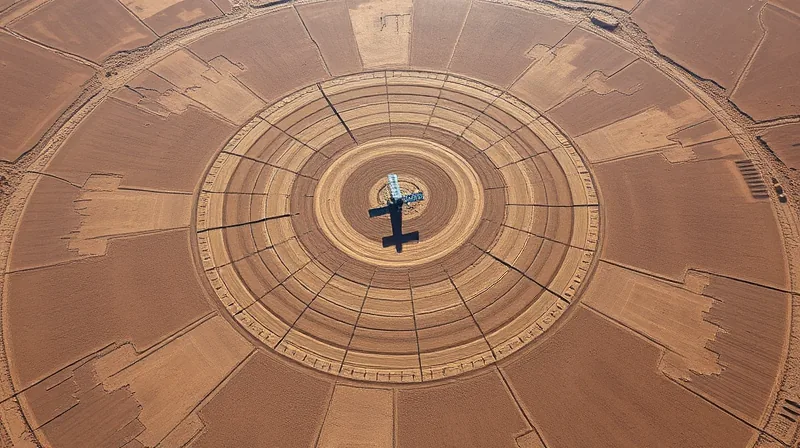
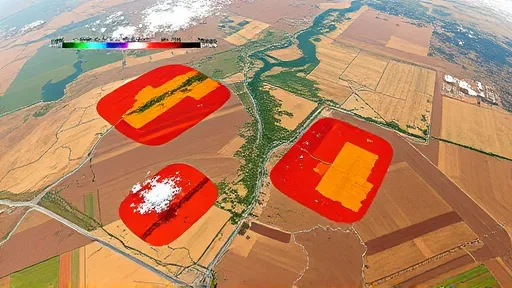
Satellites scanning Earth’s surface have begun revealing something unexpected: vast areas of farmland showing signs of distress long before crops fail. The view from orbit detects changes in soil moisture, vegetation patterns, and ground temperature that signal deeper problems below. These space-based observations matter because healthy soil is the foundation of food production for nearly eight billion people. When soil degrades silently underground, the consequences eventually surface as reduced harvests, increased flooding, and diminished carbon storage. What happens beneath the surface affects what is observed from above — and what is eaten from the ground.
Researchers have developed sophisticated methods to measure soil conditions using satellite data, cross-referencing orbital readings with ground-level measurements. This dual approach allows scientists to track soil degradation patterns across continents, identifying regions at risk before local farmers notice significant changes. The technology represents a dramatic shift from traditional soil assessment methods that required physical sampling and laboratory analysis.
For decades, soil scientists faced a fundamental problem: how to measure soil health accurately and affordably across large areas. Traditional laboratory analysis required digging samples, shipping them to facilities, and waiting weeks for chemical results. This process was slow, expensive, and provided only isolated data points. Farmers and researchers needed a method that could assess soil conditions quickly, cheaply, and across entire fields or regions.
A separate line of research took a strikingly different approach. Rather than measuring soil from above, scientists tested it from within by burying cotton fabric underground. Cotton decomposes at rates determined by microbial activity in the soil. Healthy soil teems with bacteria, fungi, and other organisms that break down organic matter, including cotton fibers. Degraded soil lacks this biological richness, meaning buried cotton would remain largely intact. This simple observation gave researchers a direct biological measure of soil vitality across different regions and farming practices.
The method gained recognition through an unconventional channel: the Ig Nobel prizes, which honor scientific achievements that first make people laugh, then make them think. The soil underwear project received this distinction, bringing international attention to a research approach that combined scientific rigor with everyday materials. [2] The prize highlighted how creative thinking can solve practical agricultural problems without expensive equipment or complex laboratory procedures.
The historical roots of soil health measurement stretch back far beyond satellite technology or buried garments. Farmers have always known that some fields produce better crops than others, but understanding why required scientific investigation. Early soil scientists focused on chemical composition, measuring nutrients like nitrogen, phosphorus, and potassium. Later research revealed that soil biology — the living organisms within the ground — plays an equally crucial role in plant health and productivity. This biological dimension proved harder to measure than simple chemistry.
The underwear experiment addressed this gap by providing a direct biological assessment. Researchers buried 1,000 pairs of cotton underpants across diverse locations, from intensively farmed agricultural land to pristine natural areas. [2] After set periods, they dug up the garments and measured how much cotton remained. The results provided a measure of soil biological activity. This validation meant the simple cotton test could serve as a reliable proxy for complex soil biological activity.
The scale of the project was remarkable. Soil scientists buried approximately 1,000 pairs of underwear across multiple sites to ensure their findings would be statistically robust. [2] Each pair represented a test location, with researchers carefully documenting soil conditions, land use history, and environmental factors at every site. The sheer number of samples allowed the team to compare soil health across different agricultural practices, climates, and soil types. What emerged was a clear picture of how land management affects the living component of soil.
The results revealed something troubling about modern agricultural practices. Soils under different management practices showed varying levels of cotton decomposition. This finding indicated that some farming methods reduce the biological activity essential for long-term soil fertility. The implications extend beyond individual farms to global food security, as degraded soils require increasing fertilizer inputs to maintain yields. The underwear data provided tangible evidence of what many researchers had suspected: certain agricultural practices come at a hidden cost to soil life.
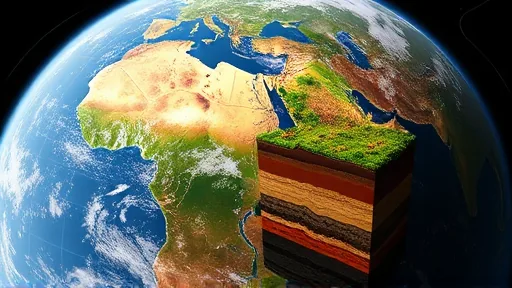
The threat identified through this research extends to the very capacity of soil to support future food production. Soil biological activity affects nutrient cycling, soil structure, and water retention. Reduced biological activity makes farmland more vulnerable to erosion, drought, and crop failure. This finding carries particular weight because soil formation occurs over centuries, meaning degraded soil cannot be quickly restored.
The Ig Nobel recognition has brought renewed attention to soil health research and its implications for sustainable agriculture. The prize celebrates research that challenges conventional thinking while addressing real-world problems. By demonstrating that simple cotton garments can reveal complex biological processes, the soil scientists have provided farmers and policymakers with an accessible tool for monitoring land stewardship. The method’s low cost means it can be deployed in developing regions where sophisticated laboratory testing remains impractical.
The final data point from this research anchors its significance: 1,000 pairs of underwear, buried and recovered, provided a continent-scale picture of soil biological health. This number represents not just a measurement exercise but a demonstration that grassroots scientific methods can complement high-technology approaches like satellite monitoring. Together, these tools offer a comprehensive view of soil condition — from orbital perspective to ground-level biological reality.