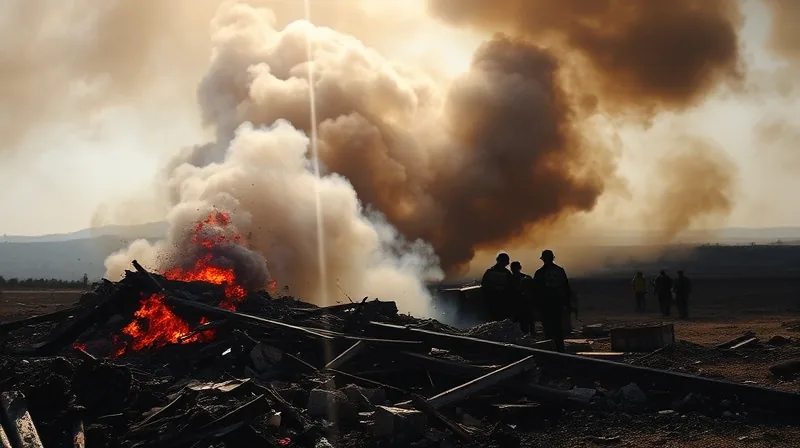
Sarmada Blast Kills 14 at Syria Weapons Storage Site
Smoke Rises Over Sarmada’s Storage Site
Smoke was still coming off the ground hours after the first blast. Crews could not get to everyone quickly: the site held materials that could easily explode, and one detonation produced others, while the resulting explosions and fires slowed the emergency response.
Idlib’s health department put the toll at 14 killed and 11 injured on Wednesday, September 9, 2025. It called the figure an initial tally, not a final one.
The site was being used as a temporary storage site. Syria’s Defense Ministry said the weapons and leftover material from the country’s long-running civil war were being stored there only temporarily, waiting to be transported elsewhere. Some of the ministry’s own personnel were among the 11 wounded.
The blast happened near the city of Sarmada, in the northwestern province of Idlib. Authorities have not yet said what caused the explosion.
Another Fatal Blast in Idlib
This was not the province’s first such day this month. On September 1, five people were killed and others were wounded when a vehicle carrying ammunition exploded in Binnish. Eight days later, near Sarmada, came the second fatal incident of its kind in Idlib. The pattern points to a storage problem rather than a single accident: ammunition and explosives left over from the war are being held in populated areas, and each site that detonates raises the cost of clearing the next one.
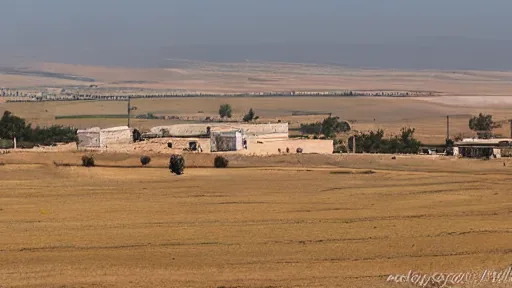
Both events fall inside the same province, and Idlib carried an unusual share of the war. It was one of the hardest-hit regions in the country during the conflict, which is why the leftover material is concentrated there now.
A New Government Inherits the Weapons
Syria has only recently emerged from more than a decade of civil war. Forces loyal to the new president, Ahmed al-Sharaa, ousted Bashar Assad and took control of Damascus. The fighting stopped; the material did not. Clearing it is now a budget line as much as a security task: every stored shell has to be inventoried, moved, and destroyed, and the government that cannot yet pay for that work is the same government that owns the risk when a depot blows up.
In this case, the material left by the fighting was gathered, held at temporary sites, and prepared to be moved on. Sarmada was one of those holding points. The government that inherited the weapons also inherited the job of handling them, and, for now, the job of explaining what went wrong at one of its own storage sites.
The count remained preliminary and the site was described as temporary. What is certain is that the weapons outlasted the war that produced them, and that the state now responsible for them has yet to say what set them off.