
MAVEN joins Mars orbital graveyard for decades
Most people imagine that when a spacecraft dies, it simply stops working and floats off into the endless void. That is not true. The truth is far stranger and far more crowded. The Red Planet has a graveyard, and it is filling up fast. In December 2024, NASA reported that the MAVEN orbiter, which launched in 2013 and studied the Martian atmosphere for over a decade, had entered safe mode and communication was temporarily lost. As of the latest update in early 2025, NASA has not declared the MAVEN mission over, and recovery efforts continue, though no timeline for restoration has been provided However, if communication is not restored, MAVEN’s orbit will naturally decay over an estimated 50 to 100 years before it burns up in the Martian atmosphere That is the fate of nearly every orbiter that has ever visited Mars. They do not leave. They linger. They become ghosts.
The Mystery of the Silent Orbiter
The story of MAVEN’s communication loss begins in December 2024 The spacecraft was humming along, doing its job, sending data back to Earth. Then, without warning, it went dark. No distress signal. No final message. Just silence. The team at NASA’s Goddard Space Flight Center attempted to re-establish contact using standard recovery procedures [2] They sent commands and listened for a response. As of the article’s publication, MAVEN had not responded to commands for several months As of the article’s publication, NASA has not officially declared the MAVEN mission over. The spacecraft entered safe mode in December 2024, and engineers are still working to restore communication. However, MAVEN’s orbital decay was anticipated regardless of its operational status. MAVEN’s orbit was designed to study the upper atmosphere, and its natural orbital decay over decades was anticipated, but the mission was not planned to end prematurely. The silence just sped up the timeline. The spacecraft’s orbit is consistent with natural decay, similar to what would occur if the mission had ended as planned So, in a way, MAVEN is exactly where it was supposed to be. It just happened to die without saying goodbye.
The Orbital Morgue: A History of Silence
To understand the Mars graveyard, you must first understand the timeline. It is a long one. It begins in 1971, when the first orbiters arrived. The United States sent Mariner 9. The Soviet Union sent Mars 2 and Mars 3. All three arrived within weeks of each other. Today, only Mariner 9 is still in orbit—maybe. The truth is, we do not know for sure. Tracking dead spacecraft is hard. They are small. They are dark. They are silent. So, we have to guess. Here is a partial list of orbiters that have successfully reached Mars, in order of arrival: Some may have already fallen. Some may have crashed into each other. Some may have hit Phobos or Deimos, the two tiny moons of Mars. In fact, MAVEN itself had to dodge Phobos back in 2017. The orbital graveyard continues to expand with each mission There is the Ingenuity helicopter, which completed 72 flights before a rotor blade was damagedThere is the Pathfinder lander, which became famous for its 1997 mission. There is also Zhurong, the Chinese rover from the Tianwen 1 mission, which entered hibernation in 2022 and has not been reactivated [6] That is it. Everything else is a relic.
The Science of Decay: Why Orbiters Fall
You might wonder: why do orbiters fall at all? Mars has an atmosphere, but it is incredibly thin—just 1% as dense as Earth’s at sea level. That is almost nothing. But over decades, even that thin air creates drag. It slows the spacecraft down. The orbit shrinks. Eventually, the spacecraft dips too low. The air thickens. Friction heats it up. It burns. This process takes 50 to 100 years for most orbiters. But it can be faster if the orbit is already low. It can be faster if the spacecraft hits something. It can be faster if the solar wind pushes it. The point is: nothThe mission’s full name is Mars Atmosphere and Volatile Evolution (MAVEN)osphere and Volatile Evolution. Its job was to study how Mars lost its atmosphere. And it succeeded beyond expectations [1]. Here is what MAVEN discovered: Mars was once a warm, wet world. It had a thick atmosphere, rivers, and lakes. The solar wind—the stream of charged particles from the Sun—This process is believed to have occurred primarily between 4.2 billion and 3.7 billion years ago, based on MAVEN dataillion and 3.7 billion years ago. That is roughly the same time that life was beginning on Earth. So, while life was starting here, Mars was dying. MAVEN gave us the timeline. It gave us the mechanism. It gave us the answer to one of the biggest questions in planetary science: why did Mars become a desert? The primary driver was the solar wind stripping the atmosphere, a process MAVEN helped quantify through measurements of atmospheric escape rates
The Bigger Picture: A Planetary Mystery
But the story of Mars is not just about Mars. It is about Earth, too. It is about us. Why? Because Mars shows us what can happen to a planet. It shows us how fragile an atmosphere can be. It shows us that life is not guaranteed. If Mars lost its atmosphere to the solar wind, could Earth lose its atmosphere, too? The answer is yes, but not in the same way. Earth has a magnetic field. Mars does not. That magnetic field protects us from the solar wind. It deflects the charged particles. It keeps our atmosphere intact. Without it, Earth would be just like Mars. So, in a way, MAVEN was nThe European Space Agency’s ExoMars Trace Gas Orbiter (TGO) is studying trace gases like methane in the Martian atmosphere [3]. India’s Mars Orbiter Mission (MOM), which studied the Martian climate, ended in 2022 after communication was lost. The UAE’s Hope probe (Emirates Mars Mission) is studying Martian weather [5]. China’s Tianwen 1 mission includes an orbiter studying the Martian surface and atmosphere [6] The UAE’s Hope probe is looking at weather patterns [5]. China’s Tianwen 1 is doing a little bit of everything [6]. All of these missions are building on MAVEN’s work. They are filling in the gaps. They are asking the same question: what happened to Mars? And they are getting closer to the answer.
The Bridge: From Mars to Earth
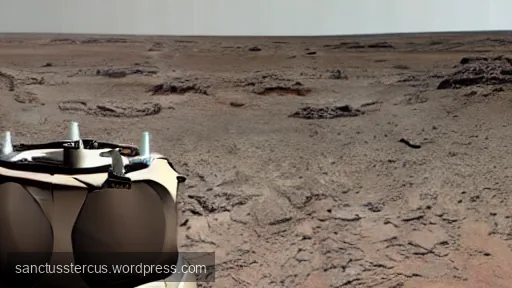
But there is a bridge between Mars and Earth that most people do not see. It is the bridge of time. The same solar wind stripping process affects Earth, but our magnetic field largely protects us. The solar wind is still stripping our atmosphere, but at a rate that is negligible compared to the damage we do ourselves. Climate change poses a significant threat to Earth’s habitability, but it is a different process from the atmospheric loss seen on Mars, which was driven by solar wind over billions of years It is the thing that could make our planet uninhabitable. And that is where the Mars graveyard becomes a warning. It is not just a collection of dead robots. It is a reminder. It is a mirror. It shows us what happens when a planet loses its ability to support life. It shows us what we must avoid.
The Personal Implication: What This Means for You
So, what does this mean for you? It means that the next time you look up at the night sky and see Mars, you are looking at a planet that was once alive. It means that the robots we sent there are not just machines. They are our eyes. They are our ears. They are our memory. And when they die, they become part of the planet. They become part of the story. The MAVEN orbiter is now a ghost. It will circle Mars for another half-century or more. It will burn up in the thin air. It will become dust. But its data will live on. Its discoveries will be used by scientists for decades. Its silence will be a reminder that even the most advanced technology is temporary. And that is the lesson of the Mars graveyard. It is not a place of death. It is a place of transition. It is a place where our machines become part of the landscape. It is a place where we learn what it means to be a species that reaches for the stars.
The Final Orbit: What Comes Next
The Mars graveyard will continue to grow as future missions arrive and eventually cease operations. They will all become part of the red dust. But that is not a sad thing. It is a natural thing. It is the cycle of exploration. It is the price of knowledge. And it is a price we are willing to pay. Because every time a spacecraft dies, we learn something new. Every time a rover stops moving, we gain a piece of the puzzle. Every time an orbiter goes silent, we get closer to understanding the Red Planet. And that understanding is the only thing that will survive. It is the only thing that will outlast the dust. It is the only thing that will matter in the end.
The Legacy of MAVEN: A Final Thought
MAVEN’s communication may be lost, but its scientific legacy endures. It provided a timeline for Mars’ atmospheric loss and identified the solar wind as the primary mechanism. And now, it is part of the graveyard. It is part of the story. It is part of the mystery. And that mystery will continue. It will be solved by the next generation of orbiters. It will be solved by the next generation of rovers. It will be solved by the next generation of humans. And when we finally stand on the surface of Mars, we will look up at the sky and see the ghosts of our machines. We will remember what they taught us. We will remember what they sacrificed. And we will know that we are not alone. We are part of a long chain of exploration. We are part of a long chain of discovery. And that chain will never break. It will only grow longer. It will only grow stronger. It will only grow more beautiful. And that is the true meaning of the Mars graveyard. It is not a place of endings. It is a place of beginnings. It is a place where we learn what it means to be human. It is a place where we learn what it means to reach for the stars.
The Silent Watch: What Happens Now
So, what happens now? MAVEN will continue to orbit. It will continue to decay. It will continue to be a ghost. And one day, it will fall. It will burn. It will become part of the planet. But until that day, it will be a silent watchman. It will be a reminder. It will be a warning. And it will be a testament to the human spirit. Because we did not send MAVEN to Mars to die. We sent it to learn. And learn it did. It learned about the atmosphere. It learned about the climate. It learned about the history. And it taught us all of it. So, when you look at Mars tonight, remember MAVEN. Remember the ghost. Remember the graveyard. And remember that we are all part of the same story. We are all part of the same journey. We are all part of the same mystery. And that mystery will continue to drive exploration and discovery. And that is the greatest legacy of all.
Sources\nNASA\nGoddard Space Flight Center\nEuropean Space Agency\nIndian Space Research Organisation\nMohammed bin Rashid Space Centre\nChina National Space Administration
2. Goddard Space Flight Center
4. Indian Space Research Organisation