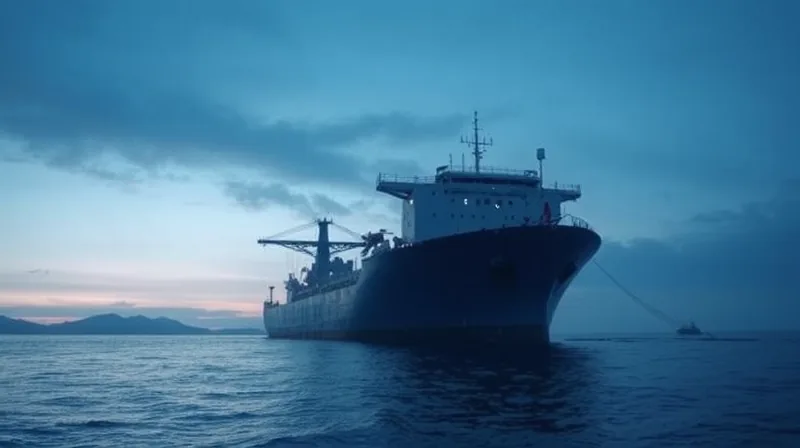
When The Chokepoints Close
A barrel of oil would cost US$130. The straits of Hormuz and Bab el-Mandeb would be largely closed to commercial shipping. Damage to oil infrastructure in the region would keep widening rather than healing. The recovery in oil supply would be delayed to the end of 2027. With limited scope for further inventory drawdown, there would be little left to sell into a shortage.
That world is a scenario, not a forecast. It sits inside the International Monetary Fund’s latest World Economic Outlook, a modelling exercise that asks how a worsening Middle East crisis would move global growth and inflation. Only then, with limited scope for further inventory drawdown, do oil prices reach US$130 from the fourth quarter of 2026 to the first quarter of 2027.
Both straits are narrow sea passages through which most shipping must pass. The fund highlighted the “clear and present danger” to a resilient global economy from turmoil in commodity and bond markets. [1] Crude oil trades above US$106 a barrel now. The scenario is therefore a US$30 move from today’s level, not a distant one.
Australia is already paying the present price. Unleaded petrol in the major east coast cities has pushed above $2.40 a litre in recent days and towards six-month highs. Diesel has eased but remains high at about $2.80 a litre.
How Economists Read The Shock
The first approach does the arithmetic and stops there. Every US$10 rise in the global oil price becomes roughly 10 cents a litre at the Australian pump — a rough conversion rule economists apply, not a modelled result. A US$30 jump would therefore add about 30 cents a litre, driving unleaded towards $2.70 and to its highest level since the war began more than seven months ago. Nobody in this school claims to know whether the rule survives a shock of that size. They apply the coefficient and leave it at that.
The second approach says the household pays twice, once at the pump and again at the mortgage. Jonathan Kearns, chief economist at Challenger, describes the Reserve Bank’s position without much hedging. “The reality”, he says, is that the Reserve Bank — alongside other interest-rate authorities — would have to respond to higher fuel costs with higher interest rates. [1] Economists working this channel put a figure on the damage: such a move could leave inflation more than 1 percentage point higher than expected by the end of the year, adding to households’ cost of living pressures and dragging on growth.
The third approach accepts the inflation risk and doubts the response. Johnathan McMenamin, head of economic forecasts at Barrenjoey, is less convinced the Reserve Bank would have to answer with higher rates, saying the central bank has been mostly responding to underlying price pressures related to domestic capacity constraints, rather than overseas factors. [1].
Which evidence wins? On interest rates, none of them yet — that dispute is live and unresolved. On inflation, the two sides converge: McMenamin puts the direct effect at 0.33 percentage points for every 10% rise in fuel prices, and economists told Guardian Australia the shock could leave inflation more than 1 percentage point higher than expected by the end of the year. [1] The disagreement is not about whether prices rise. It is about whether the Reserve Bank should answer them.
What The Arithmetic Cannot Reach
So the
Australian figures in circulation — another 30 cents a litre, unleaded at $2.70, an extra percentage point of inflation — are a translation, produced by economists applying a conversion rule to a scenario they did not write.
The 30 cents is what the rule of thumb implies, conditional on everything else staying still.

There is a second gap, and it is a gap in units. The scenario is written in terms of oil reaching US$130, and the pump figures come from a rule that turns each US$10 of oil into 10 cents of fuel. Stack those together and the alternative becomes visible: if oil moves towards US$130, and each US$10 still becomes 10 cents at the bowser, inflation could still be as high as 4.5% in late 2026. The Reserve Bank’s forecast of a fall in headline inflation to 3.6% by the end of the year assumes Brent crude falls to US$81 a barrel. The distance between 3.6% and 4.5% is not a difference of political opinion. It is the distance between two price assumptions.
That limitation matters more than the uncertainty itself because it shows where the risk sits and who holds it. The fund models the world; the central bank models Australia; households pay the price at the pump on the day. The step between the last two is performed in public by private-sector forecasters using a rule of thumb, and that is exactly where the argument about interest rates is stuck. The scenario does not say whether a central bank must tighten into an oil supply shock or look through it. The Reserve Bank’s own minutes show the board discussed how “the Middle East conflict had escalated and oil prices were substantially above the level assumed in the August forecasts”, and how global cost pressures appeared to be building. [1].