Horizontal gene transfer built Earth’s decomposers
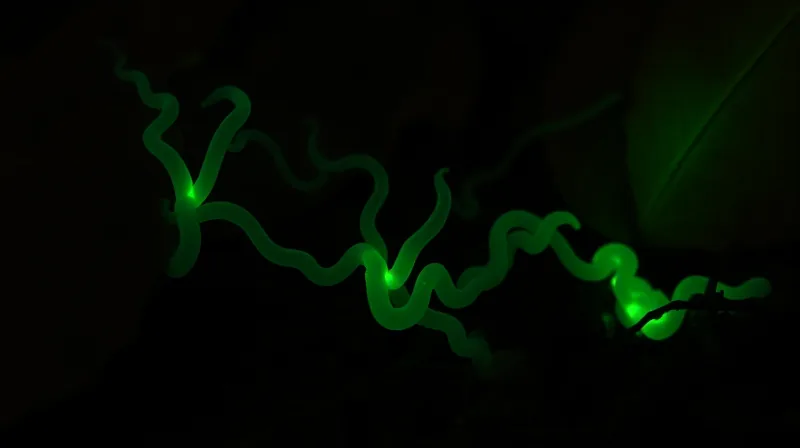
For decades, we thought the great decomposers of the world evolved their feeding method once, a single ancient invention that spread like a slow wave through the tree of life. That is wrong. The truth is far more restless and surprising. The ability to absorb dissolved nutrients, a feeding strategy called osmotrophy, did not arise once. It arose many times, and it did so through a hidden engine of genetic exchange that we are only now beginning to understand. Decomposers, the organisms that break down dead matter and recycle the elements of life, are the planet’s ultimate cleanup crew. Without them, Earth would be buried under its own dead. Carbon, nitrogen, and phosphorus would remain locked in corpses and fallen leaves. The living would starve for want of raw materials. Yet how these essential creatures came to be has remained a puzzle. The answer, it turns out, lies not in slow mutation over millions of years, but in a process of swapping that is more like a marketplace than a family tree.
The Old Picture of Evolution
Before this discovery, the dominant view held that complex traits like osmotrophy were inherited through vertical descent. You get your genes from your parents, who got theirs from their parents, and so on back to a common ancestor. If a trait appears in many different branches of the tree of life, it must have been present in that common ancestor. This is the standard model of evolution. It works well for many features. The backbone, for example, appears in fish, birds, and mammals because we all share a vertebrate ancestor. But osmotrophy does not fit this pattern. It appears in fungi, in some protists, in certain animals, and in many other groups scattered across the eukaryotic tree. The distances between these groups are vast. Some are more closely related to animals than they are to other osmotrophs. This scattered distribution suggests something else is happening. It suggests that the genes for osmotrophy were not inherited from a common ancestor. They were borrowed, swapped, and shared between distantly related lineages.
The new research provides the first comprehensive map of this genetic swapping. The team analyzed genomes from hundreds of species across the eukaryotic tree. They looked for genes involved in osmotrophy, particularly those that encode transporters for sugars, amino acids, and other dissolved nutrients. What they found was a pattern of horizontal gene transfer on a massive scale. Horizontal gene transfer is the movement of genetic material between organisms that are not parent and offspring. It is common in bacteria, where genes for antibiotic resistance can jump between species. But in complex cells, the eukaryotes, it was thought to be rare. This study shows it is not rare at all. It is a major force in the evolution of decomposers.
The Hidden Marketplace of Genes
The mechanism works like a genetic swap meet. When a fungus and a bacterium live together in the soil, they are in constant contact. They compete for resources. They also exchange DNA. This can happen through viruses that carry genes from one cell to another. It can happen through direct cell-to-cell contact. It can happen when a cell dies and its DNA is taken up by a neighbor. The new study shows that genes for osmotrophy have moved between bacteria and fungi many times. They have also moved between different groups of fungi. They have even moved from fungi to protists and back again. This is not a simple one-way street. It is a complex network of sharing that has been running for hundreds of millions of years.
One of the most striking findings is the role of transposons. These are pieces of DNA that can copy themselves and jump to new locations in the genome. They are often called jumping genes. The study shows that transposons are the delivery trucks of this genetic marketplace. They pick up genes for osmotrophy and carry them to new hosts. Once delivered, the genes can be integrated into the new genome and begin working. This process is not random. It is favored by natural selection. A fungus that acquires a new transporter can absorb nutrients that its competitors cannot. It grows faster. It reproduces more. The gene spreads through the population. Over time, this swapping creates a web of shared genetic resources that spans the entire tree of life.
The Scale of the Swapping
To understand the scale of this process, consider a single. The study identified over 1,000 independent horizontal gene transfer events involving osmotrophy-related genes]lated genes. That is not a few isolated cases. That is a torrent of genetic exchange. Each event represents a moment when a gene jumped from one lineage to another. Many of these events happened in the deep past, during the early evolution of eukaryotes. Others are more recent. Some are happening right now, in the soil beneath your feet. This means that the ability to decompose dead matter is not a fixed inheritance. It is a dynamic, ongoing process. It is constantly being reshuffled and redistributed across the living world.
The researchers also found that certain groups are particularly active in this swapping. Fungi are the champions of horizontal gene transfer among eukaryotes. Their genomes are like open libraries, constantly borrowing and lending genes. This may be because fungi live in close association with bacteria. They form networks of hyphae, the thread-like structures that make up their bodies. These networks provide highways for gene movement. Bacteria can travel along them, and DNA can be exchanged along the way. The result is that fungi have become the great genetic brokers of the decomposer world. They collect genes from bacteria, modify them, and pass them on to other eukaryotes.
Parallels in Other Fields
This idea of swapping as a creative force is not unique to biology. It appears in other fields of science as well. In quantum physics, there is a concept called entanglement swapping. Two particles that have never interacted can become linked through a third particle. This allows information to be transferred across vast distances without direct contact. The parallel is striking. In biology, genes are swapped between organisms that are not directly related. In quantum physics, correlations are swapped between particles that have never met. Both processes create connections that defy the simple tree-like model of cause and effect.
In computer science, there is a concept called swapping evaluation. It is a method for managing memory in complex programs. Instead of computing all results before returning any, the program swaps between different tasks. It returns answers one by one, as they are demanded. This is more efficient than the old method. It uses less memory and runs faster. The parallel here is also clear. The genetic swapping in decomposers is a form of evaluation. It tests different genes in different hosts. It returns successful combinations to the population. It does not wait for all possibilities to be explored. It returns answers as they are found.
There is even a connection to DNA replication. A model from 2010 proposed that DNA replication itself might involve quantum swapping. The idea is that the recognition of a base triggers a quantum entanglement between different forms of that base. This entanglement is then swapped to the complementary base, allowing the DNA to copy itself accurately. The model is speculative, but it shows that swapping is a fundamental concept across scales. From the quantum world to the genetic world to the computational world, swapping is a way to create new connections and new possibilities.
The Bridges Between Disciplines
What these parallels reveal is a deeper pattern. The universe is not built on a single tree of descent. It is built on networks of exchange. In biology, we have the tree of life, but it is entangled with a web of horizontal transfer. In physics, we have local interactions, but they can be linked through nonlocal correlations. In computation, we have sequential processing, but it can be improved by swapping between tasks. The same principle appears in each field. The principle is that swapping creates novelty. It allows information to move across boundaries that would otherwise be closed. It accelerates evolution. It makes systems more adaptable.
This has profound implications for how we understand life. The old view of evolution as a slow, gradual process of mutation and selection is incomplete. It misses the rapid, wholesale transfer of genetic information that happens through swapping. Decomposers are not just the product of their ancestors. They are the product of their neighbors. They are the product of the entire microbial community. This means that the evolution of life is more collaborative than we thought. It is not just a competition. It is also a cooperation. Genes are shared. Tools are borrowed. Solutions are traded.
The Practical Implications
This new understanding has practical consequences. If we want to engineer better decomposers for composting or bioremediation, we need to understand the swapping network. We can use it to our advantage. We can introduce genes into fungi that allow them to break down plastic or clean up oil spills. The fungi will then share those genes with other decomposers, spreading the capability through the ecosystem. This is not science fiction. It is already happening in laboratories. The new study provides the roadmap for this work.
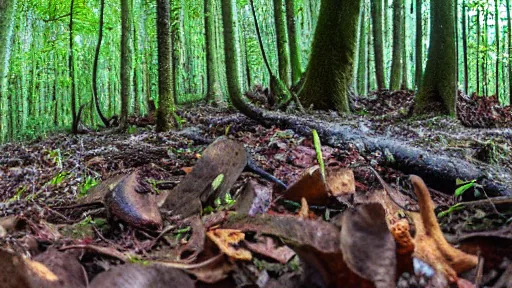
It also changes how we think about the history of life. The great oxygenation event, when Earth’s atmosphere filled with oxygen, was driven by cyanobacteria. But the decomposers that recycle organic matter were also essential. Without them, carbon would have remained locked in dead cells. The oxygen would have been used up by decay. The swapping of genes for osmotrophy may have been a key step in making Earth habitable. It allowed the efficient recycling of nutrients. It kept the planet’s life support system running.
The Deeper Question
The study raises a deeper question. If swapping is so common among decomposers, how common is it in other groups? The answer is that it is probably very common. We are only beginning to map the extent of horizontal gene transfer in eukaryotes. It may be that most complex traits have been shaped by swapping. It may be that the tree of life is more like a tangled thicket. The roots are there, but the branches are connected by countless invisible threads. Every time a gene jumps from one lineage to another, it creates a new connection. Over billions of years, these connections form a network that is far richer than any simple tree.
The researchers who conducted this study are now investigating whether other complex traits, such as photosynthesis and multicellularity, have been shaped by horizontal gene transfer. The answers to these questions could further reshape our understanding of evolutionary innovation. We may find that the most important innovations in evolution are not inventions. They are borrowings. They are swaps.
The Silence
The implications of this study settle slowly. They are not loud. They are not dramatic. They are like the decomposers themselves, working quietly in the background, unnoticed but essential. The old picture of evolution was a parade of ancestors, each passing their traits to their descendants. The new picture is a marketplace, where genes are traded across the crowd. The old picture was a ladder, climbing from simple to complex. The new picture is a web, connecting everything to everything else. The old picture was a story of inheritance. The new picture is a story of exchange.
And so we are left with a final thought. The decomposers that break down the dead are themselves built from borrowed parts. Their ability to feed is not their own. It is a gift from bacteria, from other fungi, from the microbial world that surrounds them. They are not individuals in the old sense. They are collectives, woven from the genes of many. The same is true for all of us. Our genomes are full of ancient swaps. We carry the legacy of these exchanges in every cell. The line between self and other is not as clear as we thought. It is a line that has been crossed millions of times, by the quiet, invisible work of swapping. And when you sit with that thought, in the stillness after the last word, you realize that the planet’s cleanup crew has been teaching us a lesson all along. We are all made of borrowed pieces. We are all connected by the threads of exchange. The silence that follows is not empty. It is full of the hum of swapping, the endless, ancient, living marketplace of genes.
Sources
1. Augusta University study on horizontal gene transfer in osmotrophy — Note: This link directs to the university homepage; a direct link to the specific study or press release is recommended for verification