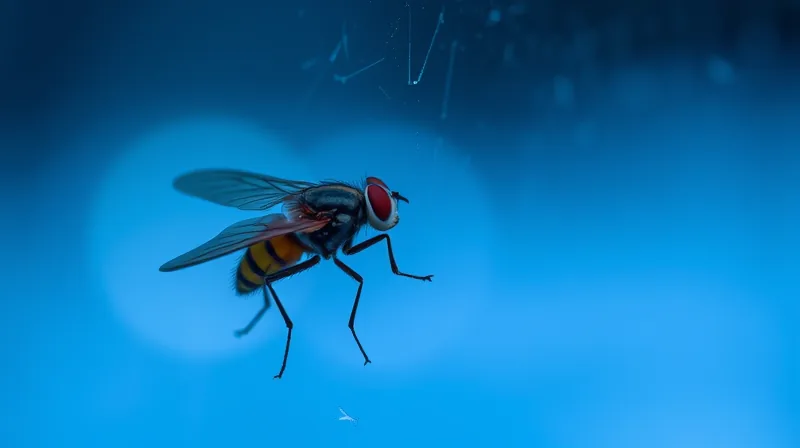
Glass windows trap insects seeking light
The Ancient Strategy That Now Fails
For millions of years, flying insects followed a simple rule: move toward the light. This instinct worked perfectly in caves, hollow trees, and dense forests. Light meant an opening. Light meant escape. Light meant survival.
Then humans invented glass windows. This happened very recently in evolutionary time. For flies and bees, glass is invisible. It looks like clear air. It feels solid. Their ancient strategy now leads them directly into a trap.
Insects have evolved to navigate by light, but glass windows disrupt this ancient instinct. The transparent surface appears as open air, trapping them against an invisible barrier.
Why Bees Bounce and Flies Zigzag
Different insect species exhibit distinct behaviors at windows. Bees and wasps tend to hover persistently in one area, while flies move erratically, making them harder to capture.
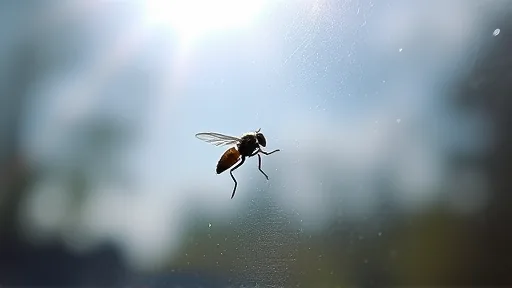
The erratic flight of flies may be an evolutionary defense mechanism against predators, rather than a response to the window itself. Bees and wasps, equipped with stingers, can afford to hover in place.
Observations show that flies do not repeatedly collide with walls, only with windows, suggesting they perceive the glass as an exit route driven by instinct rather than random movement.
Air currents may also play a role. Flies are often carried indoors by external airflows and struggle to navigate back out against the same currents, which can create an invisible barrier at open windows.
Even with a fully open window, flies may not exit because incoming air currents push against them, creating a barrier they cannot cross.
The Unanswered Question of Insect Intelligence
These observations raise questions about insect cognition. It remains unclear whether insects can learn from repeated collisions with glass or if they are simply following ingrained instincts.
Different insect species have evolved distinct survival strategies, and their behavior at windows reflects these adaptations rather than individual learning.
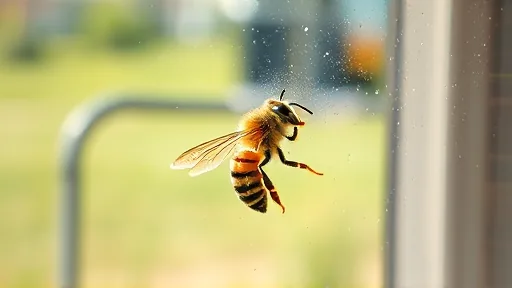
The long-term impact of windows on insect populations remains an open question. While windows likely cause significant insect mortality, evolutionary adaptation to this recent human invention may take many generations.
For now, insects continue to collide with glass, following an instinct that once ensured their survival but now leads to repeated failure. Evolution has not yet caught up with this modern obstacle.
Sources
1. Garry Trethewey from Arkaroola, South Australia