Higgsino Dark Matter Hint Meets Neutrino Silence
The Signal That Should Not Be Alone
A single parameter can flip an entire experiment from impossible to plausible. In the case of dark matter, that parameter is mass — and more precisely, whether a particle has one mass or two.
Dark matter is imperceptibly everywhere, an unidentified type of particle pervading the universe but evident based only on its gravitational effects on galaxies and other cosmic entities. On September 1, scientists with the LUX-ZEPLIN, or LZ, collaboration announced they had seen a signal in their detector that could have been caused by a single particle of dark matter — though it could still be just a blip caused by known physics processes.
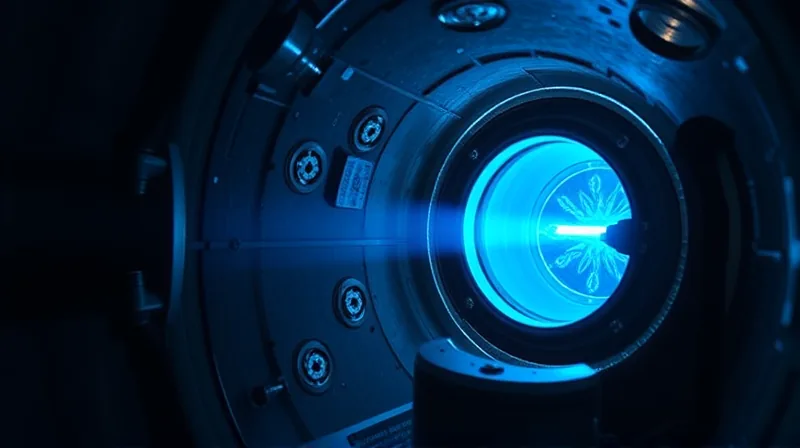
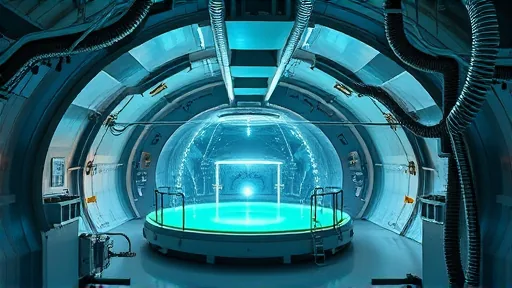
The LZ detector sits at the Sanford Underground Research Facility in Lead, South Dakota. It consists of a large tank of liquid xenon. The detector searches for dark matter speeding through the xenon, crashing into it and sending a xenon atomic nucleus zinging away. That is expected to be a rare event, since dark matter interacts very weakly with normal matter.
In the event LZ found, the nucleus recoiled with particularly high energy. Most types of dark matter would produce low-energy recoils in addition to high-energy ones. But LZ did not see any low-energy recoils. That absence is the anomaly within the anomaly — a detector that should have registered a soft whisper alongside the shout recorded only the shout.
If dark matter were a higgsino, that could explain the absence of low-energy events. The higgsino differs from typical dark matter candidates in that it would have two different masses. A collision would happen only if there is enough energy to bump the higgsino from the lighter to the heavier mass state. That means lower-energy nuclear recoils would not happen. The particle would be, in effect, a locked door that only opens for a hard enough knock.
Supersymmetry’s Favorite Candidate Steps Forward
Supersymmetry proposes that for each known particle, there exists a heavier counterpart called a superpartner. It is an idea that could solve multiple physics puzzles at once, so it has attracted a devoted following of physicists. One of these hypothetical superpartners, such as the higgsino, could be dark matter. The higgsino is the superpartner of the Higgs boson — a particle discovered in 2012 that explains the origin of mass. “If you asked people in the year 2000, ‘What’s your favorite dark matter candidate?’ probably a lot of people would already have said the higgsino then,” says theoretical physicist Tracy Slatyer of MIT. [1] In recent years, supersymmetry’s popularity has waned, as particle colliders failed to find evidence for it. But as an explanation for LZ’s dark matter hint, a higgsino seems plausible — at least at first glance. “It comes pretty close to working,” Slatyer says. “If we discover it, it would be the first discovery of supersymmetry,” says theoretical physicist Harikrishnan Ramani of the University of Delaware in Newark. [1]
Within a day of LZ’s announcement, several papers on the arXiv put forth the higgsino possibility, part of dozens posted in the weeks since. “I got pretty excited,” says theoretical physicist Katherine Freese of the University of Texas at Austin, a coauthor of one such paper, which was submitted September 1. “First paper I ever wrote in 24 hours.” The speed itself is a data point. A theory that had been drifting toward the sidelines suddenly became the most crowded lane on the road — not because new evidence favored it, but because a single unexplained recoil made it worth re-examining.
The Neutrinos That Never Arrived
But further investigation made the higgsino explanation seem less plausible. If higgsinos exist, they would interact in the sun and get trapped there due to its gravitational pull. There, according to the concepts of supersymmetry, they would annihilate one another and produce high-energy particles called neutrinos. Those neutrinos should have been observed by a neutrino detector located at the South Pole, called IceCube, Ramani and a colleague reported September 2 at arXiv.org. But no such neutrinos have been seen.
That is a clean negative result. The sun would function as a particle trap and a neutrino factory if higgsinos were real at the mass theorists expect. IceCube has looked. It has found nothing. The silence is not proof of absence, but it is a constraint that any higgsino explanation must now accommodate.
There is another potential issue. Slatyer and colleagues noticed a plot in an appendix to LZ’s paper that looks at even higher energies. If LZ saw one higgsino at the energy they reported, they would expect to see even more at these higher energies, the team reported September 3. But LZ did not report anything that looked like dark matter at those energies. The LZ detector was not calibrated for those energies, says LZ spokesperson Rick Gaitskell, a physicist at Brown University in Providence, Rhode Island. “We didn’t make any formal claims about detection or even nondetection in that event region,” Gaitskell wrote in a text message. [1] But, if the data are taken seriously, that makes LZ’s event even more difficult to explain with a higgsino.
Considering all these factors makes the higgsino idea a bit of a stretch. But there is still a little wiggle room. One possibility is that the higgsino’s mass differs from what theoretical physicists expect it to be, about 1,000 times a proton’s mass. That large mass is chosen to allow higgsinos to explain the amount of dark matter seen in the universe today. So changing it complicates the picture, but could make it align better with what LZ saw.
Additional wiggle room comes from the possible speeds of the dark matter particles in the Milky Way. The particles might reach higher velocities than typically assumed, and that could make the data easier to explain. For a faster higgsino to have shown up in LZ, it would require a larger difference in the two masses of the particle. The resulting bigger energy difference means higgsinos have fewer opportunities to produce neutrinos in the sun, explaining why neutrino experiments have not seen those particles.
By playing around with those factors, it is still possible to make the higgsino explanation work, Freese says. Higgsinos with around 2,000 times a proton’s mass could do the trick, Freese and a coauthor report in an October 2 arXiv paper. “Big picture: We love higgsino, and what we’re doing now is putting in the details that we think are important,” she says.
But, if it is not the higgsino, “maybe it’s some other particle with the same basic features,” says theoretical physicist Dan Hooper of the University of Wisconsin-Madison. Such particles would not be subject to the constraints supersymmetry imposes. For example, if the particles collect in the sun, they would not necessarily create neutrinos, so it does not matter that IceCube does not see them. Hooper and colleagues investigated the possibilities in a paper submitted September 10 to arXiv.org. And in a September 22 arXiv paper, Hooper and colleagues proposed a version of a different class of dark matter particle that could explain two puzzles in one: LZ’s result and mysterious gamma rays, high-energy light, seen coming from the center of the Milky Way.
Other physicists are looking at entirely different ideas, involving hypothesized types of particles such as dark photons. Meanwhile, scientists are eagerly awaiting new results from LZ, to see if additional data hide similar events.
Other dark matter experiments, such as XENONnT at Gran Sasso National Laboratory in Italy, are also taking a look, combing through their existing data to check for high-energy events. LZ’s result “clearly requires a cross-check,” says XENONnT spokesperson Elena Aprile, a physicist at Columbia University.
Even if the result is not a slam-dunk for the higgsino — and even though this might not be dark matter at all — scientists are enjoying exploring the possibilities. “I think it’s wrong to throw tantrums over the fact that it’s not the higgsino the way we want it to be,” Ramani says. “Nature might not give us everything we want in one go.”
Sources
Mentioned organisations (context, not sources)
- MIT — Organisation (homepage)
- University of Delaware — Organisation (homepage)
- University of Texas at Austin — Organisation (homepage)
- IceCube — Organisation (homepage)
- Brown University — Organisation (homepage)
- University of Wisconsin-Madison — Organisation (homepage)
- Gran Sasso National Laboratory — Organisation (homepage)
- Columbia University — Organisation (homepage)
- Sanford Underground Research Facility — Organisation (homepage)