Dark Matter Signal Found in Deep Underground Detector
Deep beneath the Black Hills of South Dakota, a tank of liquid xenon sits in absolute stillness. The rock above it stretches a full mile thick, shielding the experiment from the constant rain of cosmic particles that batter Earth’s surface. This quiet, cold chamber is built for one purpose: to catch a ghost. The ghost in question is dark matter, the invisible substance that outweighs all visible matter in the universe by a factor of five, yet refuses to interact with light in any way we can detect.
The system operates on a single parameter that changes everything: mass. If dark matter particles are heavy enough, they might occasionally bump into a xenon atom. That collision would produce a tiny flash of light and a few freed electrons. The detector, called LUX-ZEPLIN or LZ for short, is engineered to record those faint signatures with extraordinary precision. Over 11 tons of ultra-pure liquid xenon sit in a sealed tank, surrounded by instruments that can pinpoint where a hit occurred and how much energy it carried. The entire apparatus exists to observe an event that may never happen, or may happen once in a thousand years of waiting.
A Signal That Refuses to Disappear
The team analyzed 220 days of data collected between March 2023 and April 2024, a period that ended more than a year before this result was shared. Within that vast dataset, they found one event that stood apart from everything else. Something in the xenon produced a small, sharp signal with the exact size and shape they would expect from a dark matter particle striking an atom. When the researchers compared this signal against known sources of interference, such as trace radioactivity in the detector materials or stray particles leaking in from outside, those explanations did not fit the data as well.
The finding represents the strongest hint of dark matter the collaboration has seen to date. Months of additional checking have failed to uncover another cause. The signal has survived every test the team could throw at it, which is why they chose to share the result with the broader scientific community rather than file it away as noise. Rick Gaitskell, a professor at Brown University and the spokesperson for the experiment, said: “We are not claiming to have seen dark matter. But we have seen something interesting that we want to share with the scientific community for their input.” [1] The collaboration published its findings in late 2024, and the data window reflects the most recent complete run
The mathematics, however, tell a cautious story. The team estimates there is approximately a 0.5 percent chance that known sources of interference could have produced this event by accident. That number may sound small, but in the world of particle physics, it falls far short of the standard required for a discovery. Scientists typically demand odds of a fluke dropping to nearly zero before they will declare that they have found something new. A one-in-200 chance leaves too much room for doubt, which is why the collaboration is careful to call this an intriguing anomaly rather than proof.
Dark matter itself remains one of the great puzzles of modern physics. It does not shine, glow, or block light, which means telescopes cannot observe it directly. Scientists know it exists because of its gravitational effects. Stars at the edges of galaxies move faster than they should based on the visible matter alone, as if some unseen mass is tugging at them. Galaxy clusters bend light in ways that reveal extra mass beyond what telescopes can see. These observations point to a substance that fills space and shapes the cosmos, yet remains fundamentally unknown in its particle nature.
What This Single Event Could Mean
The LZ detector is searching for a specific type of hypothetical particle called a WIMP, which stands for weakly interacting massive particle. WIMPs would be heavy compared to most known particles, and they would almost never interact with normal matter. A WIMP could pass through a wall, a planet, or a human body without leaving any trace of its passage. This elusiveness is precisely what makes them so difficult to detect, and so interesting to physicists who study the universe’s hidden structure.
If the signal the team observed does come from a dark matter particle, that particle would be remarkably heavy. The math suggests it would have a mass over 200 times that of a proton, the positively charged particle found in the center of every atom. Such a finding would narrow the range of possible masses for dark matter, ruling out lighter candidates and focusing future searches on a more specific target. It would also hint that dark matter interacts with normal matter in ways more complex than the simplest models predict.
The significance of even a single event should not be underestimated. Dark matter particles almost never strike normal matter, which means that over many years of observation, even a few genuine hits would represent a major breakthrough. Members of the research team say this is the first time they have seen a clear outlier that still looks valid after all the tests. Previous runs of the detector produced nothing that survived scrutiny. This event is different, and that difference is what makes it worthy of attention.
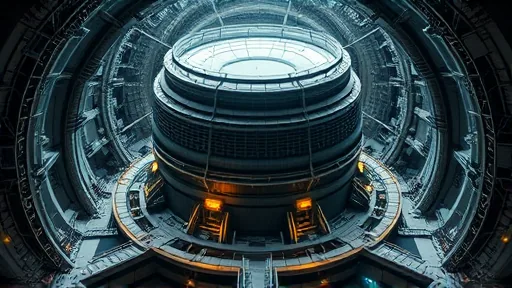
The LZ detector represents years of engineering effort and collaboration among dozens of institutions. The mile of rock above the lab blocks most cosmic rays, creating an environment quiet enough to detect the faintest signals. The liquid xenon is kept at extremely low temperatures, where it remains a clear, heavy liquid that can register the passage of particles. When a particle hits a xenon atom, it produces a tiny flash of light and releases a few electrons. Instruments surrounding the tank capture these signals, allowing scientists to reconstruct what happened inside.
The Long Road From Anomaly to Answer
The evidence for dark matter in this single event is real but far from conclusive. The 0.5 percent probability that known background noise could have produced the signal means the result cannot be considered a definitive detection or a discovery. In particle physics, extraordinary claims require extraordinary evidence, and one event does not provide that level of certainty. Scientists would need to see many more events following the same pattern, with the odds of a fluke dropping to almost nothing, before they could confidently announce that dark matter had been found.
The team will continue collecting data over the coming years. They may see additional events that look like this one, appearing in the same region of the detector’s data. If that happens, the case for dark matter will grow considerably stronger. Each new event would add statistical weight to the hypothesis that something real is striking the xenon atoms. Alternatively, this signal may remain a one-time anomaly, never to be repeated. In that case, scientists may eventually conclude that it came from some very rare background effect that they have not yet identified.
The distinction between a genuine dark matter detection and a rare background event is one of the hardest problems in experimental physics. Detectors like LZ are built to be as clean as possible, with materials chosen for their low radioactivity and shielding designed to block external radiation. Yet no detector is perfectly isolated from the world. Trace contaminants, cosmic rays that slip through the rock, and even the decay of the detector’s own components can produce signals that mimic the signature of dark matter. Sorting out which explanation is correct requires patience and more data.
For everyday life, this result changes nothing. The universe will continue to operate exactly as it did before, and no technology or product will emerge from this finding in the near term. But for our understanding of the cosmos, the stakes could hardly be higher. Dark matter shapes how galaxies form and how they move, influencing the large-scale structure of everything we can observe. Finding out what dark matter is made of and how it behaves would answer one of the greatest mysteries of our time, transforming our picture of the universe and our place within it.