A Detector That Found What It Was Never Built to Catch
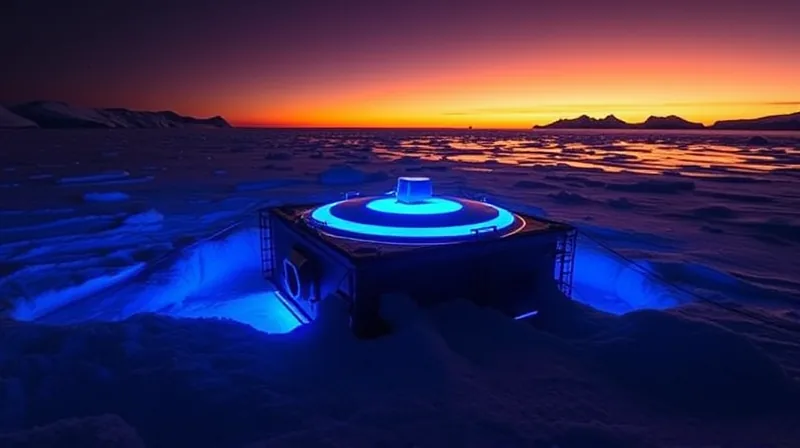
In 2013, researchers at the IceCube Neutrino Observatory reported something its designers had not promised. [1] The instrument, buried deep in Antarctic ice at the South Pole, had been built to catch neutrinos. Instead, it detected high-energy neutrinos arriving from beyond the Milky Way — particles carrying far more energy than those produced by the Large Hadron Collider, the world’s most powerful particle accelerator. [2] The detector had not failed. It had succeeded at something no one had guaranteed it could do, and in doing so it opened a new way of studying the universe.
The Royal Swedish Academy of Sciences awarded the 2026 Nobel Prize in Physics to Francis Halzen, a Belgian-American particle physicist at the University of Wisconsin-Madison, “for decisive contributions to the IceCube Neutrino Observatory and the discovery of high-energy neutrinos of astrophysical origin.” [2] The prize carries 12 million Swedish kronor, roughly $1.2 million. Halzen, 82, was born in Tienen, Belgium, on March 23, 1944, and has worked on the IceCube project since 1987 — beginning with an earlier experiment called AMANDA. He describes himself as a theoretical physicist working at the intersection of particle physics, astrophysics and cosmology.
What makes the detection remarkable is the nature of the particle itself. Neutrinos are extremely small, carry almost no electric charge, and interact very weakly with matter. They pass through planets, stars and entire galaxies almost as if those objects were not there. That weakness is precisely what makes them valuable: they can travel across enormous distances without being easily stopped or deflected, carrying information from places light cannot reach. Mark Pearce, chair of the Nobel Committee for Physics, put it plainly: “Francis Halzen has led an international team of researchers and engineers who have provided us with a fantastic instrument. His tenacity and scientific vision has paved the way for a new kind of astronomy.” [2]
A Wager Against Conventional Wisdom
The question Halzen pursued was not new. It had been open since the 1980s, when he began working on AMANDA — a prototype detector using light sensors placed deep inside Antarctic ice. That early experiment demonstrated two things: neutrinos could be detected in ice, and a much larger detector would be required to do it properly. AMANDA was not the answer. It was the proof that an answer was possible.
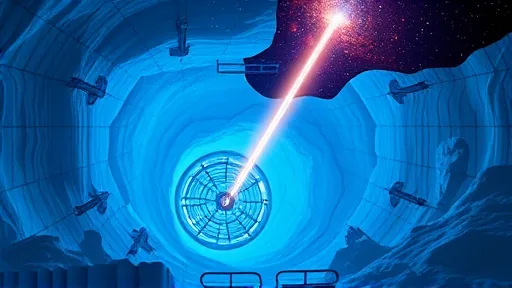
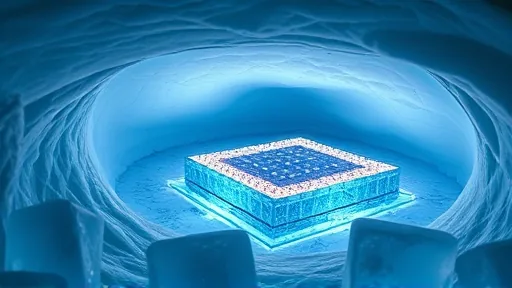
Halzen then pushed for IceCube, which was designed to be about 100 times larger than AMANDA. The detector covers roughly one cubic kilometre of Antarctic ice, with thousands of light sensors buried deep below the surface. These sensors detect the faint flashes of light produced when neutrinos interact with matter. IceCube became fully operational in 2010. The University of Wisconsin-Madison is the lead institution behind the project. “This reflects on the really courageous people who joined me in this project when really no respectable conservative physicist would have joined me,” Halzen said. “But many talented people did, and that’s why I’m here.” [2] Danielle Norcini, a particle physicist at Johns Hopkins University, said in a statement: “I am shocked and absolutely delighted that Francis was awarded the Nobel this year. He is the scientific visionary and driving force behind IceCube. It has transformed our understanding of the universe by detecting the first high-energy neutrinos from beyond our galaxy, opening an entirely new field of neutrino astronomy. The experiment is the extraordinary achievement of hundreds of scientists, engineers, and collaborators, but Francis was the person who dreamed big enough to imagine an experiment of this scale and then relentlessly pushed to make it a reality.” [2].”
Halzen’s career path had prepared him for the long wait. He studied physics at the University of Louvain in Belgium, earning a master’s degree in 1966 and a PhD in 1969. Between 1969 and 1971 he worked as a scientific associate at CERN, the European particle physics laboratory. He joined the University of Wisconsin-Madison in 1972 and has remained there since. His research has covered particle physics, cosmic rays, astrophysics and cosmology, including the study of particles produced by supernovae and the relationship between particle physics and cosmic rays. He is also co-author of Quarks and Leptons, a widely used textbook on particle physics.
A New
Window on the Cosmos
The 2013 discovery did more than confirm a prediction: it created a new observational channel. Until then, astronomy relied on light and other forms of electromagnetic radiation. Neutrinos offered something different: a way to investigate distant and powerful cosmic events that might otherwise remain invisible. The discovery also led to plans for larger neutrino observatories in Antarctica and deep beneath the oceans. [2].
The Nobel Prize is the latest in a long list of honours for Halzen. He received the Breakthrough of the Year Award from Physics World in 2013 for the discovery of cosmic neutrinos beyond the Milky Way. He received the Balzan Prize and the Giuseppe and Vanna Cocconi Prize in 2015. He was awarded the Bruno Pontecorvo Prize in 2018 and the Yodh Prize in 2019. In 2021 he received the Homi Bhabha Medal and Prize. He was elected to the US National Academy of Sciences in 2024. In 2026 he also received the APS Medal for Exceptional Achievement in Research.
Halzen spoke to the Nobel committee by phone from Italy after the announcement in Stockholm. “It was a great surprise and I obviously didn’t expect it,” he said. The prize recognises decades of work that helped establish neutrinos as a new tool for studying the universe. What remains open is the full inventory of cosmic sources. IceCube has shown that high-energy neutrinos arrive from beyond the galaxy. It has not yet mapped every source that sends them, and that mapping is the work the next generation of detectors is built to finish. [2].
Sources
Mentioned organisations (context, not sources)
- IceCube Neutrino Observatory — Organisation (homepage)
- Royal Swedish Academy of Sciences — Organisation (homepage)
- University of Wisconsin-Madison — Organisation (homepage)
- Johns Hopkins University — Organisation (homepage)
- University of Louvain — Organisation (homepage)
- CERN — Organisation (homepage)
- US National Academy of Sciences — Organisation (homepage)
- APS — Organisation (homepage)