
Cow Pregnancy Monitoring Cuts Waste and Emissions
A dairy cow’s pregnancy is a long investment. Farmers spend months on feed, water, land, and care before a calf is even born. When that pregnancy fails, every one of those resources is wasted. The cow produces no milk from that cycle, no future replacement animal, and no income to offset the costs. Worse, the greenhouse gases emitted during the entire pregnancy have already been released into the atmosphere, with nothing to show for them. This is the quiet economic and environmental toll that sits behind every miscarriage on a dairy farm.
The solution may come from an unexpected direction. A technology originally developed for an entirely different purpose — monitoring human health and fertility — is now being adapted for livestock. The same sensors that track human vital signs and predict health events can be fitted to dairy cows, a crossover first demonstrated by researchers at the University of Cambridge These devices monitor temperature, movement, and other physiological signals around the clock. When a cow’s body shows early warning signs of a problem, the farmer knows before it becomes a full crisis. This is preventive care, not reaction. The shift is from treating sickness to predicting it before it happens.
From Human Medicine to Cow Health
The crossover from human to animal health monitoring is not a small step. Human wearables track heart rate, sleep patterns, and activity levels to catch anomalies early. Dairy cows, it turns out, respond to the same logic. A cow’s body temperature rises when infection begins. Her movement patterns change when she is stressed or unwell. These signals are subtle, but they are measurable. The same sensor technology that alerts a person to an irregular heartbeat can alert a farmer to a cow that is about to miscarry.
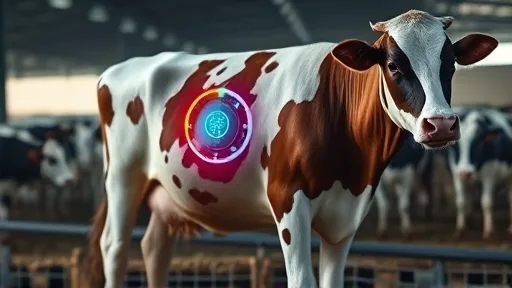
Early detection changes everything. If a farmer knows a cow is at risk, she can be separated from the herd, given extra nutrition, or treated with medication before the situation worsens. This is not speculative — the data is clear that healthier animals produce more and waste less A cow that carries her calf to term produces milk, a new animal for the herd, and income. A cow that miscarries produces none of those things. The difference between the two outcomes is often a matter of days or even hours of early warning.
The Mechanism Behind the Savings
The mechanism is straightforward once the technology is in place. Sensors continuously collect data from each cow. That data is analyzed for patterns that precede a miscarriage. When a pattern is detected, an alert is sent to the farmer. The farmer intervenes. The intervention saves the pregnancy. The saved pregnancy means feed, water, land, and emissions were not wasted. This is the chain of cause and effect that turns a health monitoring tool into a climate solution.
The greenhouse gas reduction comes from efficiency. Every pregnancy that ends in miscarriage represents emissions that produced nothing. Feed was grown, digested, and converted into methane. Land was used, water was consumed, and energy was expended. All of that for a dead calf and a lost milk cycle. When miscarriages are prevented, the same emissions produce a living animal and a productive lactation period. The carbon footprint per unit of milk drops because the waste drops. It is not about producing less - it is about wasting less.
Where Animal Science Meets Climate Research
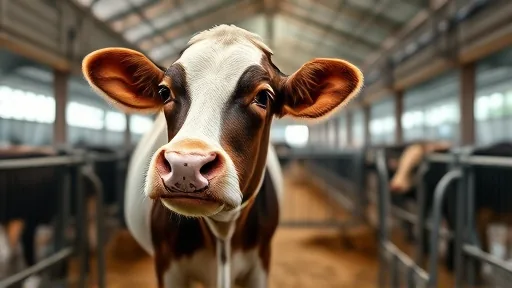
The intersection here is between veterinary science and climate research. What happens inside a single cow’s body has measurable effects on the atmosphere, and researchers at the University of Cambridge have been tracking this connection through their work on smart collars for dairy herds. A healthier herd means fewer failed pregnancies, which means fewer wasted resources, which means lower emissions per liter of milk. This connection is only visible when you look at both fields at once. The veterinarian sees a health problem. The climate scientist sees a methane source. The farmer sees a financial loss. They are all looking at the same event.
The implications open new questions. If monitoring can prevent miscarriages, what else can it prevent? The same sensors that predict pregnancy loss might predict other health problems — mastitis, lameness, metabolic disorders Each of those conditions also carries an environmental cost. Each one also wastes feed, water, and energy. The technology that started as a human health tool is becoming a livestock management standard. And every improvement in animal health is an improvement in the carbon intensity of food production. The data is still being collected, but the direction is clear: preventing loss is the cheapest way to reduce emissions