Coral Records Show Century of Unprecedented El Nino Events
For Julia Cole, a palaeoclimatologist at the University of Michigan in Ann Arbor, the powerful El Niño event now gaining strength in the Pacific Ocean comes as no surprise. Cole led the research team that produced the new reconstruction. It looks like part of a century-long pattern of strong El Niño events happening more often as the planet heats up because of human-caused climate change. “It doesn’t look like a fluke,” she says.
That observation rests on a painstaking reconstruction of sea surface temperatures in the eastern Pacific Ocean. Cole and her colleagues published their findings today in the journal Science. [2] The analysis covers the millennium before the industrial revolution, a time when human-generated greenhouse-gas emissions had not yet begun to warm the planet. [1]
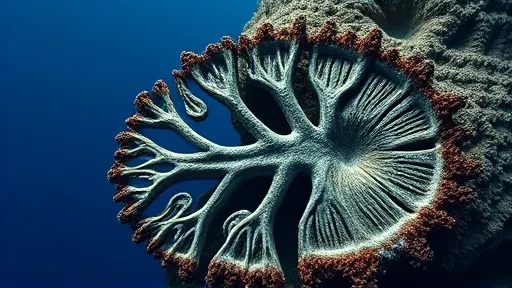
The key to this ancient temperature record lies in coral skeletons from the Galapagos islands. These marine organisms grow in layers, much like tree rings, and their chemical composition preserves a detailed history of the water they lived in. By reading these layers, scientists can reconstruct month-to-month temperature changes from centuries ago.
The results are striking. The past century has seen strong El Niño events happening more frequently than in the previous 1,000 years combined. This frequency increase represents a fundamental shift in how the Pacific Ocean behaves, one that cannot be explained by natural variability alone.
Many climate models project that this trend towards more-frequent strong El Niños will continue with climate change this century. These events lead to a temporary surge in global average temperatures, and influence the weather in particular places around the globe with consequences for ecosystems and economies. “We need to think about how to prepare better so that these aren’t as catastrophic for us,” says Cole.
El Niño is the warm phase of the natural swing between warm and cool temperatures in the tropical Pacific Ocean known as the El Niño-Southern Oscillation, or ENSO. This June, El Niño conditions emerged in the Pacific. Forecasts suggest that it is shaping up to be a record-breaking event by a wide margin, and the third strong El Niño in just 11 years, something never observed before.
That pattern has reinvigorated a long-standing debate about whether human-caused climate change has boosted the intensity and frequency of El Niño events. The question has been challenging to answer for several reasons. Computer models have trouble fully capturing the intricate feedback between winds and water that drive ENSO.
Reliable temperature measurements in remote parts of the tropical Pacific are rare before the twentieth century. This creates uncertainty about how ENSO behaved without the influence of human-caused warming. Scientists need a longer record to distinguish natural cycles from human-driven changes.
Palaeoclimatologists use proxy measurements of Pacific Ocean temperatures to extend the ENSO record further back in time. These proxies include tree rings and marine fossils, each offering a different window into past climate conditions. Corals are particularly useful because their growth captures the month-to-month changes needed to identify fleeting events such as El Niños.
Coral records from the central Pacific indicate a trend over the past several decades towards more-frequent strong El Niños. But until now, this record didn’t capture where El Niños are strongest in the eastern Pacific. This left an ambiguous view of the changes overall.
Julien Emile-Geay, a palaeoclimatologist at the University of Southern California in Los Angeles, compares the situation to a doctor trying to measure someone’s heartbeat by placing a stethoscope on their ankle. The analogy captures the problem perfectly: a doctor might detect something, but would miss the most critical signals coming from the heart itself.
The Galapagos islands in the eastern Pacific are ideally located to measure “the heart of El Niño,” Cole says. But few corals grow there because of the extreme conditions in that part of the ocean. The waters are cold and nutrient-rich, which makes coral growth difficult and slows the accumulation of their skeletal records.
Despite these challenges, Cole and her team managed to find enough coral specimens to build a continuous record spanning 1,000 years. The reconstruction required careful calibration of the chemical signals preserved in the coral skeletons. Each coral colony records temperature variations in the ratio of oxygen isotopes locked into its calcium carbonate structure.
The resulting time series offers an unprecedented view of El Niño behavior before human influence. It shows that strong events were relatively rare in the pre-industrial era. The frequency we see today stands out as an anomaly against that long-term background.
The interactions between the ocean and the atmosphere that drive El Niño events are complex. There is still uncertainty about how cycles of Pacific temperature will change this century. The corals provide a window into the past, but they cannot predict the future with certainty.
“Corals give us a time machine to look into the past,” says Cole. “They don’t give us a time machine to look into the future.” That distinction matters for how scientists and policymakers interpret the findings.
The current El Niño event serves as a live demonstration of what the coral record predicts. Forecasts indicate it could break records by a wide margin. If it does, it would be the third strong El Niño in just 11 years, a clustering that has never been observed before in the instrumental record. .
The past century has produced more strong events than any comparable period in the previous millennium. The statistical significance of this pattern strengthens the case that human-caused warming is modifying ENSO behavior.
The implications extend beyond academic curiosity. Strong El Niños trigger droughts in some regions and floods in others. They disrupt fisheries, agriculture, and water supplies across the Pacific basin and beyond. Understanding whether these events are becoming more frequent is essential for adaptation planning.
Cole emphasizes that preparation is key. If strong El Ninos become more common, communities need to anticipate their impacts. Building resilience requires knowing what kind of climate variability lies ahead.
The coral record from the Galapagos fills a critical gap in the global ENSO monitoring network. Previous reconstructions relied heavily on central Pacific records, which capture only part of the phenomenon. The eastern Pacific is where El Nino’s signature is most pronounced.
Emile-Geay’s stethoscope analogy highlights why this matters. A doctor listening at the ankle might detect a heartbeat, but they would miss crucial information about cardiac function. Similarly, central Pacific corals miss the strongest expression of El Nino variability.
The new reconstruction provides the missing eastern Pacific perspective. It confirms that the recent increase in strong El Nino frequency is not limited to one region. The pattern holds across the entire ENSO domain.
Cole and her colleagues plan to continue refining their reconstruction. More coral samples from the Galapagos could extend the record further back in time. Each additional specimen adds detail to the picture of past climate variability.
The study also raises questions about how ENSO will evolve as warming continues. Climate models disagree on some aspects of future ENSO behavior. The coral record provides a baseline against which model projections can be tested. .
Scientists at other institutions are also working on extending ENSO reconstructions. Tree ring records from tropical regions offer complementary information about past Pacific climate. Marine fossil deposits provide even longer time perspectives, though with less temporal resolution. .
The combination of multiple proxy records strengthens confidence in the overall picture. Each archive has its own strengths and limitations. Together, they paint a more complete portrait of how the Pacific has behaved over centuries and millennia.
The current study represents a significant advance in this effort. By focusing on the eastern Pacific, it addresses a known weakness in previous reconstructions. The result is a more robust assessment of how El Nino has changed.
The publication in Science ensures broad visibility for the research. Other groups may now seek to replicate or extend these results using different coral collections.
The Galapagos corals are particularly valuable because of their location. The islands sit right in the zone where El Nino’s warming signal is strongest. This makes them an ideal natural laboratory for studying ENSO dynamics.
The extreme conditions that limit coral growth in the region also preserve a distinctive chemical signature. The temperature signal in these corals is clearer than in specimens from less extreme environments. This enhances the reliability of the reconstruction.
Collecting coral cores from the Galapagos involves careful planning and permits. Processing the samples in the lab demands meticulous attention to analytical detail.
The effort has paid off with a dataset that spans a critical period. The pre-industrial millennium provides a natural baseline for comparison. The contrast with the recent century is stark and statistically robust.
Uncertainties remain about the exact mechanisms linking warming to stronger events. The role of natural variability over multi-decadal timescales is still being explored.
But the coral record adds a powerful piece of evidence to the debate. It shows that the recent clustering of strong El Ninos is unusual in a millennial context. This supports the hypothesis that human-caused warming is playing a role.
Instrumental records alone are too short to capture the full range of natural variability. Proxy records extend our perspective and sharpen our understanding.
As the current El Nino continues to develop, scientists will watch its evolution closely. Its final strength will provide another data point for testing model predictions.
The reconstruction covers a specific region and time period. Extrapolating to global patterns requires additional evidence.
The study brings together detailed proxy data, rigorous analysis, and a clear research question. The result is a compelling contribution to understanding how climate change affects one of Earth’s most influential climate phenomena.
Sources
1. DOI: 10.1038/d41586-026-02717-9
2. Science