Climate Change Shifts Malaria Across Africa
Reading a Century in Drops of Blood
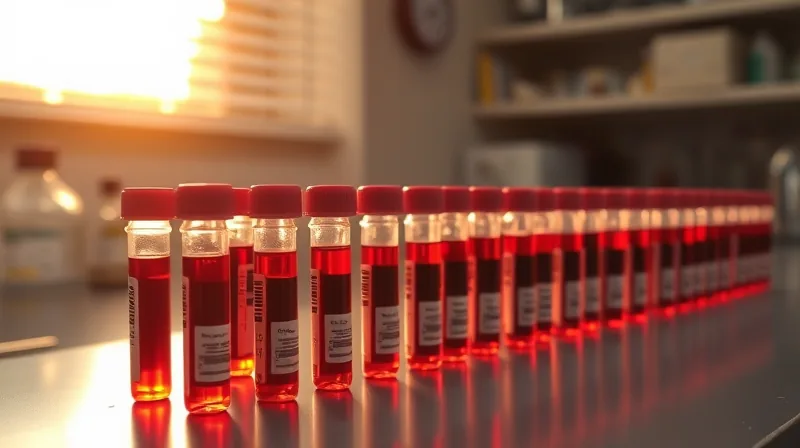
Researchers have assembled a dataset that spans more than a hundred years of blood samples collected from children across sub-Saharan Africa. Each sample carries a trace of whether the malaria parasite was present. Stacked together, these traces form something no single survey could produce: a century-long record of where the disease has lived and how that geography has changed.
The ambition is audacious. A single blood spot from a child in 1950s Nigeria or 1990s Malawi becomes a data point in a continental model. The team behind the work, including climatologist Romaric Odoulami of the University of Cape Town in South Africa, used these historical samples to build a computer model that links childhood malaria prevalence to two climate variables: temperature and precipitation. [1]
But the method has a built-in limit. The model does not measure malaria directly across time — it infers prevalence from temperature and rainfall, then checks that inference against the blood-sample record. The researchers also constructed a hypothetical version of the same model with climate change removed. The difference between the two — the real world and a counterfactual one — is what they attribute to warming. The result is an estimate of attributable change, not a direct observation of it.
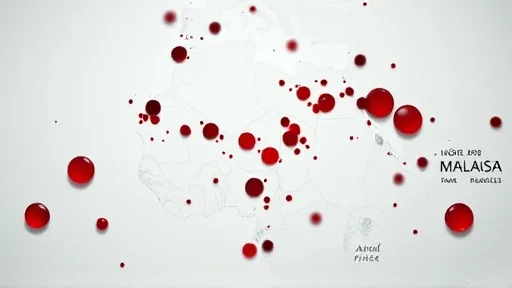
What the comparison reveals is modest in the aggregate but striking in its distribution. From 1901 to 2014, climate change likely caused a net 0.5 percent increase in malaria transmission across sub-Saharan Africa. In plain terms: one excess case for every 1,000 children. That continental average, however, conceals extremes in both directions.
A Disease That Follows the Heat
Malaria transmission and the mosquito life cycle are tightly bound to temperature. Laboratory studies have established the parameters: transmission peaks at 25 degrees Celsius, drops off below 19 degrees Celsius and above 34 degrees Celsius. These thresholds explain the disease’s historical geography. West and Central Africa — including Nigeria and the Democratic Republic of the Congo — have long been the hotbeds, their warm, stable climates hospitable to both the Plasmodium parasite that causes malaria and the Anopheles mosquito that carries it.
As temperatures rise, that hospitality is shifting. The eastern and southern regions of the continent, historically too cool in their highlands and coastal zones to sustain significant transmission, are becoming more favorable. The Ethiopian highlands saw malaria spread increase by 8 cases per 1,000 children. [1] Parts of West Africa, meanwhile, saw transmission rates decrease by 1 to 2 percent — roughly four fewer cases per 1,000 children. [1] The disease is not disappearing; its range is shifting.
Odoulami puts it directly: increased temperatures may mean a more hostile environment for disease-carrying mosquitoes in the West and Central regions and a more favorable climate in the eastern and southern regions. The researchers project that under an intermediate warming scenario of 2.7 degrees Celsius globally, climate change will lower malaria transmission rates in sub-Saharan Africa by 2 percent over the next 85 years. A net decline — but one built on regional shifts that will demand regional responses.
When Intervention Outweighs Climate
The climate signal, however clear in the data, is not the dominant force in malaria’s future. Cyril Caminade, a climatologist at the Abdus Salam International Centre for Theoretical Physics in Trieste, Italy, emphasizes that malaria transmission is largely influenced by control efforts, which outweigh climate-induced changes in their impact. Bed nets, insecticide treatments and malaria prevention drugs have driven down case numbers in ways that no temperature shift could match.
This is the ethical dimension the finding opens. If control efforts dominate, then the regions where climate change is projected to increase transmission are precisely the regions that need expanded mitigation strategies — and they need them now. Caminade says it will be important to expand these strategies to areas where malaria transmission is projected to increase. The tools exist; the open question is whether they will reach the regions where transmission is projected to rise.
Odoulami frames the stakes without hedging. Africa in general lacks the luxury to wait for the key global emitters to do what is needed to reduce climate change impacts on the most vulnerable, he says. It is important for regions across Africa to increase awareness of the danger of malaria where there is little knowledge of it. The burden of adaptation falls on those least responsible for the emissions driving the shift.
The same modeling approach — linking historical health data to climate variables, then comparing against a world without warming — has been applied to other vector-borne diseases. It does not predict the future. It measures how much of the present can be attributed to a changed climate, and it identifies where the next intervention must go.