Brains Two Separate Organs Study Finds
The Simplest Explanation Was Wrong
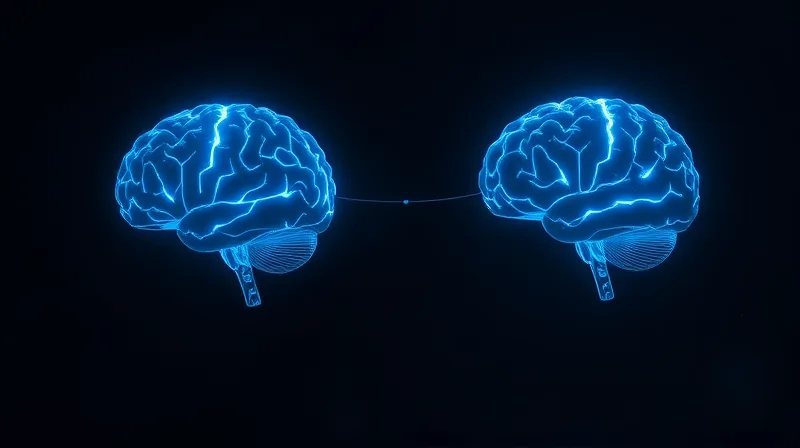
For well over a century, the standard teaching in neuroscience has been tidy and intuitive: the brain is a single organ, grown from a single starting cell, wired into one seamless machine. That picture is now being taken apart. Researchers at Stanford University have found that the human brain is actually two separate organs that work together, rather than one unified unit. [1] The two halves did not merely divide labor during development. They arose from entirely different origins and evolved along independent paths for millions of years before ending up packed inside the same skull.
The mismatch between the old model and the new evidence is stark. The old model said one progenitor cell — a kind of biological blank slate — gives rise to the entire brain. The new model says there were two distinct populations of progenitor cells from the very start, and they never mix. One population expresses a gene called Otx2 and is destined to become the forebrain and midbrain. The other expresses a gene called Gbx2 and is committed to forming the hindbrain.
This is not a subtle refinement. It changes what scientists think they are looking at when they study the brain. The hindbrain, also called the brain stem, sits at the back of the skull and runs the functions no one can live without: it keeps the heart beating, triggers sleep, and controls breathing. The midbrain and forebrain handle the high-level work — language, logic, abstract reasoning. According to the Stanford team, these two systems developed independently yet connect intimately enough to behave like one organ.
Rayyan Jokhai, the first author of the study, described the partnership in plain terms. [1] The front of the brain decides to make a movement; the back of the brain coordinates the fine spatial details and smooths the action. Movements of the face and neck are initiated by the front but carried out directly by the back through motor neurons — a division of labor that makes eating, swallowing, and facial expressions possible. Dr Kyle Loh, associate professor of developmental biology at Stanford, put the evolutionary logic bluntly: having the brain as one organ would probably be more efficient, but we rely on this primordial way to make the brain as two separate pieces. [1] His summary of what happened over deep time: evolution took two existing neural systems and pushed them together spatially.
A Failure in the Petri Dish
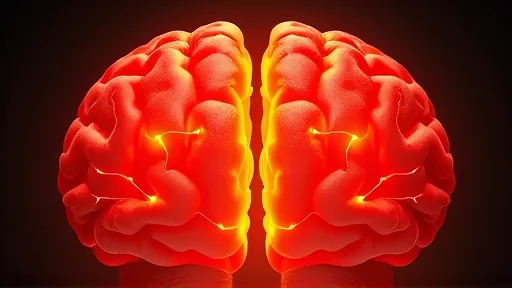
The discovery did not begin with a grand theory. It began with a failure in a petri dish. Scientists could grow brain cells from the midbrain and forebrain fairly easily, but hindbrain cells refused to grow in the lab at all. That stubborn refusal was the anomaly. Instead of treating it as a technical nuisance, the Stanford team treated it as a clue — and followed it back to the earliest moments of embryonic development.
To see those moments, they looked at mouse embryos at a stage called gastrulation — the early embryonic stage when the body first organizes into distinct layers and begins to take shape. This window cannot be opened in human embryos: once gastrulation starts, experimentation is not permitted on ethical grounds. The mouse embryos gave the team the view they needed, and the researchers say the findings apply to humans.
What they saw was two separate developmental tracks. Armed with that knowledge, the researchers examined how the DNA was packaged inside the cells and found it packed entirely differently in the two populations. Stanford described this early difference as locking the cells onto different fates, “like travellers on parallel tracks that never cross.” Dr Loh framed the result as a first: the front of the brain arises from a totally different progenitor cell than the back of the brain.
The evolutionary story turned out to be older and stranger than anyone expected. It had been assumed that the hindbrain, which controls the vital functions of life, would have evolved first, but the two-track model points the other way. The comparison to jellyfish, which carry two nervous systems in different parts of the body, gives a sense of what the arrangement may once have looked like before the two systems moved together.
A Dish of Cells and an Open Question
The practical payoff of the discovery is already measurable. Because the team can now grow hindbrain neurons, they successfully coaxed human pluripotent stem cells — cells that can become any cell in the human body — into functional hindbrain motor neurons in the laboratory. That capability had been blocked for years, and the blockage had slowed research into diseases that kill hindbrain neurons.
Two such diseases stand out. Spinal muscular atrophy, or SMA, and amyotrophic lateral sclerosis both destroy hindbrain neurons, and in both cases scientists do not know how the killing happens. The new cell system gives them a way to watch. Jokhai said the ability to create large numbers of human hindbrain motor neurons in a petri dish from stem cells offers a new approach to model these diseases. The team is now studying, at high resolution, how SMA kills hindbrain motor neurons in the dish, hoping to use the system to discover and test SMA drugs. The longer hope, in Jokhai’s words, is to one day provide regenerative therapies for patients suffering from the numerous neurodegenerative diseases that exist.
The findings are published in Nature Neuroscience, and the study’s first author is Rayyan Jokhai, with Dr Kyle Loh, associate professor of developmental biology at Stanford, as senior author. What remains open is the question the two-track model forces: if the front and back of the brain were built from different sources and never overlapped, what exactly holds them together so tightly that a person experiences them as a single mind? The Stanford work shows the connection is intimate and functional. It does not yet explain how two independently evolved systems, locked onto parallel tracks from the earliest moments of development, manage to act as one.
Sources
1. MSN (Original laut Text: The Telegraph) — Portal copy