The Border the Pacific Can See
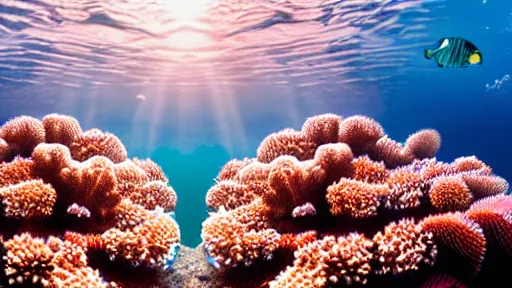
In July, the coral below Hilda Heine’s home island was bright and lush. When she looked again a few months later, it had bleached white. That is a border, even if nobody drew it on a map: the line between a living reef and a dead one, crossed inside a single season.
Heine, the president of the Marshall Islands, carried the image into the leaders’ summit at Cop31 in Turkey on Wednesday, 11 November 2026. She was one of a handful of Pacific Island leaders to address the gathering. She set the image beside the number governments accepted in Paris in 2015 — 1.5C of warming above temperatures before widespread industrial fossil-fuel use — and described what passing it would do to her country. Overshoot would mean waves eating away the shores and floods that destroy towns, schools and hospitals. Her instruction to the room ran to five words: “It’s time to wake up.” Her warning ran further: “Our response to the threat of overshoot must be overwhelming, or the world we know is over.” [1] Cop31 is the thirty-first meeting of the parties to the 1992 UN treaty under which the Cop summits are held. The 1.5C figure is a rise above pre-industrial temperatures, not an absolute temperature. Overshoot is the technical term for warming that passes the 1.5C mark and, in the most hopeful version, later comes back below it. The UN Environment Programme has found that overshoot is now inevitable. The same assessment warns that its effects on icy regions will be so calamitous that it should be kept as brief and as low as possible. Amina Mohammed, the UN deputy secretary-general, said a key priority was keeping 1.5 alive. For small island nations the distinction is not academic. Rising seas are an existential threat to them, and they are among the countries most exposed to catastrophe once heating shoots past 1.5C.
The Marshall Islands have already had a rehearsal. In December 2021, people in Majuro, the capital, cleared debris from a flooded road after storms and tidal surges pushed the sea into the streets. A road is a small thing to lose, and it is the smallest item in the image. Behind it sit the school, the hospital and the town — the three things she named, and the three that decide whether a place can still be lived in. Nearly five years separate that flooded road from this week’s speeches. In that time the argument has moved from what might happen to what is already being counted.
A Debt of Heat Comes Due
The arithmetic of the week was supplied by Mia Mottley, the prime minister of Barbados. “The UN tells us that, even if every pledge is delivered, we are heading for 2.6 degrees,” she told the leaders. [1] “On current policies, 2.8 degrees is where we will end up.” Two numbers, and the distance between them is the distance between promises and practice. She called out governments that had “not tried hard enough” to curb emissions since the Paris agreement. Then she reclassified the problem in the language of accounting. “Let me be plain: overshoot is not a new target. It is a debt, a debt of heat, borrowed against our children’s future. And it must be repaid.” A debt implies a creditor, and much of the rest of the day went into naming one.
António Guterres, the UN secretary general, aimed his address at the industry and at governments that “keep expanding fossil fuel production while claiming to be committed to 1.5C.” He accused oil and gas companies of distorting science and delaying action on the climate crisis. He asked for a windfall tax on the bumper profits they have made from the Iran war. A windfall tax takes a share of gains that arrive through circumstance — a war, a shortage, a price spike — rather than through anything the company built. In his proposal the revenue would help vulnerable countries recover. His prescription came in two parts: “It’s time to kick the habit and end the fossil-fuel addiction,” and “It’s time for governments to tax these windfall profits and use them to help vulnerable countries recover. Polluters must pay.” That first line drew applause. He compressed the politics into one image: “Fossil fuels must go the way of the dinosaurs.” Then he turned the image into an argument: “And that won’t happen on its own. The dinosaurs did not have a lobby — fossil fuels do.” He asked for speed as well: “We need an extraordinary acceleration. Our planet is heating up. The clock is winding down.” The address was a salvo aimed at boosting the talks, and one of the last he will deliver as secretary general; he stands down next month, in December.
The host government supplied the counter-example. Turkey is co-hosting Cop31 with Australia, a pairing that Recep Tayyip Erdoğan and Anthony Albanese each praised. The arrangement is unusual. Erdoğan told the summit he wants Cop31 remembered as a turning point in the climate crisis, and called on countries to act rather than to promise. His formulation: “Every minute we fail to meet the targets in the Paris agreement, the risks and costs we face continue to grow.” Two days before, away from the conference hall, he had celebrated the discovery of two new oilfields with an estimated in-situ potential of 135m barrels. In-situ potential measures oil believed to sit in the rock, not oil that has been shown to flow at a commercial price. One is a geological estimate; the other is a business.
Australia’s position is harder to deliver from a podium. The country is one of the world’s biggest exporters of coal and natural gas cooled to liquid for transport. Albanese called the conference a “historic moment” for Australia and invoked a “solemn responsibility” to act on the climate crisis. He did not mention fossil fuels, and the omission drew criticism. Heine told the summit that every new oil well drilled and every piece of coal extracted was a threat to her country’s future. On new fossil fuel resources she was explicit: “The discovery of new fossil fuel resources is not something to celebrate but something to fear.”
The Empty Chairs
The leaders’ segment opened on the third day of the summit, with impassioned speeches interspersed with vigorous displays of Turkish music and dancing. The UN counted 91 national leaders in attendance. Two major figures were not among them: Donald Trump of the United States and Xi Jinping of China stayed away. Others who declined had somewhere else to be. Emmanuel Macron of France and Friedrich Merz of Germany are heading to Ireland instead, for a conference on artificial intelligence.
Among the scientists who did come, the mood was darker. Bill Hare, a climate scientist and chief executive of Climate Analytics, described “a feeling of panic from around here, from the science community.” [1] He reported fraught conversations with rainforest and cryosphere scientists — the people who study the forests that store carbon and the ice that reflects heat. “The mood is gradually darkening among scientists. In fact, people talk about feeling as though things have gone backwards.” Two European heads of state supplied the ethical framing. Gordana Siljanovska-Davkova, the president of North Macedonia, put the generational problem in a sentence: “We are the first generation to fully understand the consequences of our choices — and perhaps the last with time to change course. Future generations will live with the consequences of our decisions.” Nataša Pirc Musar, the president of Slovenia, asked the question that precedes any deal: “If we cannot agree that human dignity and respect for nature must be at the heart of our decisions then, frankly, what is left to unite us?”
The agenda had been set weeks earlier, in the South Pacific. UN Deputy Secretary-General Amina Mohammed joined senior government figures and policy makers in Tuvalu and Fiji, two Pacific island nations facing the brunt of rising seas and intensifying floods. The pre-conference was convened to prepare for the intense negotiations to come and to set the agenda. Her test of the summit’s outcome was generational: “We must take urgent action to ensure every child born today across the Pacific Islands can grow up, prosper and live on the islands they call home.” On overshoot she refused the fatalist reading, and urged states not to give up: “Overshoot is not a reason to surrender. It is a call to accelerate — to make overshoot as short and small as possible and bring temperatures back down below 1.5 as quickly as possible.” She pressed governments to deliver what they agreed at the 2023 UN climate summit in Dubai: to transition away from fossil fuels, triple the maximum output of wind, solar and other renewable installations and double energy efficiency by 2030. She linked the renewables transition directly to energy security.
Behind the speeches sits a physical situation that is not cooperating. Record-breaking heat, devastating floods and an unprecedented El Niño pattern are making climate action more urgent. The world is barrelling past the 1.5C limit and entering the teeth of one of the strongest El Niño events in history, a periodic warming of the tropical Pacific that disrupts weather worldwide. Almost every country at Cop31 is lagging in cutting emissions. Finance for the nations most vulnerable to extreme heat, floods, fires and other climate-fuelled calamities remains insufficient. There is little sign that the talks will produce further progress on phasing out planet-heating fossil fuels. The 1.5C line remains the fixed point against which everything said in Turkey will be measured, and the science presented at Cop31 suggests the room is already running late.