Ancient Wall Under Paris Hospital Tests Lutetia Origins
Meta commentary - no external expert source; basis: Theguardian (2026-09-24). #MetaEconPol
Twenty Metres of Wall Under a Hospital
Before
Paris there was Lutetia — a name without a firm address. Lutetia is the ancient name this city carries, and for a very long time nobody could say with confidence where the settlement behind that name actually stood. A vague ancient description and a shortage of physical traces left the question open for centuries.
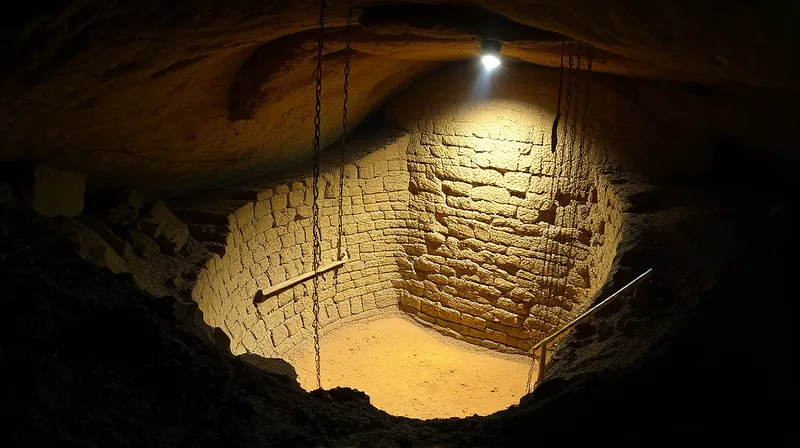
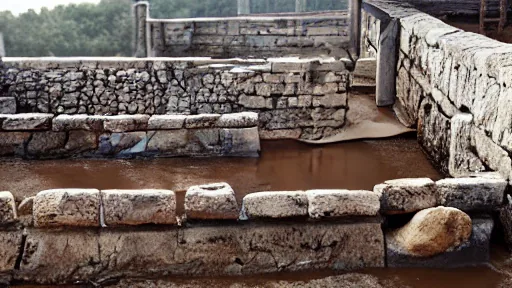
This summer the question acquired a piece of evidence. Beneath the Hôtel-Dieu hospital, on the Île de la Cité and a short walk from Notre-Dame Cathedral, excavators uncovered roughly 20 metres — 65 feet — of wall dating to the Gallo-Roman period. The structure is made of stone and wood together. France’s culture ministry has called the find a “major breakthrough.” [1]
The excavation site was visited by the archaeologist Julien Avinain. The visit underlines what is at stake: not a curiosity for specialists alone, but a possible answer to a question about the origins of a national capital. What the dig produced is physical, measurable and, for now, open to interpretation.
An Island or a Suburb Named Nanterre
Archaeologists believe the fragment formed part of the ramparts of Lutetia — the defensive line thrown up around the settlement. The excavation team believes those ramparts were built by the Gallic Parisii tribe, who lived along the River Seine during the Iron Age.
That decision is where the dispute begins. The Île de la Cité has traditionally been regarded as the centre of Lutetia. A rival theory places the original settlement instead in Nanterre, a suburb to the west of the city. Two locations, one name, and now a wall found in one of them.
The written record has never settled the matter. Lutetia first appears in book seven of Julius Caesar’s Gallic Wars, described as lying on an island in the River Seine. The description is vague, and that vagueness has generated many theories about the city’s location. The culture minister, Catherine Pégard, framed the discovery in these terms: “We may be looking at one of the most important remains ever discovered for understanding Gallic Lutetia.” [1]
Charred Traces and a Carbon Date Window
The wall carries traces of fire. That detail may correspond to Caesar’s account that the Gauls set fire to their town before the Battle of Lutetia against the Romans — a scorched layer, if the reading holds.
The dating is where the evidence becomes less decisive. Carbon analysis of the charred evidence placed the find somewhere between 200 BC and 10 BC. That window is roughly 190 years wide. It comfortably contains 52 BC, the year of the Battle of Lutetia, but it also contains a great deal else — the difference between a date range and a date.
Geography supplies the other half of the argument. The Île de la Cité is the largest island in the Seine in the Paris region, and it became the centre of the Roman settlement of Lutetia. A defensive structure found there fits that later history, which is precisely why it carries weight in the older quarrel.
The minister’s caution therefore deserves equal billing with her enthusiasm. Pégard said scientific caution still requires that the wall’s function and its chronology be verified, while noting that the convergence of evidence at this stage is particularly remarkable. [1] The culture ministry has staked a public claim on the find; the researchers must still test its purpose and date before a 2,000-year-old address can be treated as settled. The risk is not that the wall is uninteresting. It is that a headline adopts a conclusion the evidence has not yet earned, and that a genuine discovery gets buried under a claim it cannot carry.
Sources
1. MSN (Original laut Text: AFP) — Portal copy
Mentioned organisations (context, not sources)
- Hôtel-Dieu hospital — Organisation (homepage)