A Trailer Full of Fire Emoji, an Episode Without a Single Actor
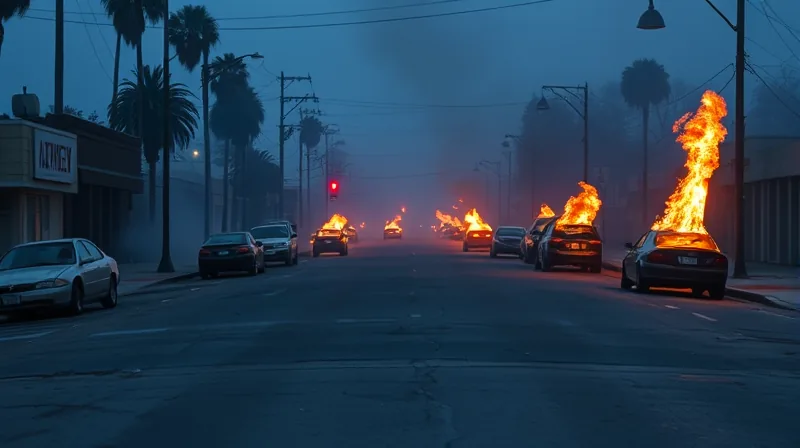
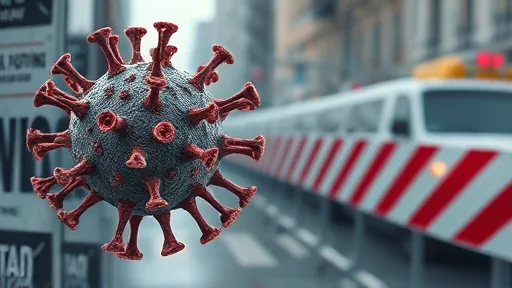
When Mansa released the trailer for They Left Us to Die on October 29, the response on Instagram was a cascade of fire emoji, anticipation building in the comments as viewers waited for a zombie outbreak story set in South Los Angeles. [1] The premise reads like a familiar genre exercise: a virus engineered on purpose, authorities barricading a neighborhood, residents abandoned to survive alone. An emergency room nurse named Imani Cross searches for a cure to save her infected brother DJ. Thirty episodes, shot vertically, built for the scroll. What the trailer did not advertise — what no frame of it could show — was that none of the people on screen exist. The entire series is AI-generated, and the gap between how it looked to an audience and what it actually was opened the moment the first episode went live at midnight.
The Product and the Promise Diverge
Mansa was founded by David Oyelowo and Nate Parker, and it arrived as one of the first vertical apps pitched as a home for Black talent — a platform to support and cultivate artists of color in a format that was exploding. [1] That was the claim. The execution, as users saw it, inverted the claim: a Black-cast show with zero human roles, no actors, no crew, no casting director, no one paid to perform. One Threads user wrote that Mansa was “one of the first vertical apps that was supposed to support and cultivate black talent, but here they are … another AI sellout,” framing the pivot as a betrayal of the founding promise rather than an extension of it. Another asked why any self-respecting casting director, producer, or director would hire Oyelowo again. Actress Yvette Nicole Brown registered her disapproval with a single line and a gif of Viola Davis looking irritated. The deception here was not hidden code or a deepfake scandal. It was simpler and more structural: the product presented itself as the thing it was displacing.
The Founder’s Case, and What It Actually Demonstrates
Parker was not surprised by the backlash, and his explanation is worth taking seriously precisely because it reframes the controversy as a strategy. [1] When we hear the words AI, he says, “it immediately drives us to the realities of what we are facing and the real lives it’s impacting. The company describes its approach as using AI as a chess piece rather than a replacement for human-centered content, and Parker characterizes the work as “holding the line on our very existence” in a consolidating industry — using “all the tools that we have at our disposal to make sure we can staff up around shows that get greenlit. The mechanism he describes is a test: make a cheap AI version, track engagement data, prove demand, then commit to live production. On paper, the AI show is a probe, not a product. In practice, the probe is the product the audience receives, and the data it generates flows to studio heads rather than to the performers whose absence made it possible.
The Economics That Make the Gap Profitable
The business case is not speculative. Microdramas are vertically shot, minute-long serials produced at a fraction of television cost, and they mirror the frenzied consumption patterns that now define entertainment. An Omdia analysis of mobile usage in the fourth quarter of 2025 found users averaging 36 minutes a day on ReelShort, against 26 on Prime Video and 20 on Netflix, with the firm projecting a $14 billion microdrama market by 2027. Issa Rae’s Hoorae Media expanded into the sector this year with two series, including Screen Time, which drew over 580 million views across TikTok and its in-house app PineDrama by October. Among 18-to-24-year-olds, short-form video now accounts for 26 percent of weekly media time, more than movies, according to a Luminate survey. Between April and August, Peacock, HBO Max, Prime Video, Paramount+, Netflix, and Disney+ all launched vertical short-form feeds inside their mobile apps. The format’s economics reward exactly the substitution Mansa performed: when the cost of production approaches zero, the difference between a test and a finished show collapses, and the audience cannot tell which one it is watching.
The Room Nobody Read
J. Christopher Hamilton, an associate professor of communications at Syracuse and an entertainment lawyer, names the failure precisely: “What Nate is trying to do, no matter how practical and logical it is, he’s not reading the room and understanding that people don’t care about that. They just see technology as stealing their opportunities. That is the anatomy of the deception in one sentence. The company’s internal rationale is coherent, documented, and defensible on its own terms. The audience’s experience is that a platform built to cultivate Black talent produced a Black story with no Black labor in it, and then explained the laborlessness as a strategy for eventually creating labor. Maria Rua Aguete, Omdia’s global head of media and entertainment, suspects AI will change the industry’s economics but notes that cheaper content does not automatically mean more viewers, and that audiences will ultimately decide what succeeds. The decision, in this case, arrived before the data did.
What the Format Cannot Show You
Hamilton believes AI microdramas are “too compelling a business proposition” for the industry to ignore, and he expects “a resetting of the table, and some people are in denial about that” — a shift that, “when it hits, it’s going to be like a blackout. No one’s going to know which way is up. That prediction is about labor, but it is also about epistemology. A vertical feed cannot tell you whether the face in the frame was paid, whether the script was written or generated, whether the engagement numbers that justified the next season came from people who knew what they were watching. The microdrama form was built for exactly this ambiguity: short, frictionless, consumed in fragments, optimized for a thumb. Mansa used the format’s speed to test an audience’s appetite and the format’s opacity to avoid saying so in advance. The question the episode raises is not whether AI can make a watchable show — the fire emoji answered that. It is who bears responsibility when a system presents a simulation as representation, and the people it was meant to represent find out last.
Sources
Mentioned organisations (context, not sources)
- Mansa — Organisation (homepage)
- Instagram — Organisation (homepage)
- Threads — Organisation (homepage)
- Omdia — Organisation (homepage)
- ReelShort — Organisation (homepage)
- Netflix — Organisation (homepage)
- Hoorae Media — Organisation (homepage)
- TikTok — Organisation (homepage)
- PineDrama — Organisation (homepage)
- Luminate — Organisation (homepage)