
A Shuttle Stands Again
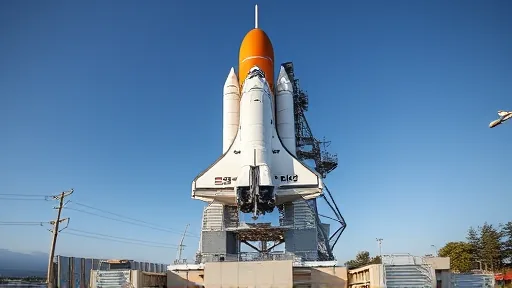
On Friday, November 13, the Space Shuttle Endeavour will open for public viewing at the California Science Center in Los Angeles after a nearly three-year hiatus. This time, visitors will see it as generations of astronauts and ground crews once did before launch: standing vertically, nearly 200 feet tall, mated to an external tank and two solid rocket boosters. [2] It is the first time in history that the public can stand directly beneath a complete, authentic Space Shuttle system in its “go for launch” position. [2] Even spectators who watched Shuttle launches in person never got this close; NASA’s press site sat about three miles from the launch pads. [2] The view now available is the one once reserved for the crews who built, maintained, and flew the vehicle.
That is the paradox at the heart of the new exhibit at the California Science Center in Los Angeles. A vehicle designed for rapid reuse became, in retirement, a monument to something else entirely: the sheer audacity of trying. On Friday, November 13, the Space Shuttle Endeavour will open for public viewing in its vertical “go for launch” configuration — mated to an external tank and two solid rocket boosters, standing nearly 200 feet tall inside the new Samuel Oschin Air and Space Center. [2] It is the first time in history that the public can stand directly beneath a complete, authentic Space Shuttle stack in launch position. [2] Even spectators who watched Shuttle launches in person never got this close; NASA’s press site sat about three miles from the launch pads. [2] The view now available is the one once reserved for the crews who built, maintained, and flew the vehicle.
The exhibit is not merely a piece of hardware on display. It is a 200,000-square-foot addition to the Science Center, built around the vertical stack after the stack was assembled in place. [2].
What the Shuttle Was Supposed to Be
When President Nixon announced the Space Shuttle program in 1972, Apollo was winding down. The Moon landing had consumed a fortune and thrown away most of its hardware in the process. The technical vision was radical: a winged orbiter that would launch like a rocket, operate in orbit like a spacecraft, and land on a runway like an airplane, with most of the system reusable up to 100 times.
Just as radical was the question of who would fly it. Scientists and technicians would travel alongside their own instruments rather than leaving them to test pilots. Over the next three decades, that vision widened the astronaut corps to include a teacher, Barbara Morgan, who flew on Endeavour in 2007, as well as members of Congress and international crewmates. The Shuttle program’s ambition was to turn space from a frontier into a destination — a place for humans to work and to build.
For all of its considerable technical achievements, the program never fully delivered on the promise of reusability that originally defined it: the giant orange external tank was discarded on every flight; the solid rocket boosters, themselves a design compromise driven in part by budget constraints, were pulled from the ocean but needed extensive rebuilding after each launch; and even the orbiter itself required months of refurbishment between flights, rather than the quick turnarounds of an airliner. The result was a fleet that, rather than flying the dozens of times a year that early planners had imagined, averaged about four and a half launches annually over three decades, at a cost per flight far above the original projections.
Nixon had predicted a workhorse, and Endeavour more than earned the distinction.
How a Museum Got a Flown Orbiter
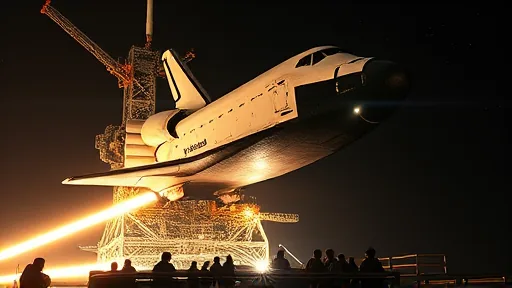
By 2011, the Space Shuttle had been a national asset for three decades, built with the nation’s resources and flown on its behalf. Retirement was never meant to end that role. NASA’s long-term goal was for the orbiters to be displayed at institutions across the country to inspire the next generation of explorers and engineers. But making that happen was no small feat. Each orbiter had to be stripped of its main engines and flushed of hazardous propellants, then prepared for display and flown cross-country on a modified Boeing 747, at an estimated cost of roughly $29 million per orbiter. In Endeavour’s case, the orbiter was rolled through the streets of Los Angeles for three days before reaching its destination. Choosing the right home for each one was therefore as important as getting it there.
NASA began soliciting interest in 2008, and by 2010 had heard from 29 organizations. A 2010 law directed the agency to give priority to locations with the best potential value to the public, and proposals were scored on factors including annual attendance, regional population, international access, and a museum’s ability to pay NASA for the cost of preparing and delivering an orbiter, with visitor reach weighted most heavily. The rubric helps explain the competition’s biggest surprise, which was that Houston, home of Mission Control and NASA’s astronaut corps, was left out; Administrator Charles Bolden himself noted that Space Center Houston had relatively low attendance and significantly lower international access than the winning sites. A city’s contribution to building a national asset, in other words, did not necessarily make it the best place to share it. Houston’s bid has since resurfaced, with a 2025 law directing NASA to send a flown spacecraft to the Houston area and the agency weighing whether that could be Discovery, which its owner, the Smithsonian, has warned could be irreparably damaged by a move.
The winners paired large audiences with real ties to the nation’s space program, from the launch site in Florida to the Southern California plants that built the orbiters, and no finalist scored higher than the California Science Center. Even so, NASA’s team initially planned to send it the lighter test orbiter Enterprise, wary of hauling a heavier flown orbiter through city streets, until Bolden asked whether the Center would prefer a flown one. It did. Between 2012 and 2013, all four exhibits opened to the public. Discovery went to the Steven F. Udvar-Hazy Center in Chantilly, Virginia, opening April 19, 2012 — the most-flown orbiter, with 39 missions. Enterprise went to the Intrepid Sea, Air & Space Museum in New York, opening July 19, 2012 — the prototype that never flew in space, making way for Discovery at the Smithsonian. Endeavour opened at the California Science Center on October 30, 2012, displayed horizontally in a temporary pavilion. Atlantis opened at the Kennedy Space Center Visitor Complex on June 29, 2013, displayed “in flight,” raised and tilted 43.21 degrees with payload bay doors open and robotic arm extended.
Endeavour’s horizontal display was always meant to be temporary, a placeholder for a far bolder plan to stand the orbiter upright, mated to an external tank and twin solid rocket boosters, as it appeared on the launch pad — something none of the other exhibits would attempt. It would take more than a decade to make that vision a reality. In the new Air and Space Center, Endeavour will be joined by a suite of other critical U.S. space program artifacts, from the Apollo-Soyuz command module to several “new space” pieces such as a Rocket Lab Electron launch vehicle and a SpaceX Cargo Dragon capsule, making the new exhibit hall a tribute not only to the Shuttle program, but to the broader spaceflight journey the U.S. has been on for more than 60 years. In addition to standing beneath the launch stack, visitors will have the chance to ride a gantry-style elevator alongside the orbiter, with views into the flight deck from above. Fast Company’s Jesus Diaz called the exhibit “the most impressive museum exhibit I’ve ever seen.”
Sources
- Steven F. Udvar-Hazy Center — Quote source (original article)
- Travel — Quote source (original article) — Original: [](https://www.forbes.com/sites/charlottekiang/2026/10/13/space-shuttle-endeavour-is-go-for-launch-on-november-13/)
Mentioned organisations (context, not sources)
- NASA — Organisation (homepage)
- Smithsonian — Organisation (homepage)
- Intrepid Sea, Air & Space Museum — Organisation (homepage)
- Kennedy Space Center Visitor Complex — Organisation (homepage)
- Space Center Houston — Organisation (homepage)
- Rocket Lab — Organisation (homepage)
- SpaceX — Organisation (homepage)
- Boeing — Organisation (homepage)