AI verification restores trust in animal content
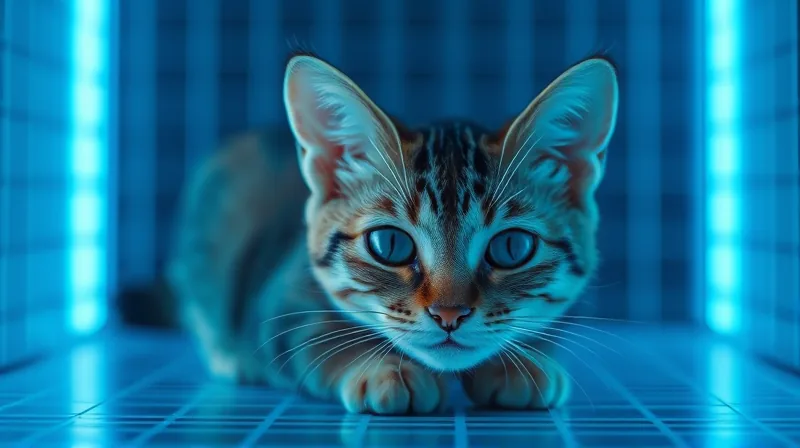
The internet’s love for animals is facing an unprecedented crisis: a flood of AI-generated images and videos that has eroded trust in every cute cat photo and dramatic rescue clip. For years, the joy of sharing authentic animal content has been shadowed by the rise of deepfakes and synthetic “slop,” leaving viewers questioning whether the polar bear rescue they just watched ever actually happened. Yet within this crisis lies a counterintuitive story of genuine progress, where the very technology causing the problem is being repurposed to lift the entire ecosystem of animal welfare, conservation, and human compassion.
The Breaking Point of Credulity
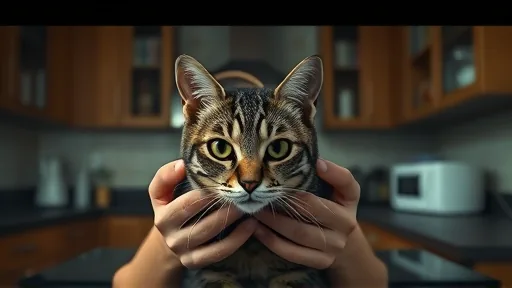
The damage is real and deeply personal, as the story of Mibbby Butler and her missing cat Brooklyn illustrates. In April, Butler received a text message claiming her lost cat had been found, complete with a photo of Brooklyn being embraced by a stranger in a kitchen. The relief she felt was immediate and overwhelming, but it evaporated when the sender demanded upfront payment for the cat’s temporary care. A closer look revealed the telltale signs of AI generation: garbled label text on a Torani syrup bottle and a microwave that appeared in both the original missing poster photo and the new image, suggesting the scammer had fed her original picture into an AI tool.
The scam was not an isolated incident but part of a growing pattern that has forced animal lovers everywhere to become pixel detectives. Butler now receives about one deepfake per month from different people claiming to have found Brooklyn, each one requiring her to scrutinize the image for subtle inconsistencies in lighting, fur patterns, and background details. The emotional toll is compounded by the fact that she cannot simply trust her own eyes anymore, and the cat remains missing months later. This experience has transformed her from a casual social media user into a vigilant skeptic, one who now spends more time in a Facebook group for artists who oppose AI, where she can reliably enjoy human-created content.
The Institutional Trust Deficit
Organizations dedicated to documenting animal suffering have been hit especially hard by the credibility crisis. We Animals, a nonprofit that has published the work of 175 photojournalists documenting abuse at farms, circuses, and scientific labs, now faces accusations that its authentic footage is AI-generated. The group’s drone footage of dairy farm hutches in Arizona, which showed calves separated from their mothers, was so visually striking that viewers assumed it must be synthetic.An Instagram user recently commented directly on their video, asking the pointed question: “How to prove it’s not AI?”
The irony is that We Animals explicitly bans its photographers from using AI technology, yet the burden of proof has shifted onto them. Eva von Jagow, the group’s marketing manager, notes that in the past, people claimed their work was staged or photoshopped, but AI accusations represent a new and more insidious challenge, as reported by WIRED in its investigation of AI’s impact on animal content The organization now expects to share behind-the-scenes clips and detailed verification processes to convince audiences of authenticity. Victoria de Martigny, their director of visual content, articulates the stakes clearly: if trust erodes, it could “open up the door to people questioning all of the work,” a position they desperately want to avoid.
The Economic Mechanics of Deception
The financial incentives driving AI slop creation are straightforward and powerful, creating an uneven playing field for authentic content. Synthetic imagery costs almost nothing to produce, allowing account owners to flood social feeds and search results with fake animal videos designed to collect likes and ad revenue. Oscar Horta, a philosopher and leading animal activist who recently directed a short film on AI’s impact on wildlife, observes that these fakes appear to be drowning out real clips. The economics favor volume over authenticity, and the platforms’ algorithms often cannot distinguish between a genuine rescue and a fabricated one.
This distortion has real-world consequences for legitimate conservation and welfare projects that depend on evocative imagery to attract donations. Horta expresses particular concern about far-fetched videos showing wild animals being rescued during fires and floods, which he believes are likely AI-generated. The danger is twofold: people may question legitimate rescue tactics when they see such content, and future fundraising efforts could suffer as donors become skeptical of all animal rescue imagery. This comes at a particularly bad time, as extreme weather events become more common and the need for genuine rescue operations grows.
The Dangerous Consequences of Fabricated Compassion
Beyond the economic damage, inauthentic animal content can inspire people to act in ways that harm the very creatures they intend to help. Horta points to deepfakes of polar bears drowning and being rescued by people in boats, scenes he describes as “ridiculous” and “unrepresentative of what it means to help animals.” Such content creates unrealistic expectations about rescue operations and could lead well-meaning individuals to intervene in dangerous situations without proper training or equipment. The gap between the fantasy presented in AI videos and the complex reality of animal rescue could have deadly consequences.
The problem extends to how people perceive animal suffering more broadly. When viewers cannot distinguish between real and fake depictions of animal distress, they may become desensitized to genuine cases of abuse or neglect. The constant exposure to synthetic imagery creates a kind of compassion fatigue, where the emotional response that should motivate action is dulled by uncertainty about what is real. This erosion of empathy represents perhaps the most insidious effect of AI slop on the animal economy, as it undermines the very emotional connections that drive conservation efforts and welfare reforms.
The Emerging Infrastructure of Verification
Despite these challenges, a practical infrastructure for verification is emerging, offering genuine hope for restoring trust. Jeff Sebo, director of the Center for Mind, Ethics, and Policy at New York University, has begun advocating for AI developers to incorporate language into their model guidelines that discourages generating responses potentially harmful to animals, as detailed in WIRED’s reporting on the subject His approach emphasizes the importance of staying grounded in evidence and reason when it comes to the possible suffering of individual creatures, while also avoiding being “overly preachy, overly moralizing, or refusing reasonable user requests.” This balanced approach aims to prevent harm without alienating users.
New legal frameworks are also beginning to require transparency in AI-generated content. California and the European Union have enacted laws requiring the most popular AI image generators to embed invisible tags signaling that content was created by artificial intelligence. Social media platforms must then use these tags to publicly label AI-generated pictures and videos, providing a baseline level of disclosure that did not exist before. These regulatory efforts represent a recognition that the problem is systemic and requires systemic solutions, not just individual vigilance.
The Practical Tools of Authentication
On a practical level, verification tools are becoming more accessible and sophisticated, offering concrete ways to distinguish real from fake. Features in ChatGPT, Gemini, and Meta AI can now identify whether an image was generated by their respective systems, providing a first line of defense for concerned viewers. WIRED’s own testing demonstrated the effectiveness of these tools: using a 29-word prompt and the original photo of Brooklyn from Butler’s missing poster, they were able to create a picture nearly identical to the scammer’s image, and ChatGPT verified that it had generated at least one of the deepfakes sent to Butler.
However, significant limitations remain. Most people do not have the time to upload every animal photo or video they encounter to verification tools, and there are caps on the number of images that can be checked. The friction of the verification process means that many fakes will continue to slip through, particularly on platforms where content moves quickly. The solution, according to researchers, lies in integrating verification tools directly into messaging apps and web browsers, turning them on by default with appropriate privacy protections, so that a simple right-click or long-press could reveal an image’s provenance. Such integration would make verification nearly effortless, dramatically reducing the practical advantage of AI slop creators.
The Human Cost of the Verification Gap
For individuals like Butler, the verification gap has a deeply human cost that statistics cannot capture. She was overjoyed when she first saw what she believed was a photo of her cat, only to have that joy replaced by the crushing realization that it was a scam. The emotional whiplash of such experiences is not merely unpleasant; it actively discourages people from engaging with animal content at all. Butler now blocks users who post AI-generated cat videos, but new accounts keep appearing, forcing her to constantly manage her social media environment to avoid the painful reminders of her loss.
The psychological burden extends beyond those who have personally experienced pet loss. The widespread awareness that animal content cannot be trusted creates a general atmosphere of suspicion that diminishes the pleasure of sharing and viewing such material. The simple joy of seeing a cute animal video, which once provided a moment of lightness in a stressful day, now comes with an automatic question: is this real? This cognitive overhead transforms what should be a source of comfort into a source of anxiety, fundamentally altering the emotional economy of the internet.
The Path Toward a More Honest Digital Ecosystem
The technical solutions to the AI verification problem are becoming clearer, but the social dimensions remain unresolved. The infrastructure exists to embed provenance data in digital files, and tools are being developed to make verification nearly effortless. Yet the adoption of these tools remains incomplete, and the incentives for platforms to implement them are not always aligned with user interests. The gap between what is technically possible and what is practically implemented represents the central challenge of the coming years.
There is also a deeper question about how society should respond to the existence of AI-generated animal content. Some argue for strict regulation and mandatory labeling, while others advocate for education and media literacy. The approach proposed by Sebo, which encourages AI developers to build animal welfare considerations into their models, represents a middle path that addresses the problem at its source rather than trying to police every piece of content after the fact. This preventive approach, combined with verification tools and legal requirements, offers the most comprehensive strategy for protecting the authenticity of animal content.
The Resilience of Human Connection
Despite the challenges, there are signs of genuine resilience in the human desire to connect with animals through digital media. Butler’s retreat to a Facebook group for artists who oppose AI, with nearly 300,000 members, demonstrates that communities are forming around the shared value of authenticity. These spaces provide sanctuary where people can enjoy art they reliably know was created by humans, without the constant suspicion that plagues the broader internet. The existence of such communities suggests that the demand for genuine content remains strong, even as the supply becomes increasingly contaminated.
The broader lesson may be that the animal economy of the internet is not doomed but rather undergoing a transformation, one that demands both technological innovation and a renewed commitment to authenticity from platforms and users alike. The tools for verification are improving, the legal framework is strengthening, and public awareness is growing. The question is whether these developments can keep pace with the accelerating capability of AI to generate convincing fakes. The answer will determine whether the internet remains a place where people can share the simple joy of watching a cat play or a dog rescue its owner, without having to wonder if they are being deceived. For now, the balance is precarious, but the direction of progress is clear: the technology that threatened to destroy trust is being harnessed to preserve it.
Sources
1. We Animals