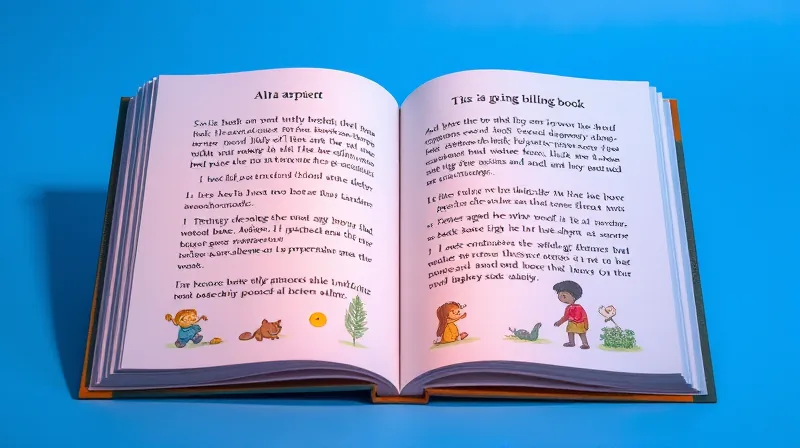
The deceptive promise of AI childrens books
Every generation of parents has endured a well-meaning but awkward gift from a relative—a toy that breaks after an hour, a sweater three sizes too small, or a book that reads more like a missed mark than a heartfelt gesture. In 2025, the awkwardness has found a new, more insidious shape: the AI-generated children’s book that pretends to be a personal treasure but is, in fact, a soulless assembly of machine-generated text, stock images, and false intimacy.
The question most people ask about these books is whether they are truly personalized. The truth is, they are—at a superficial level. A child’s name is inserted, a photo might be attached, and the story references a favorite pet or a trip to the zoo. But the deception runs deeper than a missing comma. The real question no one stops to ask is whether a so-called personalized book can ever replace the emotional architecture of a story crafted by a human who understands what makes a child laugh, wonder, or feel safe. The answer, for anyone who has watched a toddler’s eyes glaze over mid-page, is a quiet but firm no.
The Faux-Intimacy Trap
The core deception of these books lies in their promise of a connection that the technology cannot deliver. Grandparents, eager to bond with their grandchildren in an era of physical distance and digital overload, are especially vulnerable. They see an ad on social media, type in a few details, and are sold a product that wraps itself in the rhetoric of love and memory. The book is supposed to make the child feel seen. Instead, it makes the child feel confused. The story flows in a way that violates the logic of a four-year-old’s mind. The illustrations are uncanny, slightly off in ways adults notice but children sense more acutely.
A father in the Midwest described how his children, aged seven and three, received books from well-meaning relatives. On the surface, the books were about them—they contained their names, their family references, and activities they enjoyed. Yet after one reading, the kids reached for “Little Blue Truck,” a book written by a real author who spent years thinking about rhythm, repetition, and the humor of a pig in a truck. The personalized book was not merely uninteresting; it was boring. The machine had taken the ingredients of a personal story and mixed them into a bland porridge that satisfied no one.
A Crisis Masked by Convenience
The rise of AI slop books coincides with a literacy crisis that statistics alone cannot capture. The numbers paint a troubling picture, but the full scope of the crisis extends beyond what any single statistic can convey That number should terrify anyone who cares about the next generation’s ability to think critically, empathize, or simply enjoy a sentence. Yet the adults who buy these books often do not connect the dots. They see a convenient, affordable way to give a gift. They do not see that they are handing a child a tool that undermines the very skills they hope to nurture.
The deception works at multiple levels. First, the product itself is sold as “AI-generated,” which implies advanced intelligence, but what it usually means is a language model that has scraped the internet for tropes, glued them together, and sprayed them onto pages. Second, the parents who object are made to seem ungrateful or overly rigid. Why refuse a gift that has your child’s face on it? The emotional blackmail is built into the product design: if you reject the book, you reject the giver’s effort. That social pressure allows the deception to continue, gift after gift.
The Data Deception
There is another layer of deception that receives far less attention: the fate of the child’s data. Parents who have spent years protecting their children’s images and personal information from social media and apps suddenly find that their in-laws have fed those precious details into an AI platform with no clear understanding of where the data ends up. The companies that create these books, such as Imagitime, StoryWonderBook, and Childbook.ai, operate behind opaque privacy policies, leaving parents to wonder where their children’s images and personal details eventually land. The deception is not just about the quality of the story; it is about the trust that is breached when a child’s face is uploaded to a machine that may or may not respect that boundary.
This is different from the personalized books of the 1970s and 1980s, the “Me Books” that plugged a name into a chosen narrative. Those books were transparent. You knew exactly what you were getting—a Mad Libs style framework with a few personal details. The AI books, by contrast, present themselves as bespoke creations, woven specifically for this child, full of richness that does not exist. The gap between the promise and the delivery is the deception.
The Institutional Failure
The problem is not limited to individual gift-buying habits. Institutions that should protect children—educators, publishers, regulators—have been slow to address the flood of AI-generated content aimed at the youngest audiences. Amazon’s marketplace is full of books that are not labeled as AI-produced. Parents who buy them for their own children often realize only after reading that the puzzles contain impossible solutions, the grammar is erratic, and the plot makes no sense. Yet the books remain for sale, because the economics favor volume over quality. The AI assembly line produces a book in minutes; a human author and illustrator take months or years. The cheap, fast product crowds out the slow, thoughtful one.
This institutional dimension is what makes the deception so hard to fight. A grandparent who buys an AI book is not malicious. They are often guided by a desire to help, to show that they care, to participate in their grandchild’s life. But the tech industry has built a machine that exploits that generosity. It offers a quick fix for a deep human need: the need to connect across generations through story.
The Image That Stays
In the end, the best argument against these books is not a statistic or a policy proposal. It is the image of a child, sitting on a parent’s lap, listening to a story that was generated by an algorithm. The child may be called by name in the text, but the story does not know them. It has no memory of the time they fell while learning to ride a bike, no knowledge of the way they laugh when a character trips, no sense of the rhythm that makes a bedtime ritual feel safe. The child knows this, even if they cannot articulate it. They reach for the old book, the one with the worn pages and the predictable plot. That book, written by a human, has something the AI cannot fake: a pulse.
The deception of the AI children’s book is that it promises warmth and delivers only text. The problem is harder than it looks because it is not a technical problem. It is a problem of love being sold back to us in a package that looks real but feels empty. Until adults learn to recognize that emptiness, the gifts will keep arriving, and the children will keep turning away.
Sources
1. Imagitime
3. Childbook.ai
4. Amazon