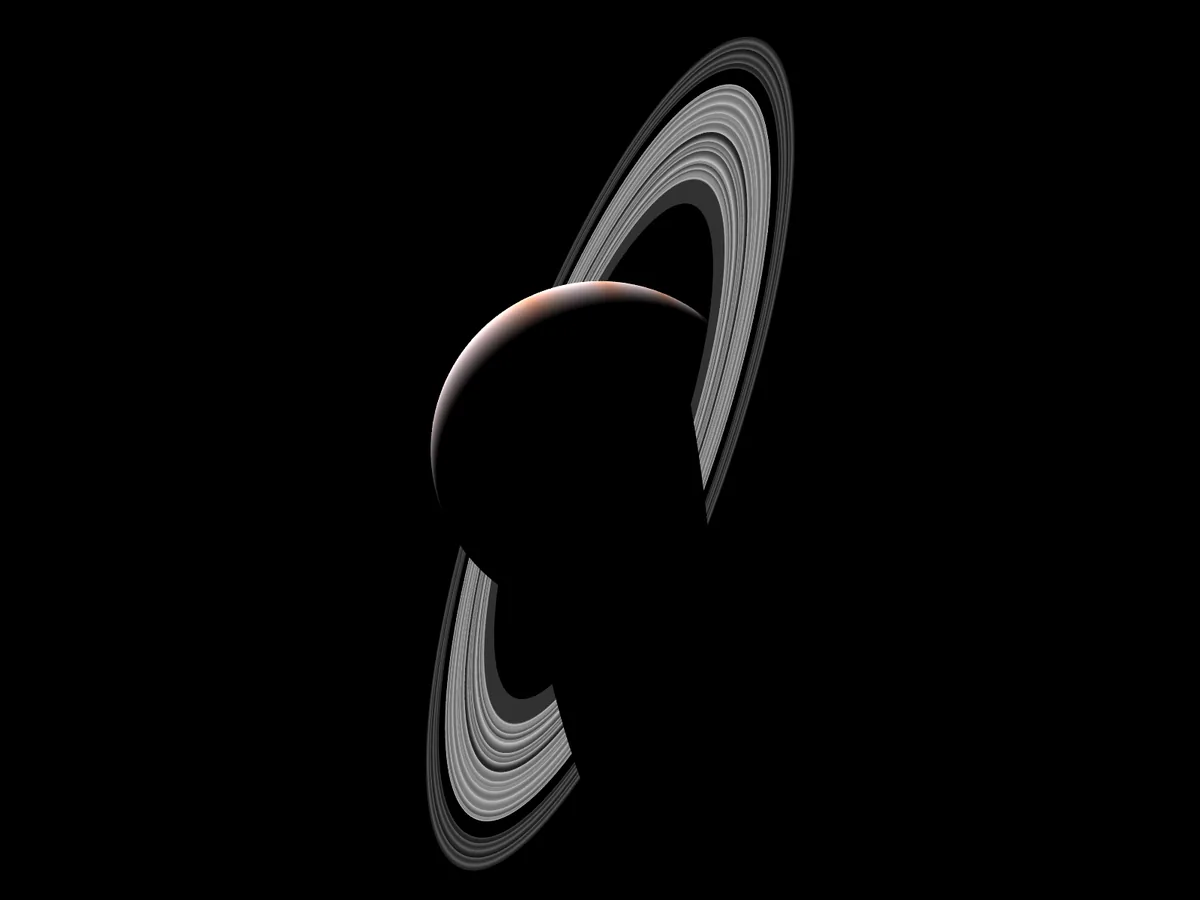
The Photograph That Was Three Photographs
The image looks like a single exposure. It is not. What reached the camera was a planet, then a bright edge, then blackness — three separate moments stitched into one frame. The picture is a composite, and that is exactly what makes it honest.
Here is the sequence. First, Saturn alone, captured before the Moon reached it. Then two more frames of the Moon, each shot at a different exposure length, because a single exposure cannot hold both the sunlit crescent and the faint earthshine beside it. The three were fused digitally afterward.
The result is a portrait of an event that took three pictures to describe.
The location mattered as much as the method. The frames were taken from Sardinia, Italy, after sunset. [1] From that vantage, the geometry lined up — and geometry is the whole story here. Nothing about Saturn changed. Only the line of sight did.
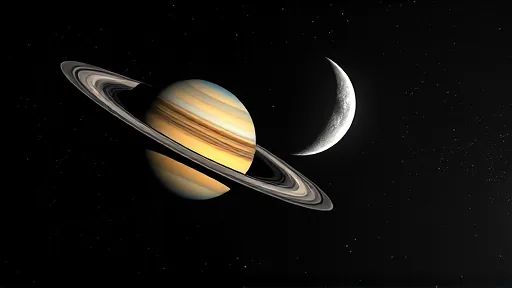
A Planet Erased by a Passing Crescent
Saturn did not go anywhere. The Moon crossed in front of it, and for observers on a narrow strip of Earth the ringed planet simply stopped existing in the sky. Astronomers call this an occultation: one body passes in front of another and hides it. The word sounds technical. The experience is closer to a light being switched off by something much closer to home.
The strip was narrow. The event was visible in early 2025 along a path running from Greenland, through central Europe, and down into northern Africa. A planet the size of Saturn, hidden from some observers and perfectly visible to others on the same evening, is not a contradiction. It is a matter of where the observer stands.
A planet is said to be “in” a place, as if its visibility were a property of the planet. It is not. Visibility is a property of the observer’s position.
There is a bright dot just beside Saturn in the frame. It is not one of Saturn’s moons. It is the star 85 Aquarii — and it sits further behind Saturn than Saturn sits behind the Moon. [1] Three objects, three distances, stacked along one line of sight. The photograph flattens them into neighbors.
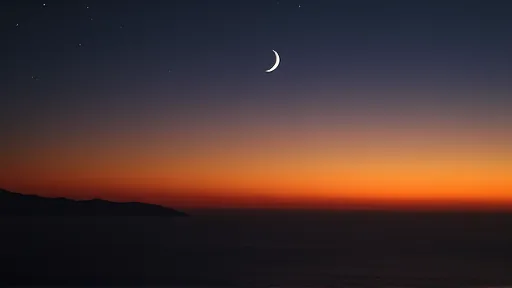
The Next Disappearance Is Already Scheduled
Occultations are not rare in the sense of unpredictable. They are rare in the sense of being local. The Moon sweeps in front of Saturn periodically, but the shadow of that event — the strip on Earth where it can be seen — falls somewhere different each time. Most of the planet’s surface gets nothing.
The next time the Moon moves in front of Saturn, as seen from somewhere on Earth, will be in 2031. [1] That is a verifiable prediction: a date, a repeat, a moment that can be checked by anyone who travels to the right strip of ground.
A star, a planet closer than the star, a Moon closer still — all collapsed into one bright point and one dark edge. The camera could not tell them apart without help. The geometry could.