The Infantryman’s Last Century: How Ukraine is Rewriting the Rules of Ground War
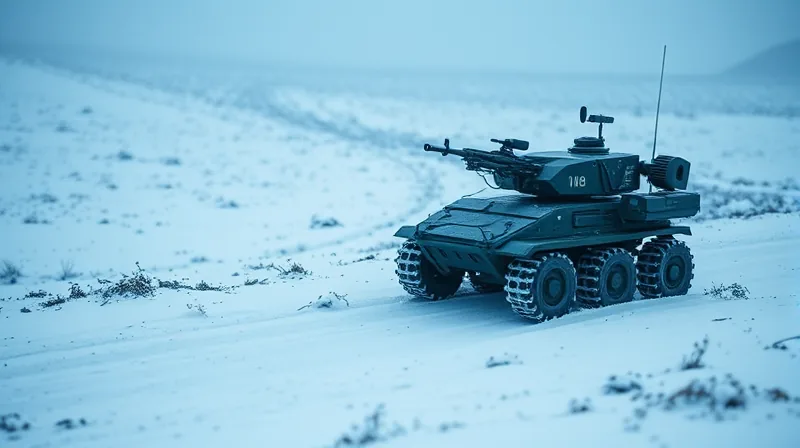
On a frozen battlefield in eastern Ukraine, a small, four-wheeled robot carries a machine gun across open ground. A soldier controls it from a bunker one kilometer away, watching a screen and moving a joystick. The robot fires. No human is near the weapon. This is the new reality of ground combat.
For nearly one hundred years, one idea was sacred. The infantryman was the king of the battlefield. A general named Archibald Wavell said this after World War Two. He said all wars are won by the man on foot. This idea came from a long history. In ancient times, the phalanx of spearmen decided battles. In the Middle Ages, the knight on horseback was the decider. Gunpowder made the line infantry the center of war. Then came the tank. Then the airplane. Still, the infantryman held the ground. He took the hill. He cleared the trench. He was the final argument.
That argument is now being tested. A new actor has entered the field. It is the uncrewed ground vehicle, or UGV. This is not a drone in the sky. It is a robot on the ground. It is a machine that can drive, observe, and shoot. It has no fear. It does not get tired. It can be sacrificed.
Ukraine is the laboratory for this change. In May of this year, the country began mass production of a robot called Legit. [1] The Legit is small. It is cheap. It costs about eleven thousand four hundred dollars. It uses parts from a Hoverboard. A Hoverboard is a two-wheeled scooter for children. The Legit carries a machine gun. It is a simple machine. It has no artificial intelligence. A human controls it by remote. The human sits far away. The robot goes to the danger.
This is the core of the change. The robot absorbs risk. It does not feel pain. It does not bleed. It does not die. A human does all those things. Oleksandra Molloy is a researcher at the University of New South Wales in Australia. [1] She says even imperfect systems become valuable if they absorb risk instead of soldiers. [1] This is a new logic. The old logic was about courage. The new logic is about cost. A human life is priceless. A robot is a tool.
The proving ground for this logic is the front line. The front line in Ukraine is a thin strip of land. It is filled with ditches and minefields. Soldiers watch from hidden positions. They are few. The real eyes are in the sky. Drones fly overhead. They see everything. One Ukrainian soldier said the observers on the ground are only there because old generals demand boots on the ground. The generals want a human presence. The robots may soon make that presence unnecessary.
Consider a specific case. A commander named Mykola Zinkevych tells a story. He says a UGV called the DevDroid held a position alone. The DevDroid is the size of a quad bike. It moves at six kilometers per hour. That is a slow walk. It stayed in a fighting position for forty-five days. It fought off Russian troops. No soldiers were in the position. The robot returned to its handlers only to change batteries and refill ammunition magazines. This was a new record. It was a machine holding ground.
Before this, UGVs were mainly used for supply. They carried food, water, and ammunition. They were mules. Now they are becoming fighters. They are fitted with remote-controlled machine-gun turrets. The turret is a simple device. It can turn left and right. It can aim up and down. The operator pulls the trigger. The robot shoots.
The next step is harder. It is the offensive attack. A robot must move forward. It must cross open ground. It must enter a trench. This is difficult for a machine. The ground is rough. There are obstacles. In 2024, Ukraine tried the first all-robot assault. The machines were carefully surveyed. The path was chosen. Still, two of the robots got stuck. They could not move. The assault continued. It succeeded. The Russian position was taken. The robots that got stuck were left behind. They were expendable.
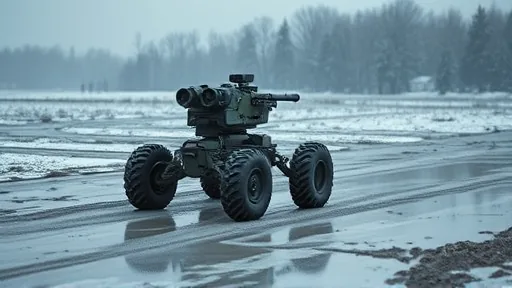
Since then, Ukraine has run many small robot operations. The military is learning specific tactics. One unit estimates that robot assaults have saved hundreds of casualties. This is a number. It is a human number. It means hundreds of families did not get a death notification. It means hundreds of soldiers are alive. This is the goal. President Volodymyr Zelensky said this in April. He said everyone must understand. This is about saving lives.
The production numbers are growing. Last year, Ukraine made about twenty-five thousand UGVs. The plan for 2026 is fifty thousand. This is a doubling. It is a sign of commitment. It is also a sign of need. Ukraine is outnumbered. The Russian army is larger. Ukraine needs to multiply its force. Robots are a way to do that. They are a force multiplier.
There is no new technology behind this. The robots are simple. They are controlled by a human. The United States deployed a similar armed robot in Iraq in 2007. It was called the SWORDS. It was a machine gun on a small tracked vehicle. It was sent to Iraq. It was never used in combat. The reasons are unclear. Perhaps the risk was too high. Perhaps the generals did not trust it. Ukraine has no such luxury. The pressure is extreme. The need is immediate. This pressure is the engine of change.
Russia has experimented less with automation. Russia has a large army. It can afford to lose soldiers. It has less incentive to use machines. Ukraine has a smaller army. It cannot afford the losses. This difference is the driver.
The cost of the robots is low. The Legit costs eleven thousand four hundred dollars. A single artillery shell can cost more. A single soldier costs years of training. The robot can be used once. It can be used in a suicide attack. It can drive into a building and explode. It can defend a position until it is destroyed. The machine is a consumable. The human is not.
Commander Andriy Biletskyi is the head of Ukraine’s Third Army Corps. He has a vision. He hopes robots will make up eighty percent of the fighting force. This is a radical number. It means the human soldier becomes a minority. The human becomes a manager. The human becomes a remote operator. The human sits in a safe room. The robot does the fighting.
This is a shift in the nature of war. The battlefield rewards certain qualities. Molloy says it does not reward elegance. It rewards survivability. It rewards redundancy. It rewards low cost. It rewards mass. A robot can be built in large numbers. A robot can be replaced. A human cannot be replaced quickly.
The current robots have limits. They are wheeled or tracked. They cannot climb stairs. They cannot go inside buildings. They are not suited for urban terrain. This is a weakness. A city is a complex environment. It has rooms and floors and corridors. A wheeled robot cannot navigate that. A human can.
This is changing. The United States military is experimenting with humanoid robots. These are robots shaped like people. They have two legs and two arms. They can walk. They can climb. They can open doors. The US is testing them for breaching operations. A breaching operation is when soldiers use explosives to blast a way into a building. A humanoid robot could do this. It could carry the explosives. It could place them. It could detonate them. The human stays outside.
Current humanoid robots are clumsy. They fall over. They move slowly. Many companies are working on this. Elon Musk’s company Tesla is developing a humanoid robot called Optimus. Musk believes agile, AI-enabled humanoids can be mass-produced within two years. This is a bold claim. If it is true, the change accelerates.
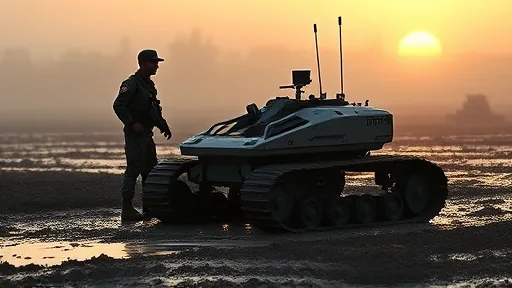
But there is a deeper question. The current robots are remote-controlled. A human makes every decision. The robot is a tool. The next step is autonomy. An AI-powered machine could operate without human control. It could decide when to shoot. It could decide where to go. This is more efficient. It is also ethically challenging. Who is responsible if the robot makes a mistake? Who is responsible if it kills a civilian? These questions are not new. They are becoming urgent.
A research paper from 2013 shows the technical direction. It is titled “Decentralized Multi-Robot Encirclement of a 3D Target with Guaranteed Collision Avoidance.” The authors are from a university. They describe a system where multiple robots work together. They encircle a target. They avoid crashing into each other. They do this without a central commander. They communicate locally. This is a swarm. A swarm of robots can surround an enemy. They can block escape. They can attack from all sides. This is a tactic that humans use. Now robots can do it.
Another paper from 2023 is about bipedal robots. It is titled “Overtaking Moving Obstacles with Digit.” Digit is a humanoid robot. The paper describes how a humanoid robot can follow a path. It can decide to overtake a slow obstacle. It can deviate from the path. It can return. This is decision-making. It is a step toward autonomy.
A third paper from 2022 is relevant. It is about path following for bipedal robots. The citation is 2203.11544. This paper is a foundation. It shows how a robot can walk and make decisions. The technology is moving fast.
The success of Ukraine’s UGVs is not guaranteed. Some people will argue that trench warfare is easy for robots. A trench is a straight line. A robot can drive along it. The terrain is simple. The enemy is in front. Other types of conflict are harder. Jungle warfare is hard. Mountain warfare is hard. Urban warfare is very hard. The robot may be a specialist. It may only work in certain conditions.
But the coming of robot soldiers in Ukraine could mark a permanent change. It is a change in the face of war. The infantryman has been the center of war for centuries. That century may be ending. The new century belongs to the machine.
The oldest question in science is about discovery. It is about what lies beyond the known world. It is the question asked by every explorer. It is the question asked by every astronomer. It is the question asked by every biologist. It is the question that drives all curiosity.
Now the question is applied to war. The battlefield is a known place. It has known rules. It has known actors. The robot is a new actor. It changes the rules. It opens a new frontier. The question is no longer about the stars. It is about the ground. It is about the mud. It is about the trench.
What else is out there? What other machines will appear? What other tactics will emerge? The answer is not yet written. The experiment is ongoing. The laboratory is Ukraine. The results will be seen by the world. The infantryman may not vanish. But he will no longer be alone. He will share the field with a new kind of soldier. A soldier of steel and wire. A soldier of code and current. A soldier that does not bleed. A soldier that does not fear. A soldier that is a tool. The question is whether the tool can be controlled. The question is whether the tool will change the user. The question is what comes next.