The Threshold That Was Never Built for Armies
For decades, military medicine has tracked hearing loss, traumatic brain injury, heat casualties and sleep debt. It has measured almost everything that could degrade a soldier’s body except one hormone that sits near the centre of physical performance. The reason was not ignorance. It was that the reference range for testosterone was assembled from civilian populations, and no one had ever run a study large enough to say what normal looks like inside an active-duty force.
That gap is what the Military Health and Nutrition Examination Study, or MHANES, was built to close. It is modelled directly on the National Health and Nutrition Examination Survey, a civilian survey that has shaped American health statistics for generations. The critical difference: NHANES does not enrol active-duty service members. Those personnel are exposed to occupational conditions — deployments, disrupted sleep, extreme physical loads — that civilian sampling frames simply never capture.
Stephen Hennigar at Pennington Biomedical Research Center in Louisiana led the work with colleagues who measured testosterone and other health markers in active-duty personnel at five military centres across the United States between 2024 and 2026. The window matters. It is the first time a study of this design has been pointed at the force itself, rather than at the population the force is drawn from.
One in Four, Measured Against a Civilian Yardstick
Among 479 male personnel tested, 26 per cent had testosterone levels below 300 nanograms per decilitre. [1] That figure is the dividing line the American Urological Association uses to classify low testosterone. Scaling the finding to the wider force, the researchers estimate that 100,691 male soldiers in the US Army could have low readings. [1] Age sharpens the picture. Among personnel aged 30 and older, 33 per cent fell into the low group. [1] Female personnel were not included in the analysis, because their testosterone levels were frequently below the limits of detection — a measurement wall, not a judgment about their health.
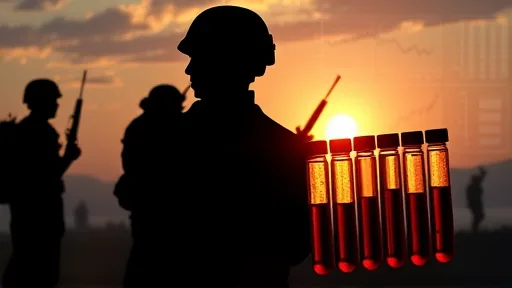
In July, US defence secretary Pete Hegseth announced a testosterone-boosting initiative. [2] Every service member aged 30 and older must now undergo annual screening and be offered voluntary replacement therapy if levels are low. [2] Hegseth framed the policy around restoring what he called natural capabilities, protecting longevity, and ensuring what he described as the biological foundation required to sustain the fight. There are no ramifications for choosing not to have the therapy, he said, adding that personnel under the age of 30 will also be able to opt for testosterone screening. [2]
When a Number Becomes a Diagnosis
A single blood draw is a shaky foundation for a diagnosis, and researchers outside the study say so plainly. Darren Katz at the University of Melbourne, who was not involved in the research, says testosterone levels can fluctuate considerably, even within the same individual, and may be influenced by the time of day blood is collected, recent food intake, inadequate sleep, obesity, acute illness and excessive physical or psychological stress. Katz accepts that for soldiers with genuine, symptomatic testosterone deficiency, appropriate treatment can improve symptoms and important aspects of physical health, including sexual function, body composition, muscle mass and bone health. But he draws the line there: there is currently insufficient evidence that it will improve military readiness, operational performance or fighting capacity.
The American Urological Association’s own guidance supports that caution. A clinical diagnosis should be made only when low blood levels are paired with related symptoms such as reduced energy, motivation, libido and erectile function. A number alone does not qualify.
The therapy carries its own ledger. Side effects of testosterone replacement therapy include acne, testicle shrinkage and reduced sperm production and fertility. It also increases the risk of bone fractures and pulmonary embolism, or blood clots in the lungs, in older men.
Sources