
The X-59 breaks sound barrier with a thump not a boom
Before this aircraft, the sound of breaking the speed limit was a weapon. A sonic boom was an explosion of air that followed a plane like a thunderclap tied to its tail. It rattled windows. It startled animals. It made entire cities below complain. For fifty years, this noise was the reason supersonic passenger travel over land was banned in the United States. The ban began in 1973. [2] The Concorde, the only commercial supersonic airliner, could only fly fast over oceans. It could never fly fast from New York to Los Angeles. The boom was too loud. The law was too clear.
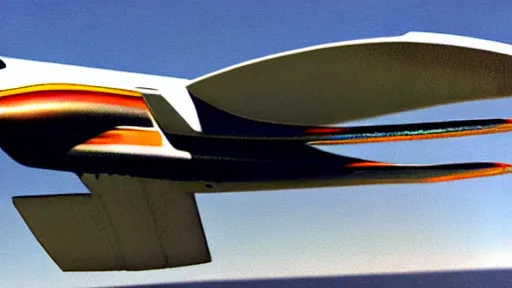
Now, a machine exists that promises to change that equation. The X-59 is not a passenger plane. It is a research tool. It is a 99-foot-long needle with wings. Its nose is so long, it looks like a sword. The pilot sits so far back, he cannot see forward through a windshield. Instead, he looks at a screen. The shape of the entire aircraft is a single argument against noise. Every curve, every edge, every surface is designed to break the sound barrier not with a bang, but with a thump. A thump is not a boom. A thump is what you hear when a door closes softly in a distant room. A thump is a sound you can live with.
The world before the X-59 was a world where speed was sacrificed for silence. The world after the X-59 may be a world where speed and silence coexist.
The Sound Barrier Was Never a Wall
The term sound barrier is a metaphor. It is not a physical wall in the sky. It is a condition. When an aircraft approaches the speed of sound, which is about 767 miles per hour at sea level, the air in front of it cannot move out of the way fast enough. The air compresses. It forms a shockwave. That shockwave travels to the ground as a cone of pressure. When that cone sweeps over your house, you hear a boom. The boom is not a single event. It is the result of air being violently shoved aside.
The faster the aircraft, the stronger the boom. The lower the altitude, the louder the sound. For decades, engineers accepted this as inevitable. If you wanted to fly faster than sound, you accepted the noise. The Concorde accepted it. Military jets accept it. But the public did not accept it. After the Federal Aviation Administration banned supersonic flight over land in 1973, the dream of fast commercial travel stalled. The speed of sound became a ceiling that passenger aviation could not break.
The X-59 is designed to break that ceiling without breaking the peace. Its shape is the result of decades of research into low-boom aerodynamics. The long nose creates a series of small shockwaves instead of one large one. These small waves travel through the atmosphere separately. By the time they reach the ground, they have spread out. They do not merge into a boom. They arrive as a thump. This is not a theory. It is a design principle that has been tested in wind tunnels and computer models. Now, it will be tested in the sky.
TheThe X-59 is scheduled for its first flight in 2025, with supersonic tests planned for 2026 [1] That flight was not supersonic. It was a careful, cautious trip to prove the aircraft could fly at all. The pilot took off from Palmdale, California. He climbed slowly. He tested the controls. He landed. The flight lasted about an hour. It was a success, but it was only the beginning.
After that first flight, the aircraft went into a planned maintenance period. Engineers inspected every system. They checked the fuel delivery. They checked the hydraulics. They checked the eXternal Vision System, a set of cameras that give the pilot a view forward. This system is necessary because the nose of the X-59 is so long that a traditional windshield would be useless. The pilot sits in the middle of the aircraft. The nose extends 38 feet in front of him. He cannot see oveFollowing its first flight, the X-59 will undergo a series of test flights in 2026, with NASA planning approximately 14 flights to gradually increase speed and altitudehree months, it completed 14 flights. Each flight pushed the aircraft a little faster, a little higher. The pilots tested takeoffs and landings. They retracted the landing gear in flight for the first time, revealing the aircraft’s sleek shape. They reached altitudes of 43,000 feet. They approached the speed of sound, reaching Mach 0.95, which is about 627 miles per hour. They were at the door. They had not yet opened it.
The Threshold Is a Number
The speed of sound is not a fixed number. It changes with temperature and altitude. At 43,000 feet, the air is cold. Sound travels slower in cold air. At that altitude, the speed of sound is about 660 miles per hour. To break the barrier, the X-59 must exceed that speed. In early June 2026, NASA plans to let it do exactly that.
The first supersonic flight will be a test of the aircraft’s performance, not its quietness. The X-59 will fly at about Mach 1.05, just above the speed of sound. It will be accompanied by a chase aircraft, a conventional supersonic jet. That chase jet will produce a normal sonic boom. That boom will be loud. It will mask any sound the X-59 makes. This is intentional. The goal of this flight is to prove the aircraft can survive supersonic flight. The goal is not yet to prove it is quiet.
The chase aircraft will also carry a specialized probe. That probe will measure the shockwaves coming off the X-59. These measurements are critical. They will tell engineers whether the aircraft’s shockwaves are actually spreading out as designed. They will confirm the shape is working. If the measurements match the computer models, the next phase can begin.
The Mission Conditions Are the Real Test
After the first supersonic flight, the X-59 will attempt a mission conditions flight. This flight will reach Mach 1.4, which is about 925 miles per hour, at an altitude of 55,000 feet. These numbers are not arbitrary. They are the exact conditions NASA plans to use when flying the X-59 over communities. The mission is called Quesst. The name is a combination of “quiet” and “quest.” The quest is to gather data on how people react to the thump.
During Phase 2 of the Quesst mission, which is expected to begin later in 2026, the X-59 will fly over selected communities in the United States. Residents will be asked to report what they hear. They will use an app or a website. They will describe the sound. They will say whether it was loud or soft, annoying or acceptable. This data will be given to regulators. It will help them decide whether to change the ban on supersonic flight over land.
The X-59 is not a prototype for a commercial aircraft. It is a proof of concept. It is a tool to gather evidence. If the evidence shows that people can tolerate the thump, the door opens. Companies like Boom Supersonic and Aerion are already working on supersonic business jets. They are waiting for the regulations to change. The X-59 is the key that might unlock that door.
The History of Breaking the Rules
The first aircraft to break the sound barrier was the Bell X-1, piloted by Chuck Yeager on October 14, 1947. That flight was dangerous. The aircraft was shaped like a bullet. It was dropped from a bomber. Yeager rode it like a bomb. When he broke the barrier, the aircraft shook violently. The boom was a roar. It was a triumph.
In the decades that followed, supersonic flight became routine for military aircraft. The F-104 Starfighter, the SR-71 Blackbird, the F-22 Raptor all flew faster than sound. But they all produced booms. The booms were accepted because the aircraft were weapons. The public did not have to live with them every day.
The Concorde was different. It was a passenger aircraft. It flew at Mach 2.04, more than twice the speed of sound. Its boom was a double crack, a sharp pair of explosions. It was loud enough to break windows if the aircraft flew too low. The Concorde could only fly supersonic over the ocean. It could only connect cities like London and New York, Paris and Rio. It could never fly from Chicago to Tokyo. It was a beautiful machine, but it was limited.
The Concorde retired in 2003. Since then, no commercial supersonic aircraft has carried passengers. The dream of fast travel has been stuck in subsonic speed. The X-59 is the first serious attempt to revive that dream by solving the noise problem.
The Shape of Silence
The X-59’s design prioritizes aerodynamics over aesthetics. Its elongated nose and compact wings are engineered to manage shockwaves, not to conform to conventional aircraft proportions. But every inch of that shape is calculated. The long nose creates a series of small shockwaves. The wings are positioned to avoid merging those shockwaves. The engine is mounted on top of the fuselage to reduce noise on the ground. The entire aircraft is a single, unified solution to a single problem.
The problem is not just the boom. The problem is the pressure. When an aircraft flies supersonic, it creates a pressure wave. That wave is shaped like an N. It has a sharp rise in pressure, a gradual decrease, and a sharp return to normal. That N-wave is what you hear as a boom. The X-59 is designed to reshape that N-wave into a different shape. Instead of a sharp rise, it creates a gentle slope. Instead of a loud crack, it creates a soft thump.
This is not easy. The shockwaves are sensitive to the aircraft’s angle, speed, and altitude. A small change in any of these can turn a thump back into a boom. The pilots must fly the X-59 with precision. They must hold the aircraft steady. They must follow the test points exactly. The engineers will monitor every parameter. The data will be analyzed for months.
The Parallels to Other Quiet Revolutions
The X-59 is not the first machine designed to make a loud thing quiet. In the 1970s, the Lockheed SR-71 Blackbird was designed to be stealthy to radar. It was not quiet to the ear, but it was invisible to detection. The B-2 Spirit bomber was designed to be invisible to radar and infrared. It was a shape that hid itself. The X-59 is a shape that hides its sound.
There are parallels in other fields. The electric car was designed to replace the noise of the internal combustion engine. Early electric cars were so quiet that they were dangerous to pedestrians. Regulators had to require them to make artificial noise. The X-59 faces the opposite problem. It wants to be quiet, but it must prove that quiet is safe. It must prove that a thump is not a threat.
In medicine, the MRI machine replaced the loud clanking of early scanners with a quieter hum. In construction, silent pile drivers replaced the hammering of traditional pile drivers. In every case, the innovation was driven by the same insight: noise is not a necessary byproduct of progress. It is a design flaw that can be fixed.
The Measurements That Matter
The X-59 is covered in strain gauges. These are small sensors that measure how much the aircraft’s structure bends and twists under load. When the aircraft goes supersonic, the air pressure changes dramatically. The wings flex. The fuselage stretches. The strain gauges record every movement. They tell engineers whether the aircraft is safe.
The aircraft also carries pressure sensors on its nose and wings. These sensors measure the shockwaves as they form. They tell engineers whether the shockwaves are behaving as predicted. If the sensors show a sharp N-wave, the design is not working. If they show a gentle curve, the design is succeeding.
The chase aircraft carries a shock-sensing probe. This probe is mounted on an F-15 research aircraft. It flies behind and below the X-59. It measures the shockwaves after they have traveled through the air. These measurements are the most important. They tell engineers what the ground will hear.
The Community That Will Listen
In Phase 2 of the Quesst mission, the X-59 will fly over communities in the United States. The communities have not been selected yet. They will be chosen based on population density, geography, and willingness to participate. The flights will take place during the day. The aircraft will fly at 55,000 feet. The thump will arrive about 30 seconds after the aircraft passes overhead.
Residents will be asked to report what they hear. They will use a smartphone app. They will press a button when they hear the thump. They will rate its loudness on a scale of one to ten. They will describe it as a boom, a thump, or a rumble. This data will be collected and analyzed by NASA.
The goal is to find out what people can tolerate. If most people report a soft thump that does not disturb them, the data supports changing the ban. If people report a loud boom that startles them, the data supports keeping the ban. The X-59 is not the answer. It is the question.
The People Behind the Machine
Cathy Bahm is the project manager for NASA’s Low Boom Flight Demonstrator. She has been working on this project for years. She has overseen the design, construction, and testing of the X-59. She knows every bolt, every wire, every line of code. She said, “What comes next is the first time this one-of-a-kind aircraft will fly supersonic. We are starting toward the mission conditions test point that X-59 was designed for.”The pilots are also key. They are test pilots from NASA and the Air Force. They have flown supersonic before. They know the risks. They know that breaking the sound barrier in a new aircraft is always dangerous. But they also know that this aircraft is different. It is designed to be stable. It is designed to be safe. The pilots trust the engineers, and the engineers trust the pilots.
The team also includes engineers from Lockheed Martin, the company that built the X-59. They designed the shape. They built the fuselage. They integrated the systems. They have been working alongside NASA for years. The partnership is a model of public-private collaboration.
The Future That Depends on a Thump
If the X-59 succeeds, the ban on supersonic flight over land could be lifted. That would open the door for a new generation of supersonic aircraft. Companies like Boom Supersonic are already designing a passenger jet called the Overture. It is expected to carry 65 to 80 passengers at Mach 1.7. It could fly from New York to London in three and a half hours. It could fly from Los Angeles to Tokyo in six hours. It could connect the world faster than ever before.
But the Overture will only succeed if it is quiet. It will only be allowed to fly over land if the X-59 proves that quiet supersonic flight is possible. The X-59 is the first step. The Overture is the second step. The third step is a world where you can fly from any city to any city in half the time it takes today.
There are challenges. The cost of supersonic flight is high. The fuel consumption is high. The environmental impact is a concern. But the X-59 is not solving those problems. It is solving the noise problem. The other problems can be solved later.
The Irony of the Chase Plane
During the first supersonic flights, the X-59 will be accompanied by a chase aircraft. That chase aircraft will produce a loud sonic boom. That boom will mask the X-59’s thump. The irony is that the quiet aircraft will be hidden by the noise of a conventional jet. The engineers will not be able to hear what they have created. They will have to trust the instruments.
The chase aircraft will also carry the shock-sensing probe. That probe will measure the X-59’s shockwaves. It will record the shape of the waves. It will confirm whether the thump is real. The probe is the only way to know. The ears of the pilots and engineers are useless. The boom of the chase plane drowns everything out.
This is a temporary condition. Once the X-59 proves it can fly supThe speed of sound at 60,000 feet is about 660 miles per hour. The X-59 is designed to reach Mach 1.6, which is about 1,056 miles per hour at that altitudesurement That Stops Time
The speed of sound at 60,000 feet is about 660 miles per hour. The X-59 is designed to reach Mach 1.6, which is about 1,218 miles per hour at that altitude. That is almost twice the speed of sound. At that speed, the X-59 could cross the United States from coast to coast in about two hours. A flight from New York to Los Angeles currently takes about six hours. The difference is four hours. Four hours is the time it takes to watch two movies. Four hours is the time it takes to sleep through a night. Four hours is the time you will never get back.
The X-59’s primary goal is to demonstrate that supersonic flight can be quiet enough for overland travel, potentially reducing flight times in the future. It is about making the world smaller. It is about connecting people faster. But none of that matters if the noise is too loud. None of that matters if the boom breaks the peace.
The X-59 is a machine that measures the world in thumps. It is a machine that asks a simple question: how quiet is quiet enough? The answer will come from the ground. It will come from people pressing buttons on their phones. It will come from data. It will come from a single number: the decibel level of a thump.
And when that number is known, the world will change. The speed of sound will no longer be a barrier. It will be a threshold that we cross without a sound.
Sources
1. NASA