The Silence After the Boom
NASA X-59 Quiets Sonic Boom in Historic Supersonic Flight
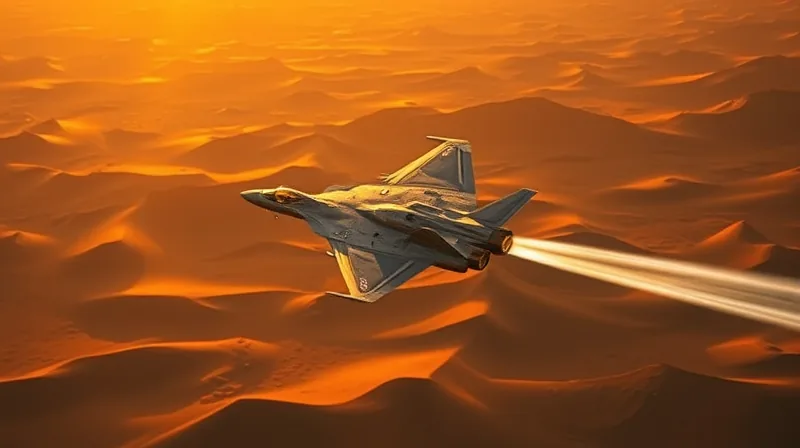
On June 5, 2026, at 11:08 a.m. Pacific Daylight Time, NASA’s X-59 experimental aircraft flew supersonically over the Mojave Desert. A plane flew faster than sound, and almost nobody heard it.
Not because the plane was silent. Because the sound it made was hidden.
A NASA F-15B chase plane flew nearby, and its own sonic boom—loud, sharp, the kind that has rattled windows and startled animals for decades—drowned out whatever the X-59 produced. The X-59 reached Mach 1.1, approximately 713 miles per hour, at 43,400 feet. [3] The flight lasted 81 minutes. NASA test pilot Dan “Hoot” Gibson took off and landed at Edwards Air Force Base in California.
But the real story is not what happened that day. The real story is what did not happen.
The X-59 did not produce a traditional sonic boom
The Old Understanding: The N-Wave That Changed Everything
To understand why this matters, you must first understand why supersonic flight over land was banned in the first place.
In 1973, the Federal Aviation Administration banned civil supersonic flight over the United States. The reason was simple: sonic booms. When an aircraft exceeds the speed of sound, it creates shockwaves that merge into a double-bang—two sharp pressure spikes arriving at ground level. These spikes can break windows, startle livestock, and wake entire neighborhoods.
The ban was not controversial. It was necessary.
For 53 years, this ban has stood. The Concorde, the only commercial supersonic airliner ever to operate, flew only over oceans. When it made its last commercial departure in 2003, it took with it the dream of fast commercial flight over land.
The physics behind the sonic boom is called N-wave coalescence. Here is what that means:
At supersonic speeds, every surface on an aircraft—wings, fuselage, engine nacelles—generates a shockwave. On a conventional supersonic jet, two dominant shockwaves form at the nose and tail. These shockwaves tend to merge into a single sharp pressure spike. That spike arrives at ground level as the characteristic double-bang.
The N-wave is named for its shape. When scientists graph the pressure change over time, it looks like the letter N—a sharp rise, a plateau, then a sharp drop.
This is what the law was designed to prevent.
This is what the X-59 was designed to prevent.
The Challenge: How to Un-Merge a Shockwave
David Richwine, deputy project manager for technology at NASA Langley, describes the problem plainly. The X-59 must prevent shockwaves from coalescing to form that N-wave.
“So what we have done with the X-59,” Richwine said, “is create an airplane that, because of its volume distribution and lift distribution, smooths out the shocks so that, in general, they are of smaller amplitude and are also of similar strength. [3] And so they don’t coalesce and form that N-wave.”
This is the core engineering challenge. The X-59 must fly faster than sound, but its shockwaves must never merge.
The aircraft attacks this problem at the structural level. Its airframe is 99.7 feet long with a razor-thin 29.5-foot wingspan. The fuselage has been optimized through thousands of computational fluid dynamics simulations to spread the pressure rise from nose to tail gradually rather than concentrating it at two points.
The nose alone stretches nearly 38 feet—longer than the entire wingspan. This forces the leading-edge pressure wave to distribute itself across that span before it begins propagating downward.
The engine placement is equally deliberate. Most supersonic jets mount their engines beneath the wings or alongside the fuselage, creating a direct acoustic path from engine shockwaves to the ground. The X-59 positions its engine on top of the fuselage, using the aircraft’s body to shield the ground from engine noise.
The Supercomputers That Predicted Silence
The X-59 did not simply look right on paper. It was simulated, tested, and validated before it ever left the ground.
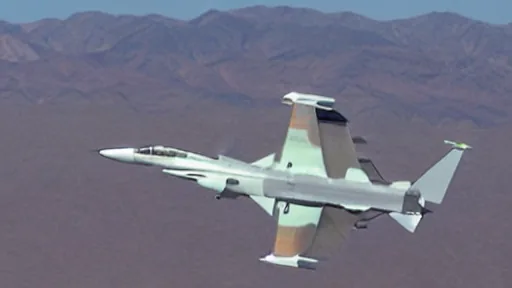
NASA ran the aircraft’s design through computational fluid dynamics simulations on three supercomputers: Pleiades, Electra, and Endeavour. They used in-house tools called LAVA and Cart3D to predict the aircraft’s supersonic noise signature.
These simulations modeled every surface of the aircraft at supersonic speeds. They calculated how shockwaves would form, how they would propagate, and whether they would merge. They predicted that the X-59 would produce a quiet thump instead of a loud boom.
But simulations are not reality. The X-59 needed to fly.
The First Phase: Envelope Expansion
For several months before the June 5 flight, the X-59 had been participating in an ongoing series of flights. The plane flew at a wide range of speeds and altitudes—a process known as envelope expansion.
These tests were the first phase of the X-59’s flight testing. They focused on performance and involved chase plane monitoring. The aircraft flew 16 times in the last 90 days before the supersonic milestone, getting into a steady test rhythm.
The first supersonic flight on June 5 was part of this envelope expansion. It was not yet the demonstration of quiet supersonic capability. It was technical validation.
Engineers needed to confirm that the X-59 behaves as predicted at transonic and supersonic speeds. A specialized shock-sensing probe mounted on the F-15’s nose began taking near-field measurements of the X-59’s shockwave pattern.
Those early measurements will be compared against the supercomputer simulations. Only once the near-field shockwave data validates those models will NASA proceed to the next phase.
What Comes Next: The Quiet Thump
The event more critical to the mission is still upcoming. In the coming days, the aircraft is expected to make its first “mission conditions” flight, reaching a cruising speed of Mach 1.4 (approximately 925 miles per hour) and altitude of approximately 55,000 feet.
This speed and altitude are the base conditions for the X-59 when it will eventually fly over several U.S. communities. NASA will gather data about how people may perceive its quiet thump.
“We expect to take the next step and push to Mach 1.4,” said NASA Administrator Jared Isaacman. [1] “I’m grateful to the NASA team and Lockheed Martin Skunk Works for their help getting us to this point, and I hope this is the first of many collaborations as we rebuild NASA’s X-plane portfolio.”
The X-59 is the centerpiece of NASA’s Quesst mission, which aims to demonstrate quiet supersonic flight and help enable commercial supersonic flight over land worldwide.
The Legislative Momentum
The X-59’s first supersonic fliThe U.S. House of Representatives passed the Supersonic Aviation Modernization Act on March 24, 2026 House of Representatives passed the Supersonic Aviation Modernization Act on March 24, 2026. This bill would require the Federal Aviation Administration to revise the 1973 ban on civil supersonic flight over land within one year, provided no sonic boom reaches the ground.
“The X-59’s first supersonic flight is a testament to America’s enduring leadership in science, engineering, and aerospace innovation,” said Michael Kratsios, Assistant to the President for Science and Technology and Director of the Office of Science and Technology Policy. [5] (Note: Kratsios served in the first Trump administration; verify current role as of 2026.) “This achievement comes as the administration continues work to enable supersonic flight and American aerospace innovation”
Together, the imminent test flight and the legislative momentum represent the most consequential moment for supersonic aviation since Concorde’s last commercial departure in 2003.
What Changes Now
Before the X-59, supersonic flight over land was impossible by law. The physics of sonic booms made it impractical. The N-wave was inevitable.
The X-59 challenges this understanding. It demonstrates that supersonic flight does not have to produce a loud boom. It can produce a quiet thump. The shockwaves can be smoothed, distributed, and prevented from merging.
This changes the regulatory landscape. If the data from the X-59 shows that quiet supersonic flight is possible, regulators can establish new noise standards. Commercial operators can design aircraft that meet those standards. Travelers can fly from New York to Los Angeles in half the time.
NASA will validate design tools through ground and flight testing. U.S. aircraft manufacturers will have the ability to explore new quiet supersonic concepts. They will have confidence that their resulting designs will meet quiet flight requirements.
The Synthesis: Silence as Progress
The X-59’s first supersonic flight was not loud. It was not dramatic. It was not the kind of event that makes headlines around the world.
It was quiet.
That quietness is the point. That quietness is the achievement. That quietness is what will change the future of flight.
For 53 years, the law has said that supersonic flight over land is too loud. The X-59 says: what if it is not?
The answer will come in the data. In the shockwave measurements. In the community surveys. In the regulatory decisions.
But for now, on that day in June, over the Mojave Desert, a plane flew faster than sound, and almost nobody heard it.
That silence contained the future.
The Philosophy of Quiet
There is something profound about this moment. For decades, human progress has been measured by loudness. The faster we went, the louder we became. The Concorde was a roar. The space shuttle was a thunder. The sound barrier was something to be broken, and breaking it meant making a noise.
The X-59 inverts this logic. It says: speed does not require noise. Progress does not require disruption. The future can be quiet.
This is a different kind of achievement. It is not about how fast we can go. It is about how softly we can arrive.
The X-59 demonstrates that the most significant scientific advance can be measured by what is absent: the sonic boom. The silence after the boom represents a new era in aviation.
And that possibility is now being measured, validated, and prepared for the world.
Sources
1. NASA
2. Federal Aviation Administration
3. NASA Langley