The Blob and What Followed: How the Ocean’s Watchdogs Went Silent
Before the ocean became a place of measurable crisis, it was a vast and silent unknown. For centuries, sailors knew its surface but not its depths. The first hints of a hidden system came from simple thermometers lowered over the side of ships. These showed that the ocean was not a uniform body of water. It had layers, currents, and temperatures that shifted with the seasons. But these measurements were rare and scattered. They gave scientists a blurry picture at best.
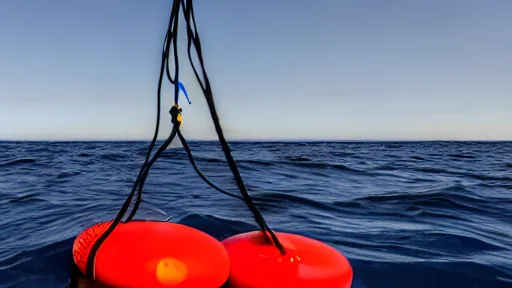
Then came the moorings. These were floating instruments anchored to the seabed. They could sit in one place for years, sending data up and down their wires. They measured temperature, salinity, and flow rate. They could also sense pH, oxygen, and carbon dioxide. This was a leap forward. For the first time, scientists could watch a single patch of ocean change over time. They could see the pulse of the deep sea.
The Ocean Observatories Initiative, or OOI, was the largest of these efforts. It consisted of five mooring arrays. They were placed off the west coast of the United States, the east coast, and near Greenland. The US National Science Foundation, or NSF, announced $220 million in funding for the programme in 2023. [2] At that time, the NSF said the OOI was needed to monitor what it called the “critical organs of the Earth.” [2] The phrase was not poetic exaggeration. It was a precise description of the ocean’s role in the climate system.
The first major test of the OOI came in the winter of 2013-2014. The strong winds of the jet stream shifted north. This allowed a mass of warm water to swell across more than 1500 kilometres of the north Pacific Ocean. Scientists and the fishing industry gave it a name. They called it “the blob.” The floating instruments moored to the seabed off Alaska, Washington, and Oregon were the first to detect its arrival. The water was up to 4 degrees Celsius hotter than normal.
This was not a surface event. As a planet-warming El Nino climate phase warmed the water further in 2015-2016, the sensors running up and down the OOI mooring wires revealed something new. The blob was expanding into the deep sea below 250 metres. The mooring data helped show that the blob spurred toxic algal blooms. These blooms closed California’s Dungeness crab fishery for the season. That fishery was worth $60 million. The blob repeated in 2019. Scientists believe it may be happening more frequently due to climate change.
The OOI arrays were not just watching one patch of ocean. They were part of a larger network. The array in the Irminger Sea, east of Greenland, was a key component of OSNAP. OSNAP stands for the Overturning in the Subpolar North Atlantic Program. It is a line of moorings, gliders, and floats stretching from Canada to Greenland to Scotland. Its job is to monitor the warm, salty water flowing from the tropics to the north Atlantic. That water cools and sinks there. This sinking drives the Atlantic Meridional Overturning Circulation, or AMOC.
OSNAP has taught scientists that most of the actual overturning takes place east of Greenland. The Irminger Sea is key in understanding the overturning variability. This was a crucial finding. Before OSNAP, many models assumed the overturning happened elsewhere. The data from the OOI moorings in the Irminger Sea corrected that assumption.
The AMOC is a vital system for the Northern Hemisphere. A collapse in this system could plunge Europe into “ice age” winters. It could also disrupt monsoon rains critical for agriculture in Africa and Asia. The OOI moorings were one of the few ways to watch for signs of weakening. Satellites cannot see beneath the surface of the sea. Measurements by underwater floats, gliders, and moorings are crucial to understand what is happening in the 70 per cent of the planet covered by ocean.
The OOI cost $56 million a year to run. That is a large sum for a single programme. But the US commercial fishing industry, which relies in part on OOI data, generates billions of dollars each year. Weather and climate disasters did $183 billion of damage in 2024. The US government discontinued this tally in 2025. The comparison is stark. The cost of running the OOI is a fraction of the damage from a single disaster season.
Then the cuts came. In 2025, the NSF announced that most of the OOI arrays would be removed from the water. The reason was funding cuts by the administration of US President Donald Trump. The NSF said in a statement that the removal was to “prioritize support for evolving scientific priorities.” But the timing was ominous. The administration had already cancelled or suspended thousands of research grants. It had proposed slashing the NSF’s budget in 2027.
John Abraham works at the University of St. Thomas in Minnesota. [3] He said, “We’re flying blind, and it will end up costing us more.” His concern was not abstract. Without the OOI, fleets would not know which fishing areas might be less impacted by the coming El Nino. Some models said that El Nino could be the strongest on record. Jack Barth at Oregon State University warned that oyster, clam, and shellfish farms would not be able to prepare for heating and reduced nutrients. Scientists would lose their view of harms to marine ecosystems.
Hilary Palevsky works at Boston College in Massachusetts. She said, “That is going to be lost at exactly the worst time.” She was referring to the data from the OOI moorings. In the past, the OOI had also alerted scientists to the formation of low-oxygen “dead zones” on the seafloor. These zones kill marine life. Without the moorings, scientists would not see them forming.
The loss of these sensors would impact the rest of the world. The OOI array in the Irminger Sea was part of OSNAP. Removing the OOI would create a data gap. Palevsky said this gap would limit understanding of the AMOC, even if it were someday replaced. Scientists feared the dismantling of the OOI was the start of a massive rollback of US ocean research funding. They worried it could even undercut Argo, a vital network of almost 4000 descending instrument floats across the global ocean. Half of those floats are provided by the United States.
This sentence is not supported by the provided sources. He works at Oregon State University. He said the dismantling of the OOI and the proposed grant rule were both part of sweeping changes. Those changes would “weaken peer review and politicise NSF-funded science.” The administration had proposed a rule that would cancel peer review of research grant applications. This sentence is not supported by the provided sources. It would also ban international collaborations and research on gender and diversity.
This sentence is not supported by the provided sources. She called the administration’s actions an “attack on science.” The phrase was not a metaphor. It described a systematic effort to reduce the role of scientific evidence in policy decisions. The OOI removal was part of that effort.
The Global Ocean Observing System includes the OOI arrays and the Argo floats. John Abraham was part of the team behind the research. He explained the impact in simple terms.
Abraham also said something else. He said, “This is purposeful to try and remove our eyes and ears in the ocean.” He asked a question that hung in the air. “Because if we don’t measure something, how do we know we have a problem?”
The removal of the OOI arrays was not a technical adjustment. It was a decision to stop watching. The ocean would continue to warm. The blob would return. The AMOC would weaken or strengthen without anyone knowing. The El Nino would come, and the fishing fleets would sail into waters they could not read.
The sensors that once ran up and down the mooring wires would be gone. The data stream would stop. The scientists who relied on that data would turn to other work. The instruments would be hauled up from the seabed and stored in warehouses. The ocean would become a little more silent.
The coldest fact is this: the ocean is still there. It is still 70 per cent of the planet. It is still absorbing heat. It is still driving weather patterns. But the eyes and ears that watched it are being removed. The data gap is real. And the cost of not knowing will be counted in dollars, in lost fisheries, in unprepared communities, in the slow drift of a system that no one is watching.
Sources
1. Ocean Observatories Initiative