
The Whiplash That Broke Britain’s Harvest
For decades, climate scientists could describe what El Niño does in the abstract — warm water piles up in the eastern Pacific, atmospheric circulation shifts, weather patterns warp across the globe — but the precise chain from ocean heat to a failed harvest on a specific farm remained stubbornly blurry. What was missing was the view from the ground: the carrot that splits down its side, the whiteflies clustering under leaves, the farmer watching rain pour down on ground that was cracked dry only weeks ago. That gap is closing now, not through better satellites, but through the testimony of people whose livelihoods depend on reading the sky.
Tom Chadwick and Rosa Farber grow vegetables and fruit at Laines Organic Farm in West Sussex, England. [1] The purple carrots they pull from the clumpy soil this year are huge and bulbous, some double-tipped — deformities that trace back to a summer of record heat and widespread drought. The heat killed some seeds outright. When the rain returned this autumn, abnormally warm, some carrots split down the side. Tiny sap-sucking whiteflies cluster under their green leaves. “If the crops are stressed, they’re more likely to get attacked,” Chadwick says. [1] The plant that survives one extreme becomes vulnerable to the next.
The rain pouring down as Chadwick and Farber work is an omen of the warm, wet, stormy weather that El Niño is expected to bring to the UK this autumn and winter, which will stress the produce further. Too much rain could rot carrots still in the ground, along with the garlic, salad greens and broad beans the farmers will plant in the next few weeks. But the farmers also fear the opposite. Frost could kill their apples, plums and pears in late winter, when El Niño can disrupt the polar vortex and release Arctic air into the UK. Or another dry summer could again require long days of emergency watering. “It is worrying, the unpredictability of it,” Farber says. [1] “It’s just an unknown.” The unknown is not whether extreme weather will come. It is which kind, and when.
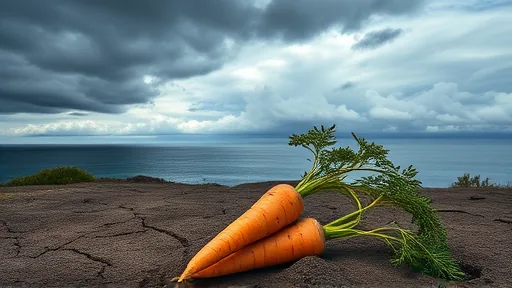
The result, experts say, will be a tale of two socioeconomic statuses: shortages and higher prices in high-income countries, food insecurity or famine in low-income ones. People in high-income countries could face shortages and higher prices over the next 18 months. Those in low-income countries could suffer food insecurity or even famine. “The UK may be willing to pay top dollar,” says Christian Jaccarini at the Energy and Climate Intelligence Unit, a UK non-profit. “It doesn’t mean people won’t go hungry somewhere else.”
The Tropics Pay First and Deepest
For consumers in Europe, that means cutting back on coffee breaks. For bean growers in South America and Asia, it means something else entirely: the possibility of falling into poverty. Ecuador, the fourth-largest grower of cacao, is expected to suffer heavy rainfall and flooding. The same ocean signal that parches one cacao region drowns another.
El Niño reduced summer monsoon rainfall in India, the biggest producer of rice, by 13 per cent. The harvest in some parts of central India failed completely as farmers were never able to transplant seedlings from nurseries to the desiccated paddy fields. Yield is expected to fall by 7 per cent, or 10 million tonnes, and India is likely to restrict exports.
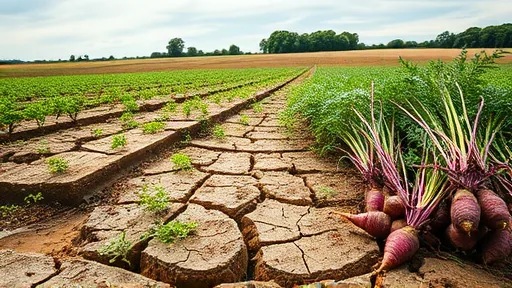
The pattern is not new, but the scale is: almost all recent El Niños have unleashed drought on Brazil, Vietnam, Colombia and Indonesia, the world’s top four coffee producers, and commodity market prices of Arabica have already jumped 30 per cent. The last El Niño, in 2023-24, led to the wettest six months ever observed in England and Wales, and it was far smaller than the current one. Waterlogged soils prevented tractors from getting onto fields. Seeds failed to germinate. Prices of bread, biscuits and beer are likely to rise next year, according to the consultancy Parker Walsh. So are beef and dairy prices, as both abnormally wet and dry weather force farmers to rely on expensive feed rather than grazing. The UK’s “climate whiplash” — from its worst-ever cereals harvest after a hot, dry summer to the opposite extreme — is not a metaphor. The harvest of grains like winter wheat and barley declined by more than 20 per cent in 2023-24, costing farmers £1 billion, and that was a far smaller El Niño than the current one.