A Valve Fix That
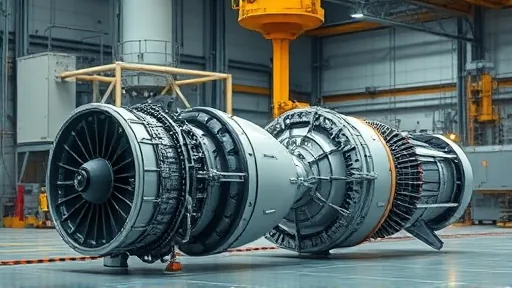
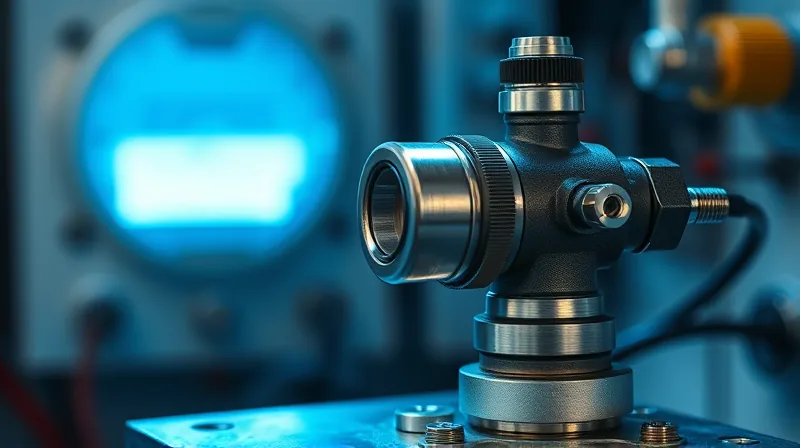
Landed in a Loud Week Last Tuesday, Blue Origin announced that a modified main oxygen valve had cleared qualification testing. [1] That is a quiet sentence about plumbing, and it landed in the middle of a very loud week for rockets. The company said the redesigned valve was already built into engines for upcoming flights and was being rolled across the rest of its fleet. [1] It also said it expected to complete the anomaly investigation into its own rocket later this month. [1] The timing matters because Blue Origin’s New Glenn rocket is aiming to fly again as early as January. It has been grounded since a catastrophic failure in May 2026 during a ground test. That failure was later attributed to a main oxygen valve on one of the BE-4 engines — the same engine family that powers the core stage of a different rocket entirely. Two rockets, one shared engine design, and one shared supplier.
Here is the part that reads like trivia and is not: the BE-4 engines on Vulcan and the BE-4 engines on New Glenn are not identical. The New Glenn version is slightly more powerful. They are close cousins, not twins.
The Data That Refuse to Fit the Model
Vulcan’s fifth flight lifted off and then went wrong in a narrow window. United Launch Alliance confirmed that just after liftoff the vehicle experienced low booster performance. The company did not say which booster, which subsystem, or which part. It said only that stage separation came when the rocket was too low and too slow to reach orbit. Around ten minutes into flight, telemetry and the mission were gone.
What did work is nearly as instructive as what did not. The Centaur V upper stage performed nominally. The solid rocket boosters performed nominally. The failure was not a general collapse of the vehicle — it was a specific, localized shortfall in the core stage, the part powered by the two BE-4 engines.
That is a crucial fork in the road for the investigation. Engineers are examining whether one of the two BE-4 engines began producing lower thrust shortly after liftoff and never climbed back to full throttle for the rest of the burn.
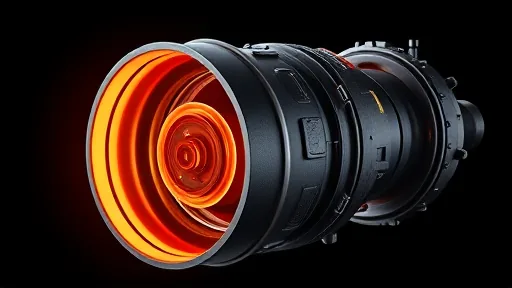
The visual evidence is the kind that makes engineers lean forward. High-zoom tracking cameras appeared to show one engine slightly dimmer than the other after Vulcan jettisoned its solid rocket boosters nearly two minutes into flight. Dimmer plume, weaker flame. And an asymmetric shutdown of the two BE-4 engines could have contributed to the sudden attitude motion visible in ULA’s telemetry-driven real-time animation near stage separation.
None of this is settled. The information is preliminary, and no definitive conclusions can or should be drawn. The investigation is being led by ULA and overseen by the Federal Aviation Administration. ULA and Blue Origin have acknowledged only that they are working together to investigate the cause, and both are holding details close.
Two of Vulcan’s four previous flights hit trouble with the nozzles on its solid rocket boosters. Both times the rocket compensated for reduced and asymmetric thrust and still reached its intended orbit. The second nozzle issue grounded Vulcan for nine months. So this vehicle has a record of surviving asymmetry — and a record of paying for it in schedule. The difference now is that the asymmetry appears to sit in the core stage, not the strap-on boosters, and the core stage has no spare.
The Ledger Nobody Wants to Read
The schedule cost is already being counted. This setback is likely to sideline Vulcan for at least half a year, and probably longer. The most exposed customer is the US Space Force, which has national security payloads waiting for a ride on Vulcan. The second is Amazon, which had more than a dozen launches of its Amazon Leo constellation on the manifest for 2027.
This failure would exacerbate a worsening launch crisis in the United States — a shortage of reliable rockets at exactly the moment demand is climbing. Think of it as a highway where one bridge closes and every truck reroutes onto roads already at capacity.
And the stakes reach past commercial customers. If Vulcan’s failure were ultimately due to a problem with the BE-4 engine, it would certainly delay New Glenn’s return to flight. That would be a setback not just for Blue Origin but for NASA, which is counting on the super heavy lift rocket to do much of the heavy lifting for its Artemis Program and its Moon Base.
The next step is already on the calendar. Blue Origin expects to complete its anomaly investigation later this month, with the modified valve now qualified and being rolled out across the remaining fleet. ULA, for its part, has committed to nothing beyond the investigation it leads. The question hanging over both is whether the dimmer engine on Vulcan and the failed valve on New Glenn are the same story told twice — or two separate stories that only look alike from a distance. Until the valve investigation closes and the propellant-feed inquiry advances, nobody can say.