A Jet, a Bag of Cement, and Ghana’s Arithmetic of Recovery
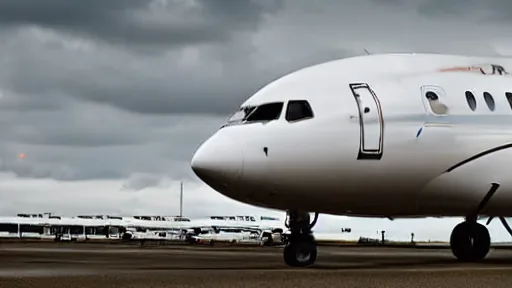
On Monday the cameras pointed at something else. A Falcon 6X, built by the French aerospace company Dassault Aviation, landed for the Ghana Air Force and rolled through a water salute — the airport ritual that marks an aircraft joining a fleet. The reported price was $60m, or £46m, with the cost at delivery put at $61m. Defence Minister Kenneth Adjei inspected the jet on the day it arrived.
A purchase of that size does not arrive quietly, and this one did not arrive quickly. Parliament approved it in December 2025. The approval sat inside a broader programme to modernise the country’s military aviation fleet. Four helicopters from Airbus belong to the same programme.
The Falcon 900EX it replaces is 16 years old, and it was reportedly grounded in France for several months in 2025 while undergoing repairs. It has suffered recurring maintenance problems, including corrosion and leakages in its fuel tank. Officials say the new jet’s longer flying range cuts the need for refuelling stops on international trips, improving the reliability of presidential travel.
Hypocrisy Is the Charge, Timing the Defence
The row that followed the landing is about priorities, and it is also about consistency. Samuel Abu Jinapor, an opposition member of parliament, framed the purchase as a misplaced one. His context: many Ghanaians are still struggling with the cost of living, and youth unemployment remains alarmingly high. He then raised the question: “What was unacceptable in opposition cannot suddenly become acceptable in government merely because the occupants of power have changed.” [1] The charge has a target: the governing National Democratic Congress. Senior figures in the party, Jinapor recalls, strongly opposed a new presidential aircraft when they were in opposition. President John Mahama himself opposed buying a new presidential jet while in opposition. The same MP asked for transparency on three points: how the aircraft was procured, how the purchase was financed, and what justifies the expenditure.
The purchase also lands while the administration is trying to demonstrate an economic recovery after years of financial difficulty that forced Ghana to turn to the IMF. The government’s answer separates the principle from the calendar. Peter Lanchene Toobu, who chairs parliament’s defence committee, holds that his party never objected to acquiring a presidential jet in principle. His formulation: “We agreed in principle that we needed to purchase a new presidential jet.” The objection, in that account, was to the moment — when Ghana was seeking a $3bn bailout from the IMF.
Toobu’s second claim is that the baseline has moved. “The strength and macroeconomic stability of this country have enhanced our status in the sense that imports have become cheaper, and this is the right time.” He adds that the aircraft was bought without borrowing. On that reading the jet is a dividend of recovery rather than a charge against austerity.
Online, the argument took the form of a payroll. “This money can employ over 100,000 nurses and 200,000 teachers,” an X user posted.
What the Cabin Denied and the Ledger Owes
Two details kept the story alive after the technical case had been made. The first was the interior. Kwakye Ofosu, a government spokesperson, rejected that outright: “There certainly is no bathroom. President Mahama has no intention of bathing in the air.” The seats recline and convert into places to sleep, in his account. A dedicated bedroom he denies.
The second detail was the cement. Ofosu reached for the price of a bag as his evidence that the economy has improved: “When I was campaigning in 2024, and I was donating cement, it cost 115 cedis (£7.5) a bag. Today, for 80 cedis, you will get a bag of cement.” [1] He also pointed to lower borrowing costs and falling prices for construction materials. A bag that fell from 115 cedis to 80 cedis is a claim about prices on the ground, and it is the government’s own yardstick.
The most uncomfortable assessment came from outside the parties. Godfred Alufar Bokpin, an economist at the University of Ghana, treats the president’s safety as paramount. He then separates safety from timing. The purchase, in his reading, is difficult to justify in the middle of severe austerity measures, high unemployment and widespread infrastructure challenges. His verdict on the calendar: “The timing makes it a bit difficult to understand.” [1] What he asks for instead is a document. A cost-benefit analysis would explain why buying the aircraft was preferable to leasing one. It would also set out how the decision serves Ghana’s interests.
The $60m is committed, the water has dried off the fuselage, and the questions that outlast a news cycle are the plain ones: a bag of cement at 80 cedis, a wage bill counted against an airframe, a purchase weighed against a lease. The cost-benefit analysis Bokpin asked for has not been published.