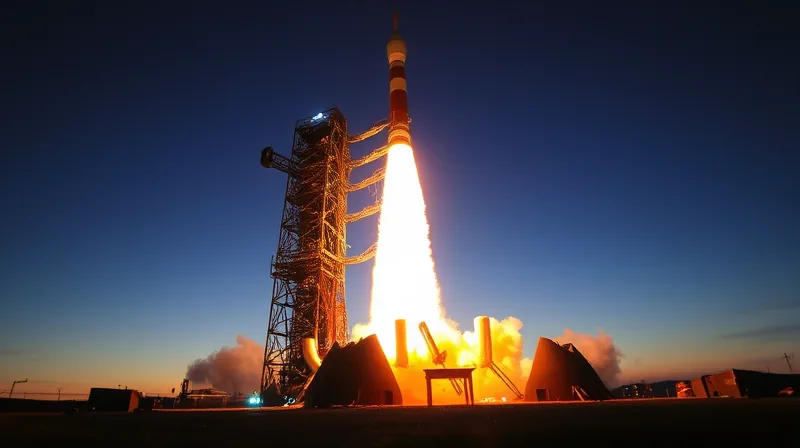
Blue Origin faces tight deadline after New Glenn pad explosion
Imagine you are building a house. You have one hammer. One saw. One roll of blueprints. One day, you test the stove. The stove explodes. The kitchen is gone. The living room is scorched. The roof has a hole. Your one hammer is melted. Now, someone asks you: can you finish the house by December?
That is the math problem Blue Origin faces today. The question is not about rockets. It is about time. About one launch pad. About half a year left on the calendar. And about a fireball that was seen for more than a hundred miles.
The Mystery of the Missing Rocket
On a date not yet confirmed by Blue Origin, a rocket stood at Launch Complex-36 during a static fire test that resulted in an explosion [1] It was called New Glenn. It was not flying. It was not carrying cargo. It was doing a test. Engineers call it a static hot fire. The engines ignite. The rocket stays on the ground. The computers check if everything works.
Everything did not work.
The rocket exploded. Not a small pop. A giant fireball. The kind that turns night into day. The kind that sends debris flying for miles. The kind that leaves a crater where a launch pad used to be.
For weeks, no one knew exactly what survived. The smoke was too thick. The damage was too fresh. The investigation had not even started. Blue Origin’s CEO, Dave Limp, stayed quiet. [1] The company’s motto is “Gradatim Ferociter” — step by step, ferociously. But the first step was just figuring out what was left.
What the Fire Left Behind
Now, the smoke has cleared. Limp walked the ruins. He looked at the twisted metal. He checked the tanks. He climbed the tower. And he found something surprising.
The propellant farm is intact. That is the place where the fuel lives. Liquid oxygen. LNG — that is liquid natural gas, not nitrogen. These are not things you can buy at a store. They take months, sometimes years, to build. They survived.
The water tower is fine. That is the tall white tank that looks like a giant golf tee. It is used to flood the pad with water during launches. It did not burn.
But other things did not make it.
The transporter-erector is gone. That is the massive steel structure that lifts the rocket upright. It is called the strongback. It was destroyed beyond repair. Blue Origin will not rebuild it. Instead, they will use a new system they had already been designing. An alternative vertical concept. A different way to stand the rocket up.
The pad tower is charred. Blackened. Singed. But it is still standing. Limp says it can be repaired. It does not need to be torn down.
So here is the tally: one destroyed strongback. One damaged tower. One missing rocket. And one very ambitious prDave Limp stated on X that Blue Origin aims to launch another New Glenn before the end of 2026, though the timeline remains unverifiedher New Glenn before the end of 2026. [1] That is seven months from now. That is the timeline.
Is that realistic? History says no.
In 2016, a SpaceX Falcon 9 exploded on the pad at Launch Complex-40. Same kind of test. Same kind of fireball. That pad took one year to repair.
In 2014, an Antares rocket exploded seconds after liftoff at NASA’s Wallops Flight Facility. It crashed back onto the pad. That facility took almost two years to launch again.
Blue Origin is aiming for half that time. Maybe less.
But there is a difference. Those other explosions were different kinds of destruction. A rocket lifting off and crashing back — that is one thing. A rocket sitting still and exploding — that is another. The force is different. The pattern of damage is different. The cleanup is different.
And Blue Origin has only one pad.
The Hidden Stakes
LC-36 is not just a piece of concrete. It is Blue Origin’s only launch site for New Glenn. Every day it is closed, the company falls further behind.
Who is waiting?
Amazon has contracts for its Kuiper internet satellites. [3] Dozens of launches. Billions of dollars. They need a working rocket. NASA is waiting too. [2] The agency plans to return astronauts to the moon. The program is called Artemis. Two companies are building lunar landers: SpaceX with its Starship, and Blue Origin with its Blue Moon spacecraft. Both landers need to fly. Both need to be tested. Both need to be certified.If Blue Origin cannot launch, the lunar timeline shifts. NASA’s Artemis 3 mission is planned for 2027. That is a test flight in low Earth orbit. The first lunar landing is scheduled for 2028. Every delay at LC-36 pushes those dates to the right.
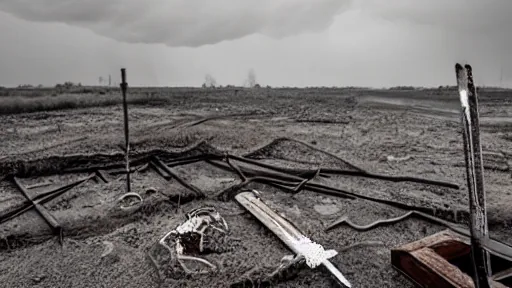
There is no backup pad. There is no second string. There is just one launch complex, one damaged tower, one destroyed strongback, and one CEO saying “before the end of the year.”
The Other Side of the Equation
This is not the first time a rocket company has rebuilt from fire.
SpaceX had its own disaster in 2023. The first Starship test flight lifted off from Boca Chica, Texas. The engines were so powerful they blasted a crater in the concrete. Debris flew everywhere. The pad was wrecked. It took seven months to launch again.
That timeline matches Blue Origin’s hope. But the damage was different. A crater from liftoff is not the same as an explosion on the ground. The force is spread out. The heat is directional. The destruction is less total.
Still, SpaceX rebuilt. They built a flame trench. They reinforced the concrete. They launched again.
Blue Origin is now in the same position. But they have less time. And more riding on the outcome.
The Pieces That Survived
Let us look closer at what is still standing.
The propellant farm is a maze of pipes, valves, and tanks. Liquid oxygen boils at -297 degrees Fahrenheit. Liquid hydrogen boils at -423 degrees. These are not forgiving substances. They need special storage. Special handling. Special safety systems.
The fact that they survived the explosion is remarkable. It is also lucky. Limp called it “good luck.” But luck is not a strategy.
The water tower is simpler. It is just a big tank on stilts. It holds millions of gallons. It survived because it is far from the pad. The fireball did not reach it.
The pad tower is the big question. It is covered in soot. It has structural damage. But it can be fixed. That saves months of construction.
The strongback is the loss that hurts most. It is not just a crane. It is a precision machine. It aligns the rocket. It holds it steady. It connects all the cables and fuel lines. Building a new one takes time. Designing a new system takes even longer.
Blue Origin says they had an alternative ready. That is good. But “ready” and “tested” are different things.
The First Source
Dave Limp posted the update on X, formerly Twitter. He wrote: “Some LC-36 updates. Now that we’ve had access to the pad and integration facility we can share a bit of good news.”
He did not give a long speech. He did not hold a press conference. He typed a few sentences. That was the first word anyone got.
The company has not released the investigation results. The cause of the explosion is still unknown. That matters. If the problem was a faulty valve, that is one thing. If it was a design flaw in the engine, that is another. If it was a software error, that is a third.
Until the root cause is found, every fix is a guess.
—The University of Central Florida operates a research center focused on launch pad safety, studying explosion dynamics and debris patterns to aid industry recovery efforts5] ThePurdue University’s rocket propulsion lab tests engines and studies failures, training engineers who often join companies like Blue OriginThey tCaltech’s Jet Propulsion Laboratory builds spacecraft and provides expertise on failure analysis in aerospaceduates.
Caltech runs the Jet Propulsion Laboratory. [7] They build spacecraft. They understand what happens when things go wrong.These institutions are not building rockets. But they are building knowledge. And that knowledge is what helps companies like Blue Origin rebuild faster.
The Parallel Path
SpaceX is not sitting still. They are launching Starship again. They are testing new hardware. They are moving toward the moon.
BlueThe Artemis program relies on both landers for redundancy; delays in either could push back lunar mission timelinesnot want a single point of failure. If one lander falls behind, the other can take over. But if both fall behind, the moon mission slips.
Blue Origin’s Blue Moon lander has not flown yet. It needs New Glenn to get to orbit. Without a working rocket, the lander stays on the ground.
That is the pressure Dave Limp is feeling. That is why he set a deadline. That is why he shared the good news about the fuel tanks.
The Door That Just Opened
Every disaster creates a question. The explosion at LC-36 is no different.
The question is not “can Blue Origin rebuild?” They will. The question is “can they rebuild in time?”
But there is a deeper question. One that goes beyond this one pad. One that touches the future of spaceflight.
How do you build a launch system that survives its own failure?
Rockets are machines. Machines break. Sometimes they break violently. The question is not if it will happen again. It is when.
The next step is redundancy. Multiple launch pads. Multiple rockets. Multiple supply chains. Blue Origin is building a second pad at the same site. But it is not ready yet.
The next step is resilience. Pads that can handle explosions. Structures that can be repaired quickly. Systems that can be swapped out.
The next step is speed. The ability to go from fireball to launch in months, not years.
This disaster opens a door to rethinking launch system resilience and redundancy, not just recovery.
The Final Calculation
Seven months. One pad. One rocket. One chance.
The math is simple. The execution is not.
Blue Origin has rebuilt before. They have overcome failures before. They have the fuel tanks. They have the water tower. They have a damaged but repairable tower. They have a new strongback design. They have a CEO who says “before the end of this year.”
But they also have a mystery. The cause of the explosion is unknown. The investigation is not complete. The root cause could be hiding in a single wire. A single weld. A single line of code.
Until that mystery is solved, every step forward is a step into the unknown.
Dave Limp ended his post with the company motto: “Gradatim Ferociter.”
Step by step. Ferociously.
The first step is finding out what went wrong. The second step is fixing it. The third step is launching again.
The fourth step is the one no one can predict.
What happens when the next fireball comes?
Sources
1. Blue Origin
2. NASA
3. Amazon
4. SpaceX
5. University of Central Florida
7. Caltech