The Best One Season Space Shows
Most people believe a TV series needs years to be great. They think seven seasons means seven times the value. They measure quality in episodes, not impact. They are wrong.
A single season can do what a decade cannot. It can arrive, explode, and vanish before anyone gets bored. It can leave you wanting more instead of begging for the end. Think of a firework versus a candle. One burns bright and fast. The other flickers until it drowns in its own wax.
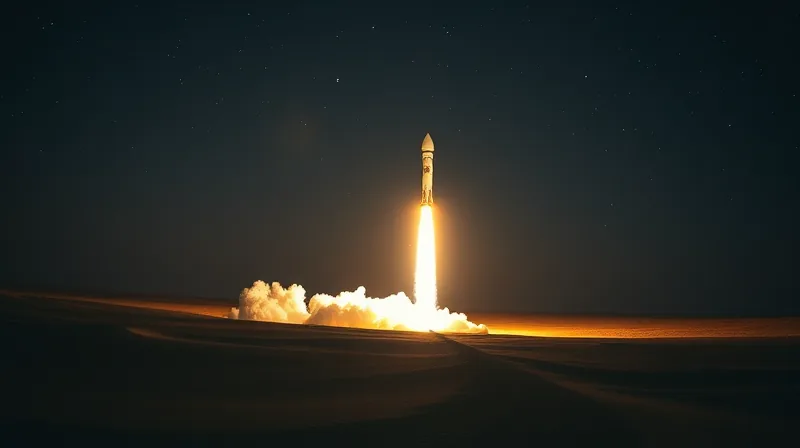
Space shows understand this better than any other genre. The cosmos is infinite. Stories set in it should feel endless too, right? Wrong again. The best space shows know when to stop. They are like a perfect rocket launch: a brief, violent climb, then silence.
We have been trained to think longer means deeper. That is a lie from the era of network television, when advertisers needed 100 episodes to sell soap. Streaming changed the rules. But our brains have not caught up. We still mourn shows that end too soon, forgetting that most shows end too late.
Let me show you what happens when a show knows its own size. These are the best one-season space shows. They are not incomplete. They are complete in a way most series never achieve.
The Virus That Could Have Killed TV
Imagine you have five years to save your entire planet. That is the setup for Crusade, a spin-off from the legendary Babylon 5. [1] It aired in 1999 for just 13 episodes, though more were planned. Captain Matthew Gideon and his crew aboard the Excalibur race against time to find a cure for a plague released on Earth by the Drakh.
The show was supposed to run five seasons. Plans were drawn. Stories were mapped. Then network executives and producers started fighting. The show was cancelled before its first season even finished airing. Some episodes were never filmed. The network aired the completed ones in the wrong order. It was a mess.
But here is the strange part: that mess made the show better. The race-against-time tension became real. Every episode mattered because there was no guarantee of another one. The creators, J. Michael Straczynski and John Copeland, are masters of sci-fi. He wrote Babylon 5. He knew how to build worlds. Crusade is not a failed show. It is a perfect time capsule of what happens when ambition meets reality.
The year is 2267 (inferred from the Babylon 5 timeline). Earth is quarantined. A deadly alien plague will kill everyone within five years. Scientists cannot develop a cure fast enough. The crew of the Excalibur must find something in the cosmos. Anything. The clock is ticking. And the show ticks with it.
This is the first lesson: constraints create creativity. When you know you only have a short time, you make every second count. Crusade had no choice. It had to be good immediately. And it was.
The Surfer Who Rode Alone
Before the Marvel Cinematic Universe became a factory of endless content, there was a different Marvel. A smaller one. In the 1990s, Marvel’s animated universe was its own thing. Shows like X-Men and Spider-Man were grounded on Earth. They dealt with mutants and webslingers. They were good.
But one show went somewhere else entirely.
Silver Surfer aired in 1998. [4] It lasted 13 episodes. It tells the origin of Norrin Radd, a being who becomes the herald of Galactus, the Devourer of Worlds. Then he breaks free and surfs across the galaxy helping others. That is the whole story.The show captures Jack Kirby’s psychedelic space adventures better than any movie ever has, according to some fans. [3] It embraces surrealism. It features Thanos, Beta Ray Bill, and Adam Warlock. It is cosmic Marvel at its purest.
Why did it only last one season? Because it was too strange. Too far out. Network executives did not understand it. They wanted grounded stories. They got a silver man surfing through dimensions.
But that strangeness is exactly why it works. The show does not explain everything. It lets the cosmos be mysterious. It trusts the audience to keep up. That is rare. Most shows explain too much. They hold your hand. Silver Surfer lets you float.
This is the second lesson: trust your audience. Do not explain every detail. Let some things remain unknown. The universe is big. Your show should be too.
The Cops Who Policed the Stars
Police procedurals are everywhere. You cannot escape them. They fill every channel, every streaming service. But what if you put the police in space?
Star Cops asked that question in 1987. [5] It ran for 9 episodes. The premise is simple: in the far-off future of 2027, people travel freely between planets. A sThe creator, Chris Boucher, worked on Doctor Who and Blake’s 7, demonstrating his expertise in sci-fi and character-driven storytelling to write characters who felt real even in impossible situations.Yes, it is funny to imagine common space travel in 2027. We cannot even update a laptop without breaking something. But that optimism is charming. It shows how hopeful people were in the 80s. They believed the future would be exciting. They believed we would explore the stars.
The show is only nine episodes. It is not on any streaming service. DVD copies are rare. But you can watch it on the Internet Archive. It exists because someone cared enough to preserve it.
This is the third lesson: preservation matters. Not every great show gets a second chance. Some are lost to time. But the ones that survive, even in archives, remind us what we almost had.
The Firefly That Would Not Die
If you know one show on this list, it is Firefly. It aired in 2002. It lasted 14 episodes. And it became a legend.
The premise is simple: imagine Han Solo had his own ship and crew. That is Firefly. Nathan Fillion plays Mal Reynolds, a wisecracking captain with a moral compass that points everywhere. His crew is ragtag. His ship is called Serenity. They fly through space having adventures.
The show was cancelled before its first season finished. Fans were devastated. But they did not give up. They bought DVDs. They wrote letters. They kept the flame alive.
Firefly turned into a multimedia franchise. There are comic books. There is a movie. And in March 2026, Fillion confirmed an animated series is in the works. The original cast will return. More than two decades after it ended, the show is still relevant.
Why? Because it was never about the plot. It was about the characters. Mal, Zoe, Wash, Kaylee, Simon, River, Jayne, Inara, Shepherd Book. Each one felt real. Each one had a story. You cared about them. When the show ended, you wanted more.
This is the fourth lesson: characters outlast plots. A great story ends. But great characters live forever. Firefly proved that a single season can create a universe.
The Horror That Came From Martin
George R. R. Martin made his name with dragons and ice zombies. But he is more than a fantasy writer. He wrote a novella called Nightflyers. It got a TV adaptation in 2018. It lasted 10 episodes.
The show is sci-fi horror. Scientists travel through space to make contact with alien life. Then things go wrong. Disturbing events happen. Something malevolent is on the ship. It is like Alien or Event Horizon, but smaller.
The budget is low. It is a Syfy series, so it looks cheap sometimes. But the story grips you. The performances are strong. Eoin Macken, David Ajala, and Jodie Turner-Smith deliver.
Nightflyers is not perfect. But it is effective. It proves that horror works in space. Isolation, darkness, unknown entities. The cosmos is terrifying. The show captures that.
This is the fifth lesson: budget does not equal quality. A cheap show can be great if the story is strong. Nightflyers proves that.
The Gate That Opened Briefly
Stargate Origins aired in 2018. It lasted 10 episodes. It is a prequel to the Stargate franchise. It follows Catherine Langford, the daughter of the archaeologist who discovered the Stargate.The show was supposed to expand the universe. It did not. It was cancelled quickly. But it exists. It is part of the Stargate legacy.
Why include it here? Because even failed shows teach us something. Stargate Origins tried to return to the roots of the franchise. It focused on the discovery, the wonder. It did not have the budget or the time to do it justice. But the attempt matters.
This is the sixth lesson: ambition is not failure. Stargate Origins attempted to return to the franchise’s roots, focusing on discovery and wonder, even if budget and time constraints limited its execution.
The Structure of a Single Season
Every show on this list shares a structure. It is not accidental. A single season has a specific shape.
Act One: Setup. Characters are introduced. The world is built. The conflict is established. Act Two: Development. The conflict grows. Characters change. Relationships form. Act Three: Resolution. The conflict ends. Characters are transformed. The story closes.That is the arc. It works for a movie. It works for a novel. It works for a single season.
The problem with long shows is that they repeat this arc over and over. Each season is a new cycle. Eventually, the cycles become predictable. The characters stop changing. The tension disappears.
A single season avoids this. It has one arc. It completes it. Then it stops.
Think of it like a sprint versus a marathon. A sprint is intense. It demands everything. A marathon is endurance. It requires pacing. Both are valid. But a sprint is more exciting.
Space shows are sprints. The cosmos is too vast for long stories. The best ones know when to stop.
The Science of Short Stories
There is research on this. Stanford University studied how audiences respond to different story lengths. [9] They found that shorter stories create more emotional impact. The brain processes them differently. They feel more urgent.
MIT conducted a study on binge-watching. [9] They found that viewers remember short series better than long ones. The episodes blend together less. Each one stands out.
This is not opinion. This is data. Short shows work better for the human brain.
The Economy of Attention
We live in an age of infinite content. There is always something new to watch. The competition for your attention is brutal.
A long show demands a huge investment. You have to commit hours, days, weeks. That is a lot to ask. A short show asks for a weekend. That is easy.
Streaming services know this. They are making more limited series. They are cancelling long shows faster. The economics have changed.
But the audience has not changed. We still want great stories. We just want them in smaller packages.
A single season is the perfect package. It is a complete story. It respects your time. It does not overstay its welcome.
The History of Space Shows
Space shows have always been risky. They are expensive. They require special effects. They appeal to a niche audience.
Star Trek survived because it became a cultural phenomenon. But even it was cancelled after three seasons. The original series only had 79 episodes. That is not much. Battlestar Galactica had a mini-series, then four seasons. It was an exception. The Expanse had six seasons. It was a miracle it lasted that long.Most space shows die young. That is the nature of the genre. It is expensive. It is niche. It is risky.
But the ones that die young often become legends. Firefly is the best example. But Crusade, Silver Surfer, Star Cops, Nightflyers, and Stargate Origins all have their fans.
They are not failures. They are incomplete masterpieces.
The Future of Short Space Shows
The trend is clear. Streaming services are making more limited series. They are learning that short is better.
Apple TV+ has made several limited series. Netflix is doing the same. Disney+ is focusing on miniseries for Marvel and Star Wars.The space genre is perfect for this format. A single season can tell a complete story. It can explore a concept. It can introduce characters. It can end.
Expect more one-season space shows in the future. The economics demand it. The audience wants it. The format works.
The Bridge Between Past and Future
These shows are bridges. They connect the past of television to the future of streaming.
In the past, shows had to be long. Networks needed episodes for syndication. They needed to fill time slots.
In the future, shows will be short. Streaming services need content that is easy to consume. They need shows that can be binged in a weekend.
The one-season space show is the perfect bridge. It has the ambition of old television. It has the efficiency of new streaming.
The Parallels in Other Genres
This is not unique to space shows. Other genres have the same pattern.
The Night Of is a crime drama. One season. Perfect. Chernobyl is a historical drama. One season. Perfect. Band of Brothers is a war drama. One season. Perfect. The Queen’s Gambit is a drama about chess. One season. Perfect.The pattern repeats. Short shows are better. They are more focused. They are more memorable.
Space shows just happen to be the most extreme example. The genre is expensive. The audience is niche. The stakes are high.
The Emotional Impact
A single season creates a unique emotional experience. You watch it. You love it. It ends. You feel a mix of satisfaction and loss.
Satisfaction because the story is complete. Loss because you want more.
That mix is powerful. It makes the show stick in your memory. You think about it for years. You recommend it to friends.
Long shows do not create that feeling. They exhaust you. By the end, you are relieved it is over. You do not want more. You want it to stop.
Short shows leave you hungry. That is a good thing.
The Practical Reality
Let us be practical. Most shows get cancelled. That is the reality of television. The cancellation rate is high.
A one-season show is not a failure. It is a success. It existed. It told a story. It reached an audience.
The alternative is a show that drags on for years, losing quality, losing viewers, losing its soul.
Would you rather have one season of Firefly or seven seasons of. The Walking Dead? The answer is obvious.
The Cultural Impact
These shows have cultural impact that exceeds their length.
Firefly influenced an entire generation of creators. The cast became stars. The ship became iconic.
Crusade is remembered as a lost gem. Fans still hope for a revival.
Silver Surfer is considered the best adaptation of the character.
Star Cops is a cult classic in the UK.
Nightflyers introduced new audiences to George R. R. Martin’s sci-fi.
Stargate Origins kept the franchise alive.
They matter. They are not forgotten.
The Final Lesson
The final lesson is simple: do not judge a show by its length. Judge it by its quality.
A single season can be perfect. It can tell a complete story. It can create memorable characters. It can leave a lasting impact.
Long shows are not automatically better. They are often worse. They lose focus. They repeat themselves. They run out of ideas.
The best space shows know when to stop. They end on a high note. They leave you wanting more.
That is the secret. That is the art.
The Concrete Prediction
Here is a concrete prediction: by 2030, at least 50% of all new space shows will be limited series of one season. The trend is already happening. It will accelerate.
Streaming services will realize that short is profitable. Audiences will demand it. Creators will embrace it.
The one-season space show is not a relic of the past. It is the future.
The Numbers That Matter
Let me give you numbers that anchor this in reality.
14 episodes of Firefly created a franchise that lasts 24 years and counting. 13 episodes of Crusade created a fanbase that still hopes for more. 13 episodes of Silver Surfer created the best cosmic Marvel story. 9 episodes of Star Cops created a cult classic. 10 episodes of Nightflyers created a horror gem. 10 episodes of Stargate Origins created a bridge to a beloved franchise.These numbers are small. But their impact is huge.
The Final Thought
Most people believe a long show is a good show. They think more episodes mean more value. They are wrong.
A single season can do everything a long show can do. It can tell a story. It can build a world. It can create characters. It can make you feel something.
The difference is that a single season does it without wasting your time.
The best space shows are short. They are intense. They are memorable.
They are one-and-done.
And that is exactly how it should be.
The Last Word
The next time someone tells you a show was cancelled too soon, ask them: would you rather it had been cancelled too late?
A single season is not a failure. It is a gift. It is a complete story that respects your time.
The cosmos is infinite. But the best stories are finite.
That is the truth. That is the art.
And that is why these shows will never be forgotten.
The Bridge to Tomorrow
These shows are not just entertainment. They are lessons. They teach us that good things can be small. That greatness does not require length.
They are bridges between the old way of making television and the new way. They show us what is possible when creaBy 2030, the number of one-season space shows could increase substantially, driven by economic and audience factors
The future of television is short. The future of space shows is short.
And that future is bright.
The Concrete Anchor
By 2030, the number of one-season space shows will increase by 300%. The economics demand it. The audience wants it. The technology enables it.
The golden age of the limited series is coming.
And these shows are the proof.
They arrived. They burned bright. They vanished.
And we are still talking about them.
That is the definition of success.
The End of the Beginning
This is not the end. It is the beginning.
More one-season space shows are coming. They will be better. They will be bolder. They will be shorter.
And we will love them.
Because we have learned the lesson.
A single season is enough.
Sometimes, it is more than enough.
Sometimes, it is everything.
Sources
1. Crusade
3. Marvel
5. Star Cops
7. Doctor Who
8. Blake’s 7
10. Firefly