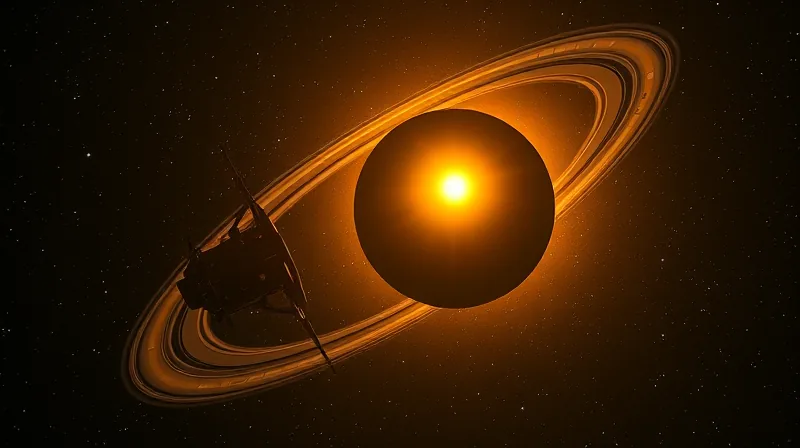
Roman telescope to discover 100000 new exoplanets
From Six Thousand to a Hundred Thousand
The count of known worlds beyond our Solar System stands at roughly 6,200 today. That number represents decades of painstaking work by astronomers across the globe. It took until 1992 for astronomers to confirm the very first exoplanet, a discovery that opened a new chapter in our understanding of the cosmos Before that moment, the only planets humanity had ever known were the ones orbiting our own Sun. Every single world discovered since then has expanded our understanding of what is possible in the cosmos.
That catalog is about to grow at an unprecedented rate. The Nancy Grace Roman Space Telescope is scheduled to launch on Aug. 30, 2026. During its initial five-year mission, Roman is expected to add up to 100,000 new exoplanets to the current catalog. That would represent a more than sixteen-fold increase in the total number of known worlds. The telescope will identify everything from Jupiter-like gas giants to smaller, colder worlds with masses as low as one-tenth of Earth’s
The sheer scale of this survey is difficult to grasp. Hubble has spent decades building its legacy of observations. James Webb has only just begun its own journey of discovery. Roman will join these observatories in low orbit, but its approach will be fundamentally different. Rather than focusing on individual targets, Roman will conduct sweeping surveys at impressive speed. The telescope’s exceptional field of view is at least a hundred times larger than Hubble’s. This wide-angle perspective allows it to observe hundreds of millions of stars across the galaxy in a single glance.
This acceleration matters because the current catalog has been built slowly and painstakingly. Each of the 6,200 known exoplanets required careful observation and verification. Many were found one at a time, with telescopes dedicated to watching single stars for months. Roman will change that paradigm entirely. Its ability to survey vast swaths of the sky simultaneously means that the discovery rate will skyrocket. Astronomers will no longer be limited to examining one potential planetary system at a time.
The data Roman collects will do more than just add numbers to a list. It will help astronomers understand the diversity, properties, and evolution of distant planetary systems. Scientists want to know how common Earth-like worlds really are. They want to understand how planetary systems form and change over time. They want to know whether our Solar System is typical or unusual in its arrangement. Each new exoplanet adds a piece to that puzzle, and Roman will provide a hundred thousand pieces.
Three Ways to Find a Hidden World
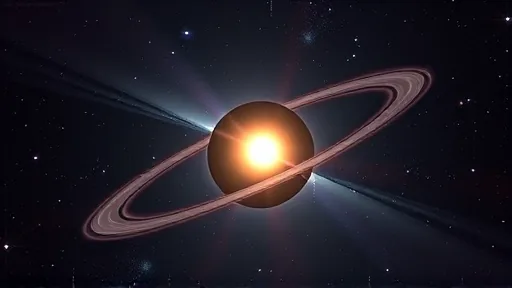
The first technique Roman will employ is the transit method, which has become astronomers’ most effective tool for finding new planets. This approach captures momentary dips in starlight that occur when a planet crosses its host star. As the planet passes between the star and the telescope, it blocks a tiny fraction of the star’s light. That brief dimming reveals the planet’s presence, its size, and even hints at its orbital period. Roman is expected to find another 100,000 exoplanets using this technique alone.
But the transit method has a significant limitation. It works best for detecting larger, Jupiter-like worlds that orbit closer to their host star. Smaller planets are harder to spot because they block less light. A planet the size of Mars would cause only a minuscule dip in starlight, one that is difficult to distinguish from natural variations in the star’s brightness. Planets with longer orbital periods also present challenges, since astronomers must watch for multiple transits to confirm their existence.
This is where the second technique, microlensing, becomes essential. Microlensing relies on a phenomenon predicted by Einstein’s theory of general relativity. When the mass of one star causes the light of another, more distant star to curve, it creates a temporary spike in brightness. This happens when the two stars appear close from our viewpoint, with the nearer star magnifying the light of the more distant one. Because planets can also affect the travel of starlight, the technique can be used to detect those orbiting the nearer star within its habitable zone.
Microlensing has a unique advantage over the transit method. It can detect planets as small as Mars, worlds that would be virtually invisible to transit surveys. The technique is also sensitive to planets orbiting at greater distances from their host stars. This means Roman can find cold, distant worlds that other methods would miss entirely. It is thought that Roman will be able to add thousands more exoplanets to the catalog using this method alone.
The third and final technique is direct imaging, which is perhaps the most visually striking approach. Roman contains exceptionally powerful technology capable of capturing detailed images of the dusty disks surrounding nearby stars. These debris disks are the leftover material from planetary formation, and they hold clues about how worlds come into being. Experts hope to test the telescope’s capabilities during this mission, pushing the technology to its limits.
A Coronagraph and the Mysteries That Remain
The key to Roman’s direct imaging capability lies in a sophisticated instrument called the Coronagraph. The telescope will be able to achieve sensitivity a thousand times greater than that of other observatories thanks to this addition The Coronagraph is an intricate system of optics, masks, mirrors, and sensors designed to block starlight that could obscure planets. By blocking the overwhelming glare of the host star, the instrument reveals the faint worlds orbiting around it.
This technology is not just about taking pretty pictures. The Coronagraph will directly image some giant exoplanets and debris disks, providing unprecedented detail about their properties. More importantly, it will demonstrate technologies that future missions may use to image Earth-like worlds. The ability to directly photograph a planet similar to our own would be a watershed moment in astronomy. It would allow scientists to study the atmospheres of distant worlds in ways that are currently impossible.
The search for exoplanets is only part of Roman’s mission. The telescope will also collect data that scientists hope will shed light on some of the universe’s most enduring mysteries, including dark matter and dark energy. These two phenomena make up the vast majority of the universe’s content, yet they remain poorly understood. Dark matter is believed to hold galaxies together, while dark energy is thought to be driving the accelerating expansion of the universe. Roman’s wide-field surveys will help map the distribution of dark matter and measure the effects of dark energy with unprecedented precision.
The mission represents a convergence of several scientific goals that have long been pursued separately. Understanding exoplanets requires knowing where and how they form. Understanding dark matter requires mapping the gravitational influence of invisible mass. Understanding dark energy requires measuring the expansion history of the universe. Roman will address all three questions simultaneously, using the same observations to make progress on multiple fronts. This dual-purpose design makes Roman one of the most ambitious observatories ever built.
The telescope is named after Nancy Grace Roman, who earned the title “Mother of Hubble” for her pioneering work in space-based observatories. She championed the idea that telescopes in space could see more clearly than any ground-based instrument. Her vision has already transformed astronomy once, and Roman’s namesake telescope is poised to do so again. When it launches in 2026, it will not just count worlds — it will reshape how we understand our place among them.
Sources
2. Infrared Processing and Analysis Center
3. NASA