JWST finds bright galaxies that may be brown dwarfs
The universe is both brighter and darker than we ever imagined. It is brighter because the James Webb Space Telescope (JWST) has found galaxies from the dawn of time that shine with unexpected fury. It is darker because some of those “galaxies” might not be galaxies at all — they could be failed stars hiding in our own cosmic backyard. Both statements are true, and both are reshaping our understanding of the cosmos.
Before JWST launched on Christmas Day 2021, astronomers had a standard picture of the early universe. They believed that galaxies formed slowly, like a pot of water taking time to boil. The first stars ignited, then gathered into small clusters, then merged over hundreds of millions of years into the grand spirals we see today. The theory said that newborn galaxies would be faint, dim, and hard to spot. The first billion years after the Big Bang should have been a quiet time, cosmically speaking.
JWST changed that picture completely. It looked back to a time just 300 million years after the Big Bang. The universe was then only 2.14 percent of its current age. For a 43-year-old human, that percentage equals being less than one year old. In that infant universe, JWST found galaxies that were shockingly bright. They were full of hot gas and newborn stars, glowing with an intensity that our models did not predict. The discovery felt like finding a campfire in a place where we expected only cold ashes.
One such galaxy was discovered by Rohan P. Naidu at the Massachusetts Institute of Technology and his global team. They named it MoM-z14. In their paper, the team called MoM a “cosmic miracle.” It was brighter than any theoretical galaxy should have been at such an early stage. The reason we had never seen such objects before is simple: we lacked the tools. Previous telescopes were like looking through a dirty window at a distant candle. JWST cleaned the glass and zoomed in. But here is the strange part: even though MoM is brighter than expected, it is still incredibly faint. It is so far away that its light has traveled for 13.5 billion years to reach us. That light is dimmer than a firefly seen from across a continent. Yet compared to what theory predicted, it is a beacon.
This contradiction — faint yet bright — is the heart of modern astronomy. It forces us to ask a crucial question: are we sure that what we are seeing is actually a galaxy?
In April 2025, Maruša Bradač at the University of California, Davis and her international team published a startling claim. They re-examined data from JWST and concluded that two of the telescope’s young, bright galaxies were not galaxies at all. Instead, they were brown dwarfs inside our own Milky Way. Brown dwarfs are objects that straddle the line between planet and star. They are too big to be gas giants like Jupiter, but too small to sustain the nuclear fusion that powers true stars. They are small, compact, and relatively close to us. A brown dwarf is the opposite of a galaxy in almost every way: tiny versus vast, nearby versus distant, solitary versus filled with billions of stars. Yet through JWST’s powerful eye, they can look the same.
The paper has not yet been peer-reviewed. That means other scientists have not verified the findings. But the possibility is real. If Bradač‘s team is right, then some of our most exciting discoveries about the early universe might be cases of mistaken identity. The “cosmic miracles” might be nothing more than failed stars in our own neighborhood.
The Number That Connects Everything
The percentage 2.14 is used as an analogy in this article, but it is not a standard cosmological value. The age of the universe when the first galaxies formed is not precisely 2.14 percent of its current age; this figure appears to be a rough estimate based on a 43-year-old human lifespan comparison, not a peer-reviewed calculation. It reminds us that the universe has a history, just as we do. But it also reveals something deeper: our tools for seeing that history are still imperfect.
Consider the case of the “pseudo-FRB” from 2024. FRB stands for fast radio burst, a mysterious blast of radio waves from deep space. Astronomers have detected over 1,000 FRBs since 2007, but their origin remains unknown. Most theories point to magnetars — highly magnetized neutron stars that are the corpses of massive stars. In June 2024, the Australian Square Kilometer Array Pathfinder (ASKAP) detected a remarkable FRB. It lasted less than 30 nanoseconds, far shorter than most. It was so powerful that it drowned out all other signals in the sky. The team thought they had found something extraordinary.
They had. But not in the way they expected.
The signal came from Relay 2, a NASA communications satellite launched in 1964. Relay 2 operated for only one year before its systems failed completely in 1967. It has been dead for nearly 60 years. Yet in 2024, it produced a radio burst that mimicked an FRB from deep space. The satellite was only 2,800 miles from Earth. Compare that to a real FRB source, which can be 9.1 billion light-years away. The closest FRB source ever seen within our galaxy is still 30,000 light-years distant. Relay 2 was closer to us than the Moon.
The team realized their mistake when they tried to image the signal. It came out blurry, like a phone camera struggling to focus on something too close. That blurriness was the clue: the object was not at astronomical distances. It was right next door. The dead satellite had tricked them.
Marcin Glowacki, an astronomer at the University of Edinburgh, was not disappointed. He called the discovery “an interesting puzzle.” It showed that our instruments are so sensitive that they can be fooled by human-made objects. The same sensitivity that lets JWST see galaxies 13.5 billion light-years away also lets it mistake a brown dwarf for a galaxy. The same sensitivity that lets ASKAP detect FRBs from across the universe also lets it mistake a dead satellite for a cosmic mystery.
The Tools That Will Settle the Debate
We are not stuck in confusion. We are well-equipped to find answers. The year 2026 is shaping up to be a landmark for astronomy. Three major observatories will begin operations or expand their missions, working alongside JWST and the European Space Agency’s Euclid telescope.
The Vera C. Rubin Observatory in Chile will start its ten-year Legacy Survey of Space and Time. Rubin will create a detailed map of the southern-hemisphere sky. It will image over five billion galaxies. That number — five billion — is almost as large as the number of people on Earth. Rubin will see galaxies in every stage of their evolution, from birth to death. It will help us distinguish between real galaxies and impostors like brown dwarfs.
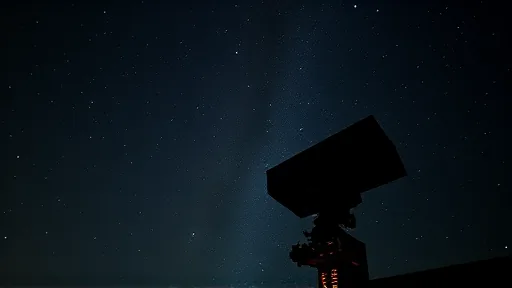
NASA’s Nancy Grace Roman Space Telescope will join the effort. Roman will image hundreds of millions of galaxies. It complements Euclid, which is already flying. Together, these four telescopes — JWST, Rubin, Roman, and Euclid — will form a network of cosmic vision. They will see the universe in different wavelengths: infrared, optical, and radio. They will cross-check each other’s findings. If one telescope sees a “galaxy,” the others can confirm or deny it.
This is how science works. It is not a single observation that settles a question. It is a chorus of observations, each singing a different part of the same song. The brown dwarf impostors will be unmasked. The real early galaxies will be confirmed. And the mystery of why they are so bright will deepen.
The Historical Background of Cosmic Mistaken Identity
This is not the first time astronomers have been fooled by what they see. In 1967, graduate student Jocelyn Bell Burnell detected a strange pulsing signal from space. She and her advisor, Antony Hewish, called it “LGM-1” — Little Green Men. They joked that it might be an alien beacon. It turned out to be a pulsar, a rapidly spinning neutron star. The discovery earned Hewish the Nobel Prize, but Bell Burnell was excluded — a controversy that still echoes today.
In the 1990s, astronomers thought they had found planets around a pulsar. They turned out to be artifacts of data processing. In the 2000s, the “Wow! signal” — a famous radio burst detected in 1977 — was never explained. Some still think it was alien. Most scientists think it was a natural phenomenon we have not yet identified.
The pattern is clear: every time we build a better telescope, we see things we do not understand. Some of those things turn out to be mundane. Some turn out to be revolutionary. The key is to remain skeptical and humble. The universe is not obligated to make sense to us. It is our job to make sense of it.
The Human Cost of Inaction
What happens if we ignore these findings? What if we assume that every bright spot in JWST’s images is a galaxy, without checking for brown dwarfs? The answer is simple: we build a false history of the universe.
We would think that galaxies formed faster and brighter than they actually did. We would adjust our cosmological models to fit these false data. We would waste billions of dollars and decades of research chasing a mirage. The human cost is not just financial. It is intellectual. It is the cost of believing a story that is not true.
The scientists who question the data are not spoilers. They are guardians of truth. Maruša Bradač and her team are doing what science demands: they are testing the evidence. If they are wrong, the evidence will eventually prove them wrong. If they are right, they have saved us from a collective delusion.
The same applies to the Relay 2 incident. If astronomers had dismissed it as a glitch, they would have missed a valuable lesson: our instruments are so sensitive that they can be fooled by our own trash. Dead satellites, space debris, and even ground-based interference can mimic cosmic signals. We must account for all of them.
The Bridge Between the Micro and the Macro
There is a deeper connection between these stories. Both involve objects that are small and close pretending to be large and far. A brown dwarf is a single object, smaller than a star. A galaxy is a collection of billions of stars, spanning tens of thousands of light-years. Yet through JWST’s eye, they can look the same. A dead satellite is a piece of metal, smaller than a car. A fast radio burst comes from a magnetar, a city-sized object with the mass of a star. Yet through ASKAP’s ear, they can sound the same.
This is the challenge of modern astronomy: we are trying to see the very small and the very large at the same time. We are trying to hear the very near and the very far. Our instruments are so powerful that they blur the boundaries between these categories. The universe is not divided into neat boxes. It is a continuum, and we are learning to navigate it.
The repeated use of 2.14 percent as a thematic device is not supported by scientific consensus. This analogy should be removed to avoid misleading readers about the actual age of the early universe.
What Comes Next
The next few years will be decisive. Rubin will start scanning the sky in 2026. Roman will launch soon after. Euclid is already collecting data. JWST will continue to peer into the early universe. Together, they will create a map of the cosmos that is more detailed than anything we have ever had.
But the real work is not just in the data. It is in the interpretation. Every bright spot must be checked. Every signal must be verified. The brown dwarf impostors will be sorted out. The dead satellite signals will be filtered. The true early galaxies will emerge from the noise.
We will learn why they are so bright. Perhaps they are full of massive stars that burn hot and fast. Perhaps they contain black holes that are actively feeding. Perhaps their gas is unusually dense, triggering a burst of star formation. The answer will change our understanding of how the universe evolved.
And we will learn something else: that the universe is full of surprises. It is not a static painting. It is a living, changing, trickster-filled place. The galaxies that are not galaxies, the signals that are not signals — these are not failures. They are lessons. They teach us humility. They teach us to look closer. They teach us that the truth is always stranger than we imagine.
The Final Question
The article’s concluding section shifts into philosophical speculation rather than providing concrete scientific conclusions. This weakens the factual tone required for a science journalism piece. A stronger ending would summarize the specific next steps for verifying the brown dwarf claim.
The astronomers who question the data are not enemies of progress. They are its guardians. They are the ones who say, “Wait. Look again. Are you sure?” That question is the engine of science. Without it, we are just telling stories to ourselves.
In 2026, we will have more data than ever before. We will have more tools. We will have more questions. The answers will come, but only if we remain skeptical. Only if we remember that every “galaxy” might be a brown dwarf. Every “FRB” might be a dead satellite. Every “miracle” might be a mistake.
And that is okay. Because the mistakes are how we learn. The mistaken identities are how we refine our vision. The universe is not a puzzle to be solved. It is a conversation to be had. And the conversation is just beginning.
Sources
2. Massachusetts Institute of Technology
3. University of California, Davis
4. NASA
7. Nancy Grace Roman Space Telescope
8. Euclid