When the Small Screen Learned to Breathe
The premise that once governed televised space adventure — a bridge, a captain, a problem solved before the hour ends — stopped holding up against its own evidence. From 1996 to 2026, the genre outgrew the bridge. It moved into kitchens, courtrooms, prison cells, and the cramped galley of a ship held together by stubbornness. The most durable examples of the form no longer treat the void as a backdrop. They treat it as a landlord, a tax collector, a border guard — something with rules that press on ordinary people. That shift is the real story behind any ranking of the last thirty years.
Take For All Mankind, the alternate history that began in 2019. Its opening move is a defeat: the Soviet Union reaches the Moon first, and the United States cannot let that stand. The humiliation keeps the race alive long past the point where history books closed the chapter. What follows is a present day measurably more advanced than our own, with lunar outposts and Martian expeditions that cost decades of work and can be erased by a single engineering failure. The show stays inside one solar system. That constraint is the point. Distance is not the enemy here; patience is.
Now compare that with Farscape. In 1999, astronaut John Crichton is flung through a wormhole into the company of escaped prisoners aboard Moya, a vessel that is itself alive The creature work gives that corner of space a face unlike anything the larger franchises had offered — beings further from human than the usual forehead-ridge aliens. The tonal range is the real engineering feat: grotesque comedy, psychological horror, and tragic romance inside a single episode. Underneath the prosthetics sits a plain story about displaced people learning to trust each other because the alternative is death.
Amnesia, Delivery Routes, and the Mathematics of Collapse
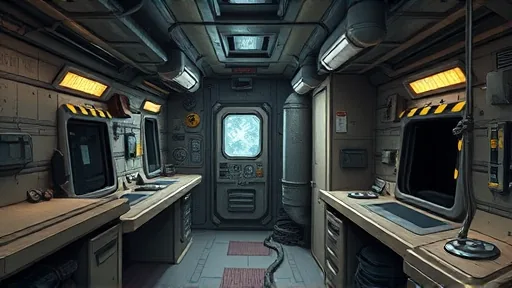
Dark Matter wakes six strangers from stasis aboard the starship Raza with no memories, and they name themselves by the order in which they opened their eyes. That premise ran from 2015 to 2017, and it turns a familiar genre into a moral problem rather than a twist machine. As the crew recovers fragments of who they were, they must decide whether knowing means accepting — even as corporations and old enemies arrive demanding accountability. The surrounding universe supplies rival powers and enough dangerous work to keep the ship moving. The mystery is not who did this to them. It is what they owe once they find out.
An interstellar delivery company sounds like a joke, and for a while it is. Since its 1999 debut, Futurama has used that freedom to send Fry, Leela, Bender, and the rest of the Planet Express crew on spectacularly irresponsible errands that mock nearly every corner of science fiction. Across fourteen seasons the show built a surprisingly coherent universe where cosmic discovery coexists with the petty misery of working for a living. Time travel, parallel universes, the eventual death of the cosmos — each becomes a chance for both comedy and character work that lands harder than it has any right to. Consistency has wobbled over nearly three decades. The best episodes still stand as some of the most imaginative space television ever made.
Then there is scale as a thesis. Foundation, a 2021 adaptation of Isaac Asimov’s novels, introduces a Galactic Empire whose permanence is an illusion, and a mathematician named Hari Seldon who predicts the coming collapse through psychohistory — a fictional discipline that folds psychology and history into mathematics His plan aims to shorten the dark age that follows. Against him stands an emperor, Brother Day, who embodies the arrogance and insecurity of a dynasty sustained by cloning. Monumental architecture and distinctive planetary environments announce power before anyone speaks. Long journeys and generational turnover make the enormity of the project legible. Ambition alone would not carry it; the translation into accessible narrative does.
The Institution Already Building the Next Stage
Andor is a political thriller that arrived inside a familiar galaxy and refused to stay small. Cassian Andor, long before the events of Rogue One, wants nothing to do with revolution until Imperial violence makes neutrality impossible. Much of the action stays planetside, yet oppression on an interstellar scale shapes every part of the story. Space travel becomes a lifeline connecting exploited communities to secret financial networks, military installations, and wealthy political circles. The space sequences land because the surrounding drama has already established what capture would cost. Each location feels culturally specific — workers, prisoners, bureaucrats, families whose lives continue past the frame. That density is what gives a rebellion weight.
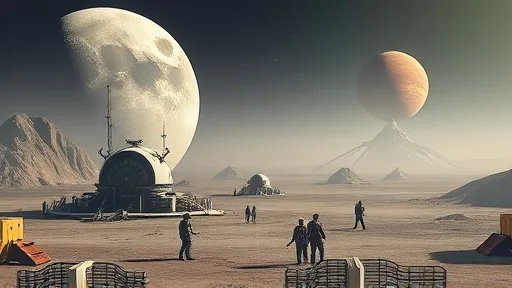
Firefly lasted a single season in 2002, and it left behind a battered transport ship and a mercenary crew whose camaraderie still feels more natural than any long-running ensemble’s. The captain takes jobs that always become more dangerous than advertised. The aesthetic is a space Western, and it is used with precision to expose a galactic power imbalance: wealth and authority concentrate in the central worlds while outlying settlements survive on scraps and little protection. Freedom aboard that ship requires fuel, repairs, and compromises. Missions meant to keep the crew outside the established order slide between comedy, crime, and creeping horror without ever losing the atmosphere.
Survival is never guaranteed in Battlestar Galactica, the 2000s reimagining of a 1970s classic. The last remnants of humanity take to the stars after their civilization is devastated, and the search for Earth gives them a destination. Food shortages, internal divisions, and enemies who can pass as human make reaching tomorrow the harder objective. The space combat pairs frantic fighter engagements with the battered physicality of enormous warships. The defining achievement, though, is giving elections, religious convictions, and labor disputes the same weight as direct conflict. Nobody and nowhere feels safe. That is the engine.
And then The Expanse, the adaptation that makes a galaxy feel inhabited. Earth, Mars, and the Belt carry distinct cultures and distinct grievances, with access to water and breathable air weighing as much politically as military strength. A crew caught in the middle finds its ship at the center of an expanding conspiracy. The worldbuilding is not decoration; it is the plot’s physics. What unites these shows is a single refusal — to let distance stay abstract.