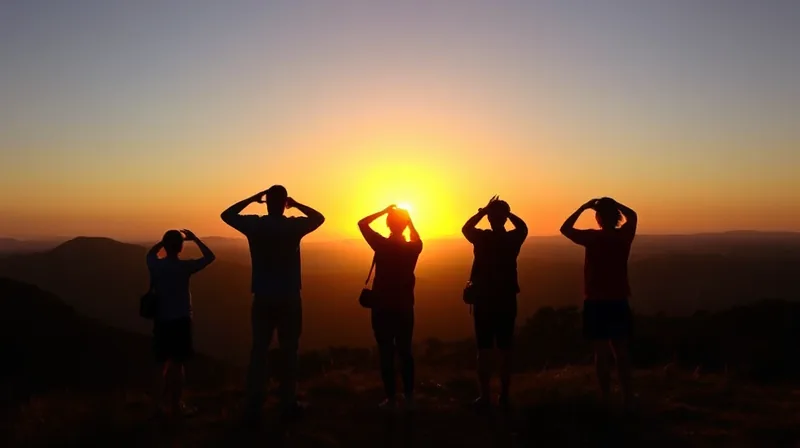
The 2026 Spanish Eclipse: A Horizon-Viewing Guide for Eclipse Chasers The sun is setting. The sky grows dim. You prepared for months. You bought special glasses. You traveled across a continent. You feel the air cool. You expect darkness. You expect the corona. You expect the moment that eclipse chasers call the most beautiful sight in nature.
Then nothing happens.
The sun sets behind a hill. A cloud blocks your view. You were in the wrong spot by just two miles. You see a deep partial eclipse, but not totality. You miss the main event. You watch a video on your phone instead.
This scenario will happen to thousands of people. It does not have to happen to you.
The total solar eclipse of August 12, 2026 is the first visible from mainland Europe since 1999. [1] The path of totality crosses northern Spain. It passes between Madrid and Barcelona. It touches the Balearic Islands. It ends at sunset over the Mediterranean.
This eclipse is different from any other in recent memory. It happens extremely late in the day. The eclipsed sun sits very low on the horizon. In eastern Spain, totality occurs just two to five degrees above the horizon. [1] That is less than the width of three fingers held at arm’s length.
For comparison, the 2017 total solar eclipse in the United States had the sun high in the sky. The 2024 eclipse in Mexico and the United States also had a high sun. Observers could stand anywhere within the path and see totality. The horizon did not matter. Terrain did not matter much either.
The 2026 eclipse reverses this logic. Being inside the path of totality is necessary. It is not sufficient. You also need an unobstructed view of the west-northwest horizon. You need clear skies in that specific direction. You need to avoid mountains, buildings, trees, and hills.
This article explains the five biggest mistakes that eclipse travelers will make. It then shows you how to avoid each one. It provides a step-by-step plan for choosing your viewing spot. It gives you tools to check your location. It ends with a question that only you can answer.
The First Mistake: Believing That 99% Is Good Enough
The most common mistake is simple. People think a 99% partial eclipse is almost as good as a total eclipse. This is wrong. It is dangerously wrong.
A 99% partial eclipse means one percent of the sun’s surface remains visible. That one percent is still overwhelmingly bright. The sky does not go dark. The corona does not appear. The stars do not come out. The temperature does not drop noticeably. Animals do not act strangely.
The difference between a 99% partial eclipse and a total eclipse is qualitative, not quantitative: totality reveals the corona, Baily’s beads, and the diamond ring effect, none of which occur during a partial eclipse.
Eclipse chasers distinguish sharply between a partial and total eclipse: a 99% partial eclipse leaves one percent of the sun visible, which is still overwhelmingly bright, preventing the corona, darkness, or temperature drop seen during totality.
Consider what happens during totality. The moon completely covers the sun. The corona becomes visible. That is the sun’s outer atmosphere. It glows white and extends millions of miles into space. Baily’s beads appear. Those are points of sunlight shining through valleys on the moon’s edge. The diamond ring effect occurs. That is a single bright point of light surrounded by the corona.
None of these phenomena occur during a partial eclipse. Not one.
The path of totality for the 2026 eclipse is about 190 miles wide. [1] It strikes Galicia in northwestern Spain. It then crosses northern Spain. It passes between Madrid and Barcelona. Observers in those two cities will see a deep partial eclipse. They will not see totality.
Madrid has a population of 3.5 million. Barcelona has 1.7 million. Combined, over five million people live in cities that will experience a deep partial eclipse. Many of them will think they saw the main event. They will be wrong.
Tourists often book hotels in Madrid or Barcelona, assuming proximity to the path of totality suffices, but both cities lie outside the path, offering only a deep partial eclipse.
The rule is simple. You must be inside the path of totality. You must be inside it completely. There is no substitute. There is no alternative. There is no partial credit.
The Second Mistake: Ignoring the Horizon
The second mistake is more subtle. People focus on the path of totality. They forget to check the horizon.
The 2026 eclipse occurs at sunset. In northwestern Spain, the eclipsed sun sits about 10 to 12 degrees above the horizon during totality. In eastern Spain and the Balearic Islands, it sits just two to five degrees above the horizon.
To understand what this means, hold your hand at arm’s length. Your fist is about 10 degrees wide. Your thumb is about two degrees wide. In eastern Spain, the eclipsed sun will be no higher than your thumb.
This creates a problem. The sun is very close to the horizon. Any obstacle in that direction blocks your view. A hill. A building. A tree. A lighthouse. A castle. A mountain. Anything.
Mediterranean coastal resorts typically face east for sunrise, but the 2026 eclipse occurs in the west-northwest at sunset, requiring tourists to seek alternative viewing spots.
Experienced eclipse chasers know that horizon geometry matters more than almost anything else for this eclipse. They will spend hours studying maps. They will check satellite images. They will visit their chosen location the day before. They will confirm that nothing blocks the view.
The same applies to inland locations. Spain has many medieval hill towns. They sit on hilltops. They offer panoramic views. But those views might not include the west-northwest horizon. The town itself might block the view. The church tower might block the view. The castle walls might block the view.
You need an unobstructed view of the west-northwest horizon. That means no obstacles for at least the first five degrees above the horizon. Ideally, you want a clear view down to the horizon itself.
The Third Mistake: Underestimating Spain’s Terrain
Spain is a mountainous country. This is its beauty. This is also its challenge for eclipse observers.
Galicia has rugged terrain. Asturias has mountains. Cantabria has peaks. The Iberian Highlands have ridges. All of these regions are within the path of totality. All of them offer dramatic landscapes. All of them can block your view.
The problem is especially severe in eastern Spain. The terrain there is complex. Distant hills can block the sun when it is only a few degrees above the horizon. You might think you have a clear view. You might be wrong.
Consider the example of Valencia. The city is near the path of totality. It has beautiful beaches. It has historic architecture. It has excellent infrastructure. But the terrain around Valencia includes hills and mountains. The eclipse occurs low in the west-northwest. Those hills could block the view.
The same applies to the Balearic Islands. Mallorca has mountains. Menorca has hills. Ibiza has terrain. The eclipse occurs just two to three degrees above the horizon. Any mountain or hill in that direction blocks the view.
Experienced eclipse chasers will avoid locations with complex terrain. They will look for flat areas. They will look for open farmland. They will look for reservoir shorelines. They will look for any location with a clear, unobstructed view to the west-northwest.
The best locations are those with minimal terrain blocking the horizon. That means flat plains. That means coastal areas with no hills to the west-northwest. That means elevated positions that rise above nearby obstacles.
One strategy is to find an elevated location. A hilltop or ridge might give you a view above nearby obstacles. But you must check carefully. The hill itself might block the view in the wrong direction.
Another strategy is to find a location near the coast. The sea provides a flat horizon. But you must ensure the coast faces west-northwest. Many Mediterranean coasts face east or south.
The Fourth Mistake: Misunderstanding Weather Forecasts
Weather is the most misunderstood aspect of eclipse chasing. People check the forecast for their location. They assume that forecast applies to the eclipse. They are often wrong.
Eclipse chasers note that climate indicates long-term averages, but weather on the day is unpredictable. Inland Spain (e.g., Castile and León) has favorable August climate, but distant clouds along the line of sight can still block the low-hanging sun.
For the 2026 eclipse, weather forecasting is even more complicated. Totality occurs very low above the horizon. Observers on Mallorca waiting for totality at 2.5 degrees above the horizon will look through hundreds of miles of Earth’s atmosphere. Distant clouds far beyond the local forecast area could still block their view.
Most weather forecasts describe conditions directly overhead. They tell you if it will rain or shine where you stand. They do not tell you if clouds block the horizon 50 miles away. For the 2026 eclipse, that distant cloud could be the difference between success and failure.
Climate change adds another complication. Traditional seasonal weather patterns are becoming less predictable in some parts of Europe. August weather in Spain might not follow historical averages. The data from the past 30 years might not apply to 2026.
Experienced eclipse chasers will make their final viewing decision only 24 hours before the eclipse. They will check multiple weather models. They will look at satellite images. They will consider cloud cover along the entire line of sight.
They will also have backup locations. They might plan to be in Castile and León. If the forecast there looks bad, they might move to Aragón. If both look bad, they might consider the coast. They will have options.
The key is to understand that weather forecasts are not guarantees. They are probabilities. You must be prepared to change your plans. You must have flexibility. You must accept that you might need to drive for hours to find clear skies.
The Fifth Mistake: Getting Trapped in Traffic
The fifth mistake is logistical. People underestimate the traffic.
Spain could experience one of the largest eclipse tourism events in modern European history. The path of totality crosses a densely populated region. Madrid and Barcelona are just outside the path. Millions of people will try to reach the path.
The pressure on the road system will be intense. It will be especially intense in the hours before the eclipse. It will be even more intense after the eclipse ends. Everyone will try to leave at the same time.
Areas around Madrid, Barcelona, Tarragona, Zaragoza, and Valencia are potential black spots. These cities have large populations. They are near the path of totality. Their residents will try to drive into the path.
Coastal resorts are another problem. Many tourists will try to reach the path from coastal locations. The roads are not designed for this volume. Expect severe congestion.
Some of the quietest roads are predicted to be from Salamanca to Zamora and Valladolid. These areas are in Castile and León. They have among the best chances of clear skies. They are also less populated. The roads might be less congested.
Experienced eclipse chasers will prioritize practicality over aesthetics. They will avoid cities. They will avoid beaches. They will avoid lighthouses. They will avoid castles. They will look for open farmland. They will look for reservoir shorelines. They will look for roadside pull-offs.
The best eclipse observing site is one with the cleanest sightline low to the northwest horizon. It does not need to be beautiful. It does not need to be famous. It needs to be functional.
Plan your route in advance. Consider alternative routes. Have a backup plan. Leave early. Arrive the day before if possible. Stay overnight after the eclipse. Avoid the rush.
How to Choose Your Viewing Spot
Choosing a viewing spot for the 2026 eclipse requires research. You cannot simply show up. You must prepare.
The first step is to understand the path of totality. The eclipse will be total along a narrow path. That path is about 190 miles wide. It crosses northern Spain from west to east. It touches the Balearic Islands.
Use an eclipse map to find the path. Eclipse Atlas by Michael Zeiler is excellent. Besselian Elements has an accurate map. Xavier Jubier has an interactive Google Map. These tools show the exact path.
The second step is to find a location within the path. Ideally, you want to be near the center of the path. That gives you the longest duration of totality. The center line has about four minutes and 30 seconds of totality. The edges have less.
The third step is to check the horizon. Your location must have an unobstructed view to the west-northwest. Use Google Maps in 3D mode. Check for hills, mountains, buildings, and trees. Use the Eclipse Horizon Checker tool. Enter your coordinates. It will analyze the sight lines.
The fourth step is to check the weather. Look at historical data. Use Eclipsophile.com for climate analysis. Use NASA Worldview for satellite images. Use Windy.com for real-time cloud forecasts. Remember that overhead conditions are only half the story. You also need clear skies along the line of sight.
The fifth step is to visit your location in advance. Nothing beats being there the night before. Check for trees and other obstructions. Confirm the view. Make adjustments if needed.
The sixth step is to have a backup plan. Identify multiple locations. Have a primary and a secondary. Be prepared to change your plans based on weather and traffic.
The seventh step is to use the right tools. The Eclipse App provides precise timings and a visualization of shadows. The Photographer’s Ephemeris shows exactly where on the horizon the eclipse will occur. PhotoPills is a smartphone app that does the same. Solar Eclipse Timer is a talking timer for the final execution.
The History of Eclipse Chasing
Eclipse chasing is not new. People have traveled to see total solar eclipses for centuries.
The ancient Greeks traveled to see eclipses. They understood the geometry. They knew the moon caused the darkness. They wrote about the experience.
In the 18th and 19th centuries, scientific expeditions traveled to remote locations. They wanted to observe the corona. They wanted to test Einstein’s theory of general relativity. The 1919 eclipse proved Einstein right. That expedition traveled to Africa and Brazil.
In the 20th century, air travel made eclipse chasing easier. People could reach remote locations quickly. The 1973 eclipse was observed from a supersonic Concorde. The plane extended the duration of totality to 74 minutes.
In the 21st century, eclipse chasing has become a hobby for thousands of people. They travel the world. They chase the shadow. They experience the most beautiful sight in nature.
The 2026 eclipse is the first total solar eclipse visible from mainland Europe since 1999, which crossed France, Germany, Austria, Hungary, and Romania, inspiring many to become eclipse chasers.
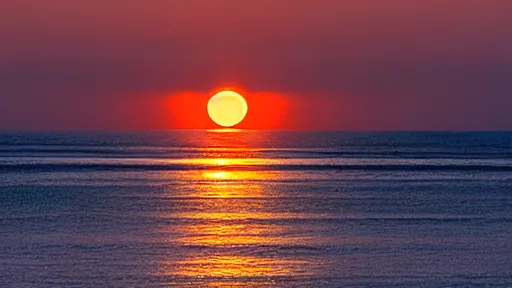
The 2026 eclipse is also special because of its timing. It occurs at sunset. That creates unique challenges. It also creates unique opportunities. The eclipsed sun will be low on the horizon. It might appear distorted by atmospheric refraction. It might appear red or orange. It might be framed by the landscape.
Photographers will love this eclipse. The low sun creates dramatic compositions. The corona will appear above the horizon. The landscape will be silhouetted. The colors will be warm.
But photographers must be careful. They need to find the right location. They need to check the horizon. They need to prepare their equipment. They need to practice.
What the Experts Say
Experts agree on one thing: preparation is key.
Jay Anderson is an eclipse meteorologist. He runs Eclipsophile.com. He analyzes the climate of eclipse paths. He says the 2026 eclipse requires careful planning. Weather is unpredictable. You must be flexible.
Michael Zeiler is an eclipse cartographer. He creates detailed maps. He says the 2026 eclipse path is narrow. You must be precise. A few miles can make the difference.
Xavier Jubier creates interactive Google Maps. He includes sight lines. He says terrain is the biggest challenge. You must check the horizon.
Gordon Telepun is an eclipse expert. He created Solar Eclipse Timer. He says timing is critical. You must know exactly when totality begins and ends.
All of them agree on one thing: the 2026 eclipse is worth the effort. It will be beautiful. It will be memorable. It will be the experience of a lifetime.
The Counterfactual: A World Without This Eclipse
Imagine a world where the 2026 eclipse did not exist. Where the moon’s shadow missed Earth entirely. Where the alignment was slightly off.
In that world, people would not travel to Spain. They would not gather in fields. They would not look up at the sky. They would not experience the corona. They would not feel the temperature drop. They would not hear the birds fall silent.
In that world, the beauty of the universe would remain hidden. The connection between the sun, moon, and Earth would be invisible. The wonder of nature would be diminished.
But we do not live in that world. We live in a world where the 2026 eclipse will occur. We have the opportunity to see it. We have the chance to experience totality.
The question is whether we will take that chance. Whether we will prepare. Whether we will succeed.
The Tools You Need
You need tools to prepare for the 2026 eclipse. Here are the most important ones.
Eclipsophile.com provides climate analysis. It tells you the odds of clear skies. It helps you choose a region.
Eclipse Atlas provides detailed maps. It shows the path of totality. It helps you find your location.
Besselian Elements provides accurate maps. It uses the latest solar diameter. It is useful for locations near the edge of the path.
Xavier Jubier’s Interactive Google Map provides timings and sight lines. It helps you check the terrain.
Google Maps provides 3D terrain views. It helps you find coordinates.
The Eclipse App provides precise timings. It visualizes shadows. It includes a countdown and real-time weather.
Eclipse Horizon Checker analyzes sight lines. It checks for obstacles. It comments on tree canopy cover.
The Instituto Geográfico Nacional assesses sight lines. It works for any point in Spain.
The Photographer’s Ephemeris simulates the eclipse. It shows exactly where on the horizon it will occur.
PhotoPills is a smartphone app. It shows where the eclipse will be on the horizon.
NASA Worldview provides daily global images. It goes back 25 years. It helps with weather analysis.
Windy.com provides real-time cloud forecasts. It uses seven different models. Remember that overhead conditions are only half the story.
Solar Eclipse Timer is a talking timer. It guides you through the eclipse. It ensures you do not miss the key moments.
The Final Checklist
Here is a checklist for the 2026 eclipse.
One: Confirm you are inside the path of totality. Use an eclipse map. Check your coordinates.
Two: Check the horizon. Use Google Maps. Use Eclipse Horizon Checker. Visit your location in advance.
Three: Check the weather. Use Eclipsophile.com. Use NASA Worldview. Use Windy.com. Have a backup location.
Four: Plan your route. Avoid cities. Avoid beaches. Avoid famous locations. Look for open farmland. Look for reservoir shorelines.
Five: Prepare your equipment. Bring eclipse glasses. Bring a camera. Bring a tripod. Bring a timer. Bring a chair. Bring water. Bring food.
Six: Arrive early. Arrive the day before if possible. Stay overnight after the eclipse.
Seven: Enjoy the experience. Totality lasts only a few minutes. Make the most of it. Look at the corona. Look at the stars. Feel the temperature drop. Listen to the silence.
The Question
The 2026 eclipse will occur on August 12. The path of totality crosses northern Spain. The eclipsed sun will sit low on the horizon. The challenges are many. The rewards are great.
You have the information. You have the tools. You have the time.
The question is: will you be ready?
Will you find a location with an unobstructed view? Will you check the weather? Will you avoid traffic? Will you experience totality?
Or will you be among the thousands who miss it?
The answer is yours to decide. The preparation is yours to do. The experience is yours to earn.
On August 12, 2026, the moon will cover the sun. The sky will go dark. The corona will appear. The stars will come out. The temperature will drop. The birds will fall silent.
Will you be there to see it?
Sources
1. Instituto Geográfico Nacional
2. NASA