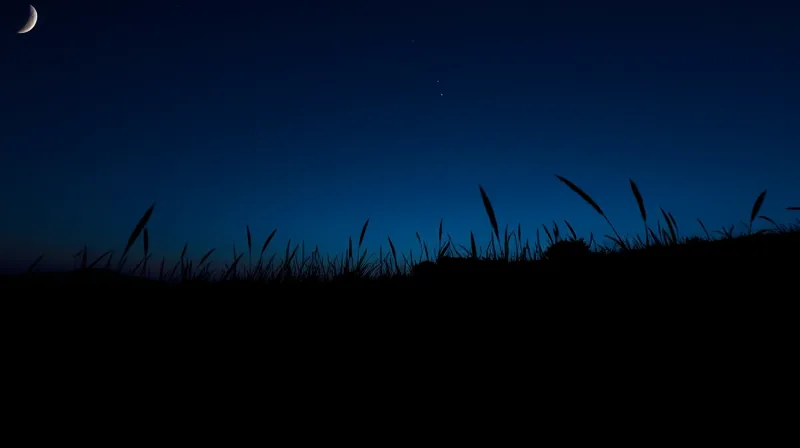
September Sky Guide Moon Venus Equinox
The Moon as a Night-Sky Pointer
For generations, stargazers relied on printed charts and their own memory to navigate the night sky. The idea that a beginner could find deep-sky objects without specialized equipment seemed reserved for experts with years of experience. This month, NASA’s skywatching program shows how the Moon itself becomes the simplest navigation tool available to anyone.
From September 14 through 20, the Moon serves as a moving pointer in the evening sky. About an hour after sunset, observers looking south will find the Moon shifting position night by night against the background stars. Its first target is Antares, a bright reddish star that marks the heart of the constellation Scorpius. The Moon passes near this distinctive star, making identification effortless even for those who have never located Scorpius before.
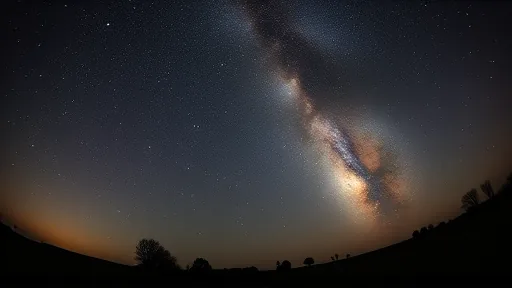
The celestial tour continues with the Teapot, a star pattern within the neighboring constellation Sagittarius. This grouping genuinely resembles a teapot, complete with handle, lid, and spout. For observers under especially dark skies, a hazy band appears to rise from the spout like steam. Following that steam to its thickest point leads directly toward the center of our Milky Way galaxy, a region normally difficult to pinpoint without dark sky conditions and experience.
This approach transforms the Moon from a mere object of beauty into an active teaching tool. Instead of memorizing star charts, beginners can simply watch the Moon’s nightly progress and let it reveal the landmarks one by one. The technique works because the Moon’s orbit carries it predictably across the same regions of sky that contain these notable deep-sky targets.
Venus Reaches Peak Brightness
Venus has captivated skywatchers since ancient civilizations first tracked its movements across dawn and dusk skies. The planet’s brightness varies throughout its orbital cycle, and understanding when it reaches maximum brilliance has traditionally required careful observation over many weeks. NASA’s September skywatching guide simplifies this by pinpointing the exact date when Venus outshines everything else in the evening sky.
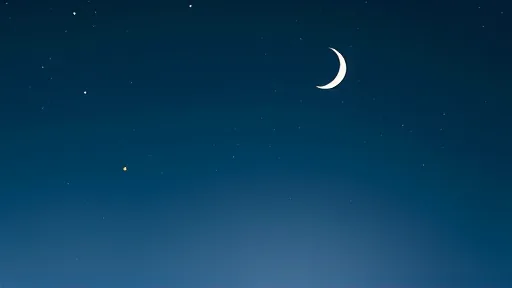
On September 18, Venus hits peak brilliance for this evening appearance. The planet will stand out as a brilliant point of light low above the western horizon shortly after sunset. Its brightness will exceed every star in the surrounding sky, making it impossible to miss even in urban areas with significant light pollution. A clear view of the horizon gives the best chance to catch it before it sets below the edge of the Earth.
The same week offers an additional reason to look upward. September 19 marks International Observe the Moon Night, a global event inviting people everywhere to connect with Earth’s nearest celestial neighbor. Participants learn about lunar science, exploration, and the many ways the Moon has shaped cultures around the world. NASA provides resources for finding local events or participating remotely through their public engagement platforms.
The timing of these events is no coincidence. Venus reaches its greatest brilliance roughly every 584 days, when its position relative to Earth and the Sun creates maximum reflected sunlight. The September 18 peak represents the culmination of this particular evening apparition, after which the planet will gradually fade as its orbital position changes relative to our own.
Seasonal Turning
Point and the Harvest Moon
The changing seasons have governed human agriculture and celebration for thousands of years. The September equinox marks a precise astronomical moment when the Sun crosses the celestial equator, yet its practical significance extends far beyond the mathematics of orbital mechanics. This year, that moment arrives on September 22, bringing autumn to the Northern Hemisphere and spring to the Southern Hemisphere.
On the equinox, the Sun sits directly above Earth’s equator, and day and night are close to equal in length around the world. After this date, daylight steadily decreases in the Northern Hemisphere while increasing in the Southern Hemisphere. This reversal has driven harvest festivals, planting calendars, and cultural observances across civilizations for millennia, making the equinox one of the most culturally significant moments in the astronomical year.
Just four days later, on September 26, the Harvest Moon rises in the east shortly after sunset. This full Moon has historically provided farmers with extra evening light to complete their harvests before winter arrived. Its name reflects this practical agricultural purpose, and its timing near the equinox means it rises soon after sunset for several consecutive nights, extending the period of useful evening illumination.
The Harvest Moon will not appear alone in the sky. Saturn will be visible nearby, easily spotted with the unaided eye as a steady golden point of light. Fainter Neptune completes a wide triangle in the sky, though at magnitude 8, it requires binoculars or a telescope to observe. Darker skies and good observing conditions improve the chances of spotting this distant ice giant, which orbits nearly 30 times farther from the Sun than Earth does.
September 2026 thus offers a complete celestial program: the Moon guiding observers through the Milky Way’s heart, Venus at its most brilliant, the equinox marking the seasonal turning point, and the Harvest Moon keeping company with two outer planets. Each event builds on the others, creating a month where even casual skywatchers can witness the solar system’s grand mechanics in motion.
Sources
1. NASA